



The food court is technically open. A guest using a wheelchair can reach the midway but not the ordering counter. A menu is too high to read. The only open space at a picnic table is being used for a cooler. None of those problems looks like a broken concession stand to the team inside it. Together, they can prevent a visitor from buying and enjoying lunch. Accessible fair concessions depend on the whole route, not just an open window.
January is the right time to fix that disconnect. Before stand assignments and equipment placements become hard to change, treat accessibility as part of the concessions operating plan. The objective is not a special favor delivered after somebody complains. It is a food experience people can use with dignity, alongside the friends and family they came with.
Plan accessible fair concessions around the complete guest journey
Walk the route from an accessible arrival point to the food court, through ordering and payment, to pickup, seating, and nearby amenities. Examine the return journey too. A usable counter means little if the path leading to it becomes a storage area halfway through the afternoon.
The 2010 ADA Standards for Accessible Design establish scoping and technical requirements for covered construction and alterations, including temporary and permanent facilities. Existing facilities and operating policies also involve obligations under the applicable ADA regulations. Do not assume that an annual event or movable booth is automatically exempt.
Have the fair’s accessibility lead and qualified advisers identify the rules applicable to the actual facilities and organization. Public entities and private public accommodations have different regulatory frameworks. Federal compliance also does not remove potentially applicable California or local requirements. This article is an operating checklist, not a determination that a particular layout complies.
Protect the accessible route from everyday clutter
A route drawn on a plan must remain usable in the field. Waste bins, temporary displays, electrical protection, parked carts, and queue barriers can narrow an otherwise appropriate path. Assign someone to inspect the route after vendors finish setting up, not just before they arrive.
The U.S. Access Board’s accessible-route guide explains connections between site arrival points, accessible facilities, and elements. Use the underlying standards with qualified review for widths, surfaces, turns, slopes, and other technical details. A generic instruction to leave “enough room” is not a design specification.
Mark the route in the controlled site plan and explain it to the people who move equipment. Give service crews a place to put carts that does not compete with public access. If an obstacle appears, staff should know who can remove it promptly instead of starting a discussion about which department owns the problem.
A service counter needs an operating plan
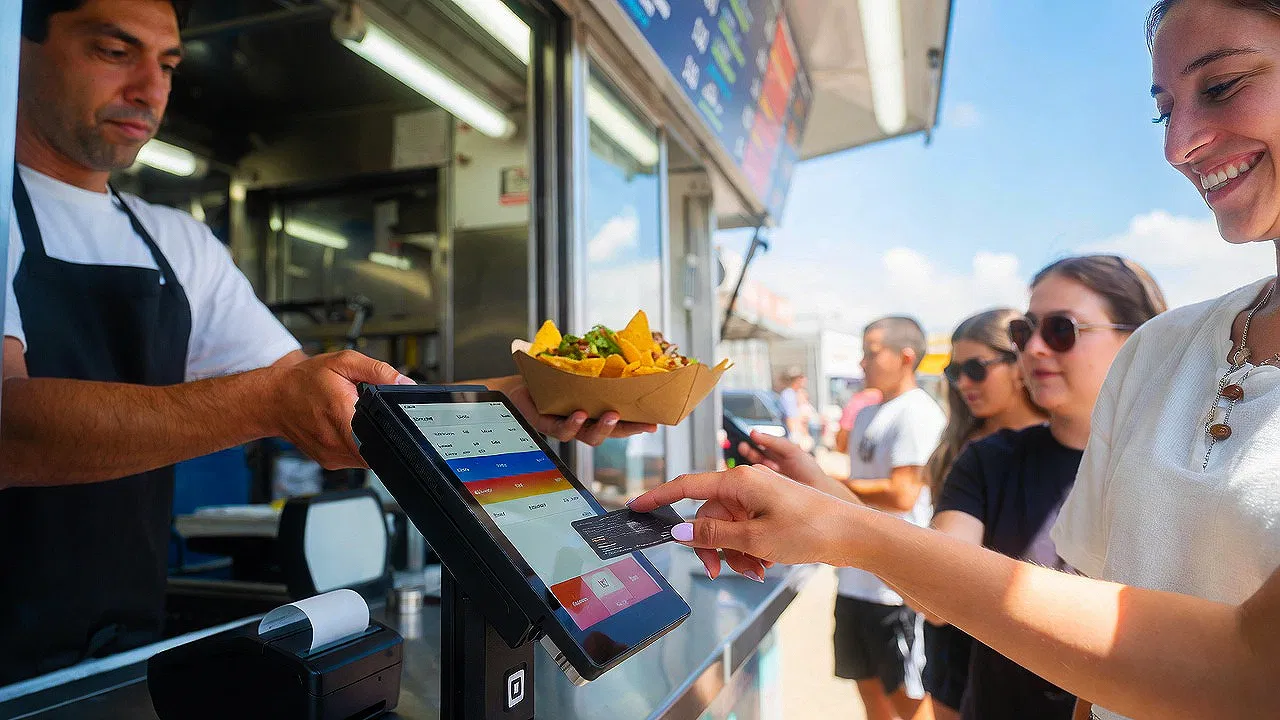
Review how the guest orders, receives information, uses any payment equipment, and obtains food. A low section should not become the place where staff stack supplies. Nor should a vendor place the only reachable terminal behind a display that cannot be moved during a rush.
Determine the required accessible features for the stand with the appropriate specialist. Where service alternatives are necessary, establish a workable, equivalent process consistent with legal obligations; do not assume that a staff member waving from a high window resolves a structural problem. The guest should not have to shout personal information across a crowded queue.
Practice the sequence with a realistic order. Can a guest communicate directly with the cashier? Can staff position equipment appropriately without disconnecting it? Where does the tray go? Ask the people using the service what works rather than assuming their needs from a distance.

Communication access is part of food service
Noise, glare, tiny print, and rapid verbal instructions can make an ordinary transaction unnecessarily difficult. Provide a way to ask a menu question without relying exclusively on hearing a cashier over a generator. Keep a readable menu available where it can be brought into the conversation.
Department of Justice effective-communication guidance explains that covered entities must communicate effectively with people with vision, hearing, or speech disabilities. The appropriate aid or service depends on the nature, length, complexity, and context of the communication and the person’s usual method. Reading a menu or exchanging written notes can work for some straightforward transactions, but not every circumstance.
Train staff to address the guest directly, allow time to respond, and ask how they can communicate effectively. Do not default to talking only to a companion. Keep the escalation contact available when an ordinary transaction becomes more complex or the available method is not effective.
Digital convenience should not become a barrier
If a vendor uses a phone-based menu or ordering channel, consider the guest who cannot use that channel. A dead battery is one operational issue; inaccessible content or an unusable interface is another. Maintain a practical way for guests to obtain information and service without being forced into an inappropriate workaround.
Review the complete transaction, not just whether a page loads. Price, ingredients, modifications, order confirmation, and pickup instructions all need to be conveyed. Ask vendors to demonstrate their alternative service process before opening and confirm who assists when technology fails.
Do not present an informal alternative as a blanket legal exemption for inaccessible technology. Get advice about applicable obligations. The operational recommendation is simpler: the fair should know how a guest can complete the purchase when the most convenient channel for the vendor is not usable for that guest.
Seating must be available, integrated, and maintained
Dining is a social activity. Accessible places should connect to usable routes and allow people to sit with their group, rather than being isolated behind the busiest stand. Review required accessible dining surfaces and clearances with the applicable standards and qualified advisers.
Then check what happens after the first hour. Loose chairs migrate. Strollers and coolers occupy open ends. Cleaning crews may rearrange furniture into an inaccessible pattern. Give staff a reference layout and identify which areas must remain clear. Routine maintenance is as important as initial placement.
Include accessible seating in the shaded and desirable parts of the food court rather than leaving it as the last available option. That is a planning recommendation, not a claim that every shade arrangement has a separate federal quota. The practical test is whether the dining experience offers meaningful choice.
Write service-animal instructions before a dispute
A food-court employee should not invent animal-access policy in front of a guest. DOJ guidance on service animals explains that covered establishments generally must allow service animals in public areas, including establishments that sell or prepare food. Service animals are not simply pets.
When the service is not obvious, the guidance identifies two permitted questions: whether the dog is required because of a disability and what work or task it has been trained to perform. Staff should not demand a special identification card, medical documentation, or a demonstration. Separate provisions address miniature horses and specific circumstances for exclusion.
Give workers the fair’s approved instructions and an escalation contact. A generic no-pets sign should not become the reason an employee denies lawful access. Handle any actual behavior or sanitation concern according to the applicable rules, without turning assumptions about disability into a service decision.

Make vendor instructions specific enough to use
The DOJ primer for small businesses discusses accessible facilities, policies, communication, and barrier removal. It is a useful starting point for vendor orientation, not a replacement for the fair’s site-specific legal and technical review.
Translate approved requirements into a short stand checklist. Identify the ordering point, menu alternative, service contact, accessible route boundary, and equipment that must remain reachable. Show staff where they can stage supplies without blocking those features. A clear photo of the approved arrangement can supplement the written instructions.
Include everyone who affects access: vendors, cleaners, security, guest services, and delivery crews. Accessibility can fail between departments even when each vendor believes its own counter is ready. Establish one route for reporting barriers so guests do not have to repeat the same explanation to several offices.
Test at the busiest time, not just the quietest
A morning walkthrough may miss the conditions that appear at dinner. Observe whether queues encroach on routes, pickup crowds block counters, or tables become difficult to reach. Check lighting and communication after dark. A route that is physically present but hard to identify can still create a frustrating experience.
Invite input from people with different disabilities and compensate advisers appropriately when engaging them professionally. No single volunteer can represent every access need. Use their observations alongside technical review, not as a substitute for it or as a declaration that the site is certified compliant.
Record problems, actions, owners, and completion. If a temporary change affects the approved arrangement, have the responsible person review it before implementation. Avoid moving a queue into an accessible route to solve a different problem without considering the consequences.
Budget for access before buying the wrong fix
Put accessibility review alongside the initial concessions budget, not in a contingency line that requires an emergency request. Some improvements may involve layout or maintenance; others need professional design, equipment, or construction. Identify the distinction early so the fair does not spend money on a temporary arrangement that fails to address the underlying issue.
For example, imagine a stand whose ordering surface is reachable but whose pickup shelf is not. Buying another menu board would not resolve that sequence. Map the specific barrier, obtain appropriate advice, and define the desired result before choosing a product. This is a hypothetical planning example, not a description of a particular fair or a prescribed technical solution.
Make acceptance of the completed work part of the purchase or project plan. Somebody needs to verify the arrangement against the approved requirements and explain its operation to the vendor. Retain the review and instructions with the stand file. That record helps the next shift maintain the intended setup and keeps a future relocation from accidentally recreating the same barrier.
Give leadership a clear readiness picture
Before the event, report unresolved barriers and the plan for addressing them. Distinguish an item awaiting technical review from an operating instruction already implemented. The board does not need every dimension on a daily dashboard, but it should understand material unresolved issues and who has authority to act.
During the fair, track recurring access complaints without collecting unnecessary medical details. The question is what prevented service and how the fair responded. Protect personal information and look for patterns that point to a layout, equipment, or training problem.
Afterward, carry improvements into the next site plan while details are fresh. Accessible concessions are not a one-time construction purchase. They require coordinated placement, communication, maintenance, and staff decisions whenever the grounds are open.
Talk to FairFirst Before Your Next Fair
Make access part of the concessions brief before stand assignments become fixed. FairFirst can discuss how vendor coordination, operating instructions, and site readiness fit into a food program that serves the whole community.
Schedule a FairFirst consultation to review the guest journey through your concessions program.
Plan a food court people can actually use.
Sources
- 2010 ADA Standards for Accessible Design — U.S. Department of Justice, 2010
- Accessible Routes Guide — U.S. Access Board, guidance to 2010 Standards
- ADA Requirements: Effective Communication — U.S. Department of Justice, 2020
- ADA Requirements: Service Animals — U.S. Department of Justice, 2020
- ADA Update: A Primer for Small Business — U.S. Department of Justice, 2020


