


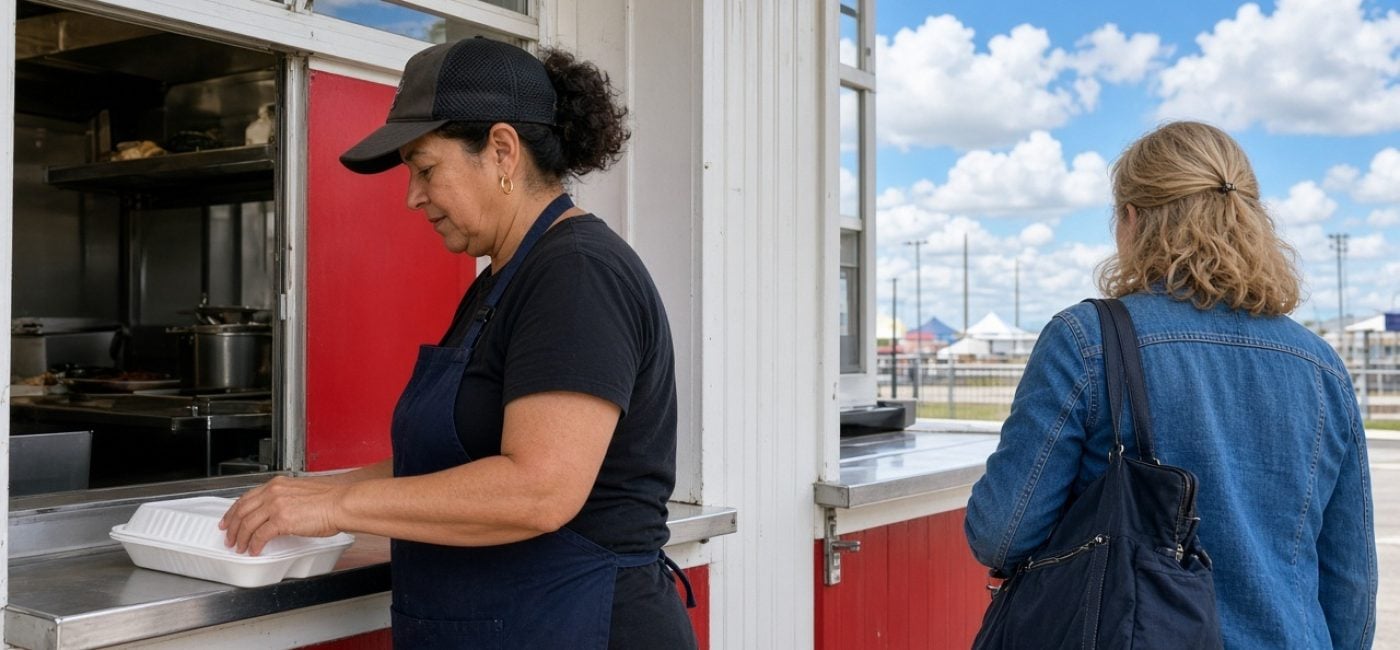
A shorter order line is not the same as faster service
Digital ordering can move a transaction off the midway without moving dinner through the kitchen any faster. Picture a hypothetical fair stand accepting phone orders while the walk-up line remains full. The screen promises convenience, but completed meals pile up, guests crowd the counter, and cooks cannot tell which order belongs next. That is not a technology failure alone. It is an operating design that accepted demand without defining capacity. Digital ordering at county fairs works only when the kitchen and pickup plan can keep up.
In July 2025, fairs considering digital food ordering should start with the physical handoff, then work backward. Who prepares the meal, where does it wait, how does the guest find it, and what happens when the phone dies? None of those questions requires a particular platform. They require a shared plan between fair management and participating vendors, with service expectations that the kitchen can meet under real event conditions.
Set capacity by the slowest production step
Count what the stand can actually finish during a realistic rush. A grill, fryer, assembly station, or pickup attendant may be the limiting step. Test a representative mix of orders rather than timing one easy item. Include packaging, special requests, cleaning, and ordinary interruptions. Use the result as a planning assumption to be checked in operation, not a guaranteed throughput claim.
Give the vendor a way to slow or pause new digital orders when production falls behind. Define who makes that decision and how guests see the change before ordering. Avoid offering a precise pickup time that staff cannot defend. A modest, honest window with a clear update process is better than a confident promise that turns into a counter argument. The objective is balanced demand, not the largest possible number of transactions waiting to be fulfilled.
Give each ordering route a fair place in the kitchen
Walk-up guests and phone guests both need a transparent service process. Decide how their orders enter the production sequence and explain the practical result to staff. Do not quietly make one group absorb every delay. If a limited pickup window or advance-order menu is used, test whether that arrangement actually fits the equipment and staffing assigned to it.
Keep the menu manageable. A focused digital selection can be an operating choice when it is communicated honestly, but substitutions and unavailable items need a defined response. Identify who can authorize a change, how consent is obtained, and how a canceled item is resolved. Allergy questions should go to trained staff rather than being reduced to an ambiguous comment field. The FDA’s 2022 Food Code is a model food-safety reference; the local authority’s adopted requirements govern the stand’s actual food handling.
Build pickup as a service area, not a shelf
A pickup shelf should not become a public guessing game. Assign a specific point, provide an accessible approach, and keep waiting guests out of the ordering queue and emergency path. Separate a meal that is still being assembled from one that is ready for handoff. Make responsibility for the food clear while it remains under the vendor’s control.
Review the arrangement against the applicable accessibility requirements, using the 2010 ADA Standards as a starting reference rather than assuming a temporary counter is exempt. Walk the route with barriers, cables, and neighboring queues in their actual positions. A neatly drawn pickup zone may fail when the next booth extends its line across it. The concession coordinator needs authority to resolve those shared-space conflicts instead of leaving each vendor to defend its own few feet of frontage.
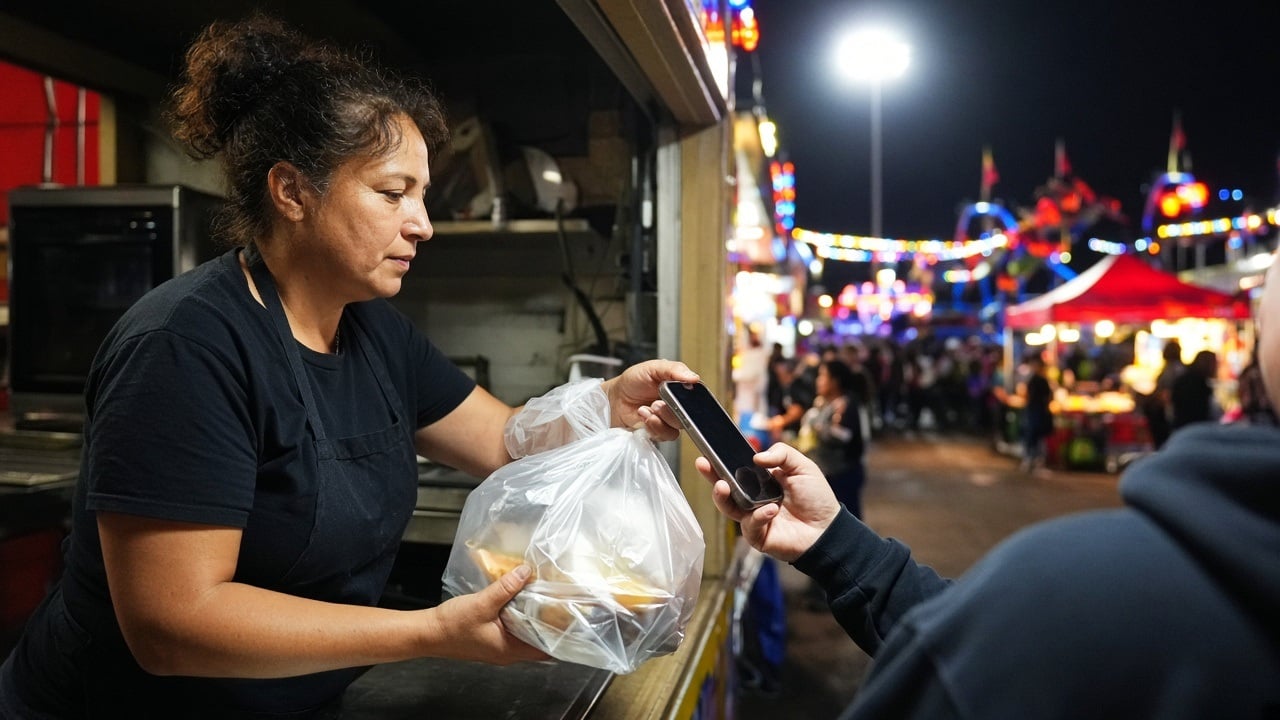
Verify the order without broadcasting the guest’s identity
Use an order identifier and a simple confirmation step that match the system’s capabilities. Staff should know how to handle duplicate names, a partially collected family order, and a guest who cannot display the original confirmation. Do not announce full contact details across the food court or display information that other guests do not need to see.
The FTC’s personal-information guide recommends knowing what information a business holds, limiting collection, and protecting what it keeps. Apply that discipline to order exports, pickup screens, and handwritten backup notes. A meal handoff rarely requires a copy of a guest’s identification. Ask what is genuinely needed to fulfill and resolve the order, then set access and retention rules around that purpose. Operational convenience is not a reason to collect everything a platform happens to offer.
Treat wristband entitlements as a separate promise
A meal package or hospitality wristband can complicate digital pickup if nobody defines what it includes. Write down the eligible menu items, redemption period, participating stands, allowed substitutions, and procedure for a failed scan. Tell vendors how a redemption is recognized and reconciled without forcing the guest to negotiate the package at every counter.
A wristband is not proof that an order has already been prepared, and an order confirmation is not automatically proof that an entitlement remains unused. Keep those steps distinct. Test a family collecting several meals, a guest returning for an omitted item, and an entitlement used at the wrong location. These are illustrative scenarios, not reports of fraud. The purpose is to prevent ordinary confusion while preserving a clear record of what the vendor actually delivered and what the package promised.
Keep a workable route for people without phones
Not every guest has a charged smartphone, a usable connection, or the ability to navigate a small screen. Preserve an in-person ordering and assistance route that does not turn those visitors into second-class customers. Identify where help is available and how the same essential menu and pickup information can be communicated through another method.
The Department of Justice’s effective-communication guidance explains that covered entities must communicate effectively with people who have communication disabilities. The appropriate aid depends on the situation and the person’s communication needs. A QR code alone does not answer that obligation. Train staff to offer assistance respectfully, without requiring a guest to disclose personal medical details to the entire line. Include simple backup materials and a supervisor contact so the alternative remains usable when the fair is busiest.
Plan for connectivity loss before selling convenience
Test the system on the grounds, not only in an office. Check the service location, pickup area, and kitchen during a representative operating period. Confirm what staff can see if the connection drops and whether accepted orders remain available. Define when new orders stop rather than allowing an unseen backlog to grow.
Use a written outage procedure: preserve the record of accepted orders, tell waiting guests what staff know, identify the person handling adjustments, and avoid asking a guest to pay again merely because a confirmation cannot be retrieved. Keep any temporary paper record limited and secure. A backup process should not expose full payment details or account credentials. After service resumes, reconcile the temporary record with the restored system so one meal does not become two charges, two redemptions, or an unresolved complaint.
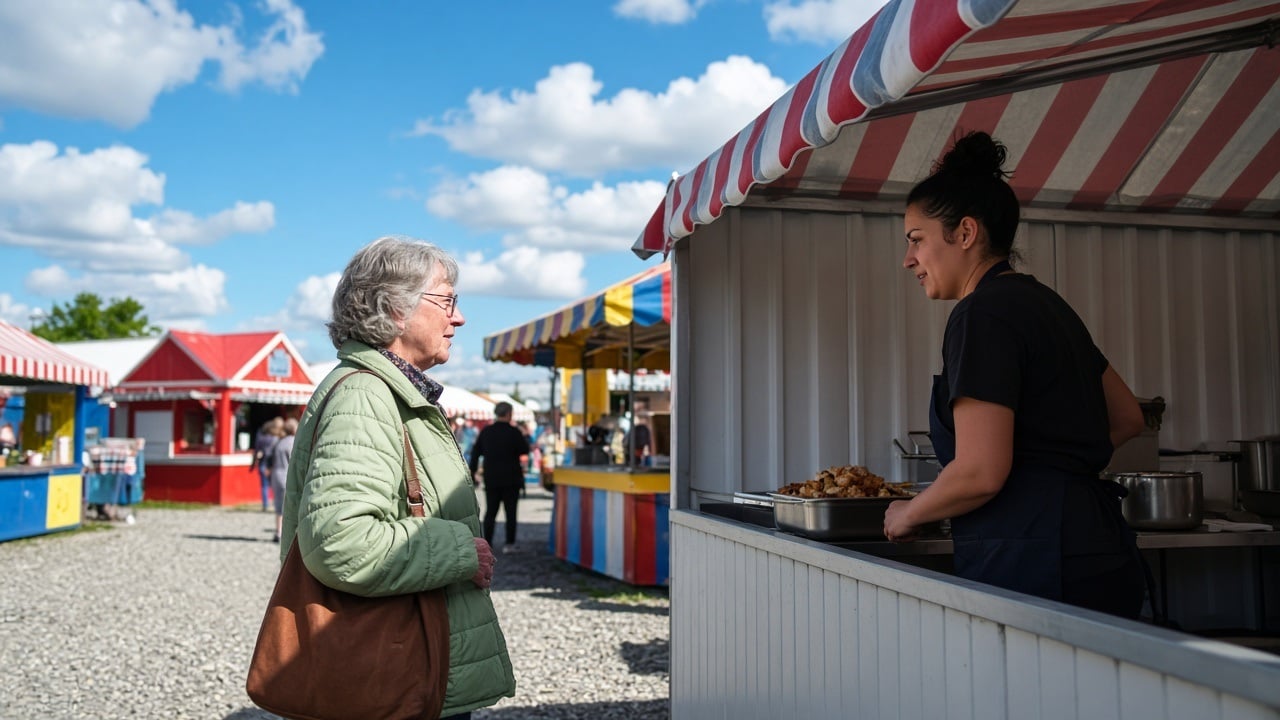
Protect food quality while guests find the counter
A digital order still creates a food-handling responsibility. Agree with the local environmental health authority on the approved process for preparation, holding, pickup, and uncollected meals. Do not treat a sealed bag as a substitute for temperature control. Staff should know which items may wait under the approved procedure and when a meal must be remade or discarded.
Use the 2022 FDA Food Code to frame questions about safe holding and contamination prevention, while following the requirements adopted for the event. Avoid inventing one universal pickup timeout for every menu. A cold dessert, a hot entrée, and a packaged snack have different handling needs. Design the menu and pickup promise around those differences. Good digital operations protect the meal as well as the transaction; a fast notification is not useful if the food is no longer suitable to serve.
Coordinate pickup with the larger grounds plan
Pickup crowds are part of pedestrian management. They should not collect beside a restricted vehicle lane, block accessible circulation, or interfere with an emergency route. Bring the pickup layout into the fair’s broader site review, including security, operations, and accessibility staff. Observe the area after dark, when a small directional cue may be harder to see.
The National Weather Service’s Event Ready guidance also reminds outdoor organizers to plan for changing conditions and assign monitoring responsibilities. Apply that coordination to ordering: who pauses service during a weather interruption, how are accepted orders handled, and where do guests receive instructions? The digital channel should not keep inviting customers into an area that the grounds team has closed. Connect the order-status process to the same operational decisions that govern the physical food court.
Pilot digital ordering at county fairs before expanding the program
Start with a controlled test at a willing stand and a menu suited to its production setup. Define the test questions in advance: whether pickup is easy to find, whether accepted orders are visible to staff, whether the alternative ordering route works, and whether guests receive accurate updates. Record delays by stage instead of blaming every problem on the kitchen.
Review the pilot with the vendor and frontline staff. A long pickup wait might reflect unclear readiness notifications rather than slow cooking. A crowd at the shelf might indicate a poor verification process rather than too little space. Use observation to identify the actual bottleneck. Do not publish promised percentage improvements without evidence. The value of a pilot is the opportunity to revise the operating plan before multiplying the same weaknesses across the grounds and creating a larger problem to untangle.
Measure completed meals, not just accepted orders
A useful operating review includes order completion, adjustment handling, pickup confusion, accessibility issues, and the vendor’s ability to manage demand. Decide what records are necessary and aggregate results where possible. Avoid retaining personal guest information merely to create a more detailed dashboard. The board needs evidence of service performance, not a marketing list disguised as an operations report.
Assign an owner for each corrective action and give vendors a clear path to report problems before they become public disputes. Digital ordering works best when it strengthens the existing food-service operation rather than becoming a separate promise nobody on the grounds owns. Before expanding, make sure the kitchen, pickup attendant, guest-service team, and fair manager can describe the same process. Bring those observations into the next vendor briefing, with one clear owner for every unresolved issue. If those descriptions conflict, improve the handoff first and add more ordering channels later.
Talk to FairFirst Before Your Next Fair
Professional concession management should connect the policy on paper with the decisions made on the grounds. FairFirst can help your team define responsibilities, coordinate vendors, and build practical operating procedures around your fair’s needs. Schedule a consultation with FairFirst to review your food-service operation and identify the next steps.
Start the conversation about your next fair.


