


A fair can celebrate agriculture in its barns and barely mention it where guests eat. That disconnect is not solved by placing an animal next to a food booth. It is solved by giving visitors an accurate, engaging way to understand the crops, skills, and people behind food. Fair agricultural education concessions can make that connection where guests already gather.
As summer programming approaches, the food court offers a useful connection point. A supervised crop demonstration, a verified ingredient story, or a youth-led educational activity can extend the fair’s agricultural mission without turning concessions into an unplanned classroom.
The examples here are proposed planning ideas, not claims about programs already operating at a named fair. Professional concessions coordination can help align educators, vendors, site planners, and fair leadership. The goal is meaningful learning with clear responsibilities, not a decorative agricultural label or an unsupported promise of higher sales.
Start with one thing a visitor should learn
Choose a specific question: how a grain becomes an ingredient, what part of a plant is eaten, or how a farmer makes a production decision. A narrow learning objective gives the activity more substance than a general message that agriculture matters.
Ask an appropriate educator to review the content and method. A vendor may understand its product well without being the right person to design an age-appropriate learning activity. Define where subject expertise, teaching responsibility, and commercial promotion begin and end.
Keep the experience short enough to fit a fair visit without claiming every guest will participate. Provide an obvious way to engage and an equally clear way to continue walking. Education should invite curiosity rather than obstruct the food-service experience.
Partner with the educational program, not just its logo
UC’s 2018 California 4-H Community Club Leader Handbook describes youth-adult partnerships and experiential learning. The emphasis is on meaningful participation, reflection, and application, not using young people as background decoration.
Contact the appropriate county program staff or school agricultural educator to explore a suitable partnership. For a proposed FFA activity, work through the relevant school and chapter advisers. Do not announce an organizational relationship before the people authorized to approve it have agreed.
Obtain permission for names, marks, and program descriptions as required. Participation by an individual member does not automatically establish endorsement by the whole organization. Let the educational partner define the conditions under which its identity may be used.
Give youth an authentic educational role
Invite young participants to help choose the question, develop the demonstration, and explain what they learned, under appropriate supervision. Do not write a complete sales script and describe repeating it as youth leadership.
The 4-H handbook distinguishes meaningful youth-adult partnership from arrangements in which adults dominate or leave youth unsupported. Apply that principle by defining real responsibilities and providing preparation, feedback, and qualified adult oversight.
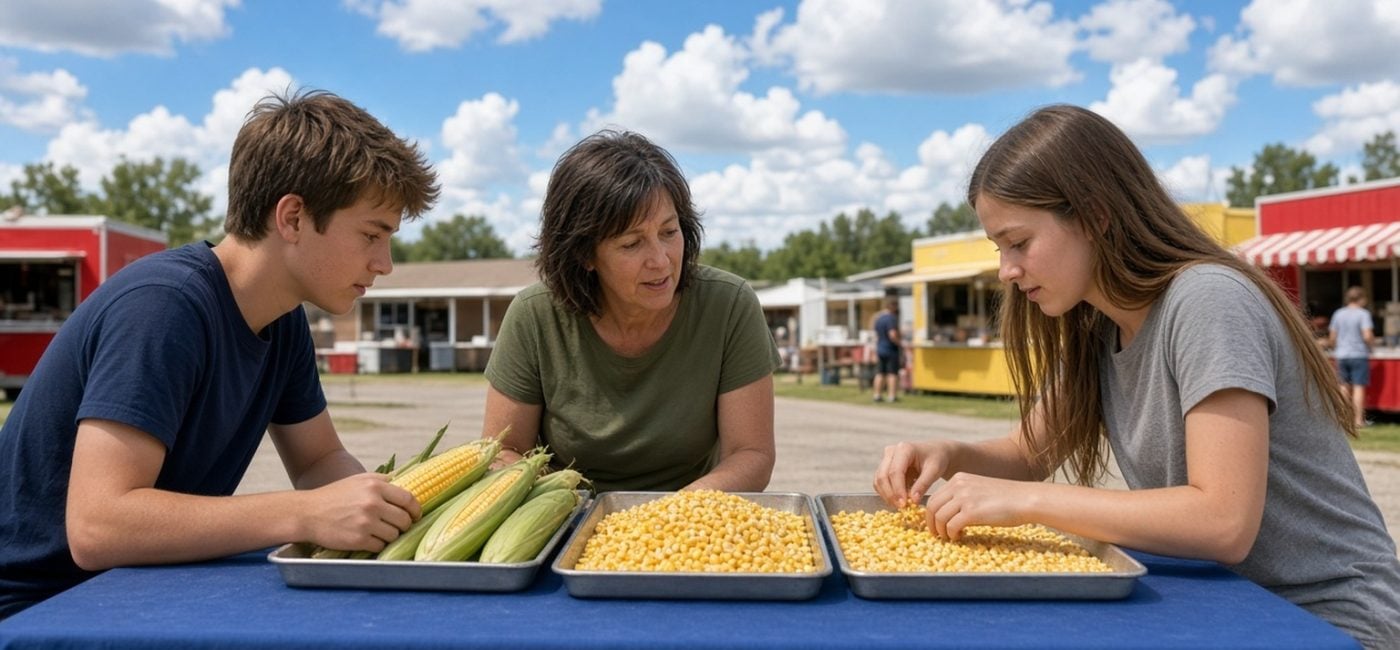
For example, a clearly hypothetical crop-sample activity might ask visitors to match a whole plant part with a familiar ingredient. Youth could help design the comparison and explain it. Adults would remain responsible for supervision, approved materials, and the operating boundaries of the activity.
Use existing educational foundations
UC ANR’s 2018 4-H Food and Nutrition Project sheet illustrates a structured project approach with activities that develop over different experience levels. It offers a better planning starting point than inventing a demonstration solely because it photographs well.
Select the elements appropriate to the participants, setting, and learning objective with the educational partner. A project resource is not automatic permission to reproduce every activity at a crowded event or to serve food without applicable approvals.
Make the distinction between an educational display and a food-sampling operation explicit. If tasting is proposed, obtain the necessary review and permissions for the actual activity. A learning objective does not remove the requirements that apply to handling or serving food.
Keep animal contact and food areas separate
The headline’s calf is a reminder to connect ideas, not physically combine incompatible activities. The CDC’s April 2024 animal-exhibitor guidance recommends separating dining and animal areas and providing handwashing at animal-area exits.
The 2023 compendium on animals in public settings provides more detailed recommendations for venue operators, exhibitors, and public-health partners. Have the relevant specialists review the site arrangement rather than inventing a universal separation distance.
Guests can learn about livestock and later learn about food production without animals entering the concession environment. Use clear transitions, appropriate signage, and approved handwashing provision. Do not encourage visitors to carry food or drinks into animal-contact areas for a promotional photograph.
Tell an ingredient story you can verify
A crop display can explain how a food is produced without claiming the stand’s actual ingredients came from a particular farm. Keep that distinction clear. A demonstration ear of corn does not prove the origin of every corn ingredient sold nearby.
California’s 2024 enacted text of Civil Code section 1770 includes prohibitions on deceptive geographic-origin and product representations. Have advisers review sourcing claims and retain appropriate support for the wording used.
If the vendor wants to name a producer, confirm the actual product, period, permission, and evidence. A precise statement about one verified ingredient is stronger than a broad claim that the entire menu is local when the supply does not support it.
Explain agricultural choices without oversimplifying them
Work with educators to distinguish an observation from a universal rule. A sample crop or one producer’s method does not represent every farm. Avoid turning a complex production question into an unsupported claim that one food or farming practice is always better.
Give participants a process for questions beyond their knowledge. It is appropriate to say that the educator will help find an answer. Young presenters should not feel obliged to improvise scientific or regulatory explanations to keep a conversation moving.
Review educational copy separately from promotional copy. The vendor can be recognized for participation without the lesson becoming an advertisement disguised as instruction. Agree in advance how products, sponsors, and agricultural partners will be described.
Plan supervision before inviting participation
The 4-H handbook addresses volunteer roles and youth protection. Work with program staff to apply the current policies governing the proposed activity, including approved adults, supervision, transportation, emergency contacts, and any necessary permissions.
Do not treat a parent’s presence somewhere on the grounds as a complete supervision plan. Identify who is responsible at the activity and how participants are checked in, supported, and released. Keep personal and emergency information in the appropriate protected process.
Youth education is not a workaround for employment rules or a source of free concession staffing. If a proposed role involves actual work for a business, have qualified advisers determine the applicable requirements. Keep that question separate from educational participation.
Give fair agricultural education concessions a suitable physical home
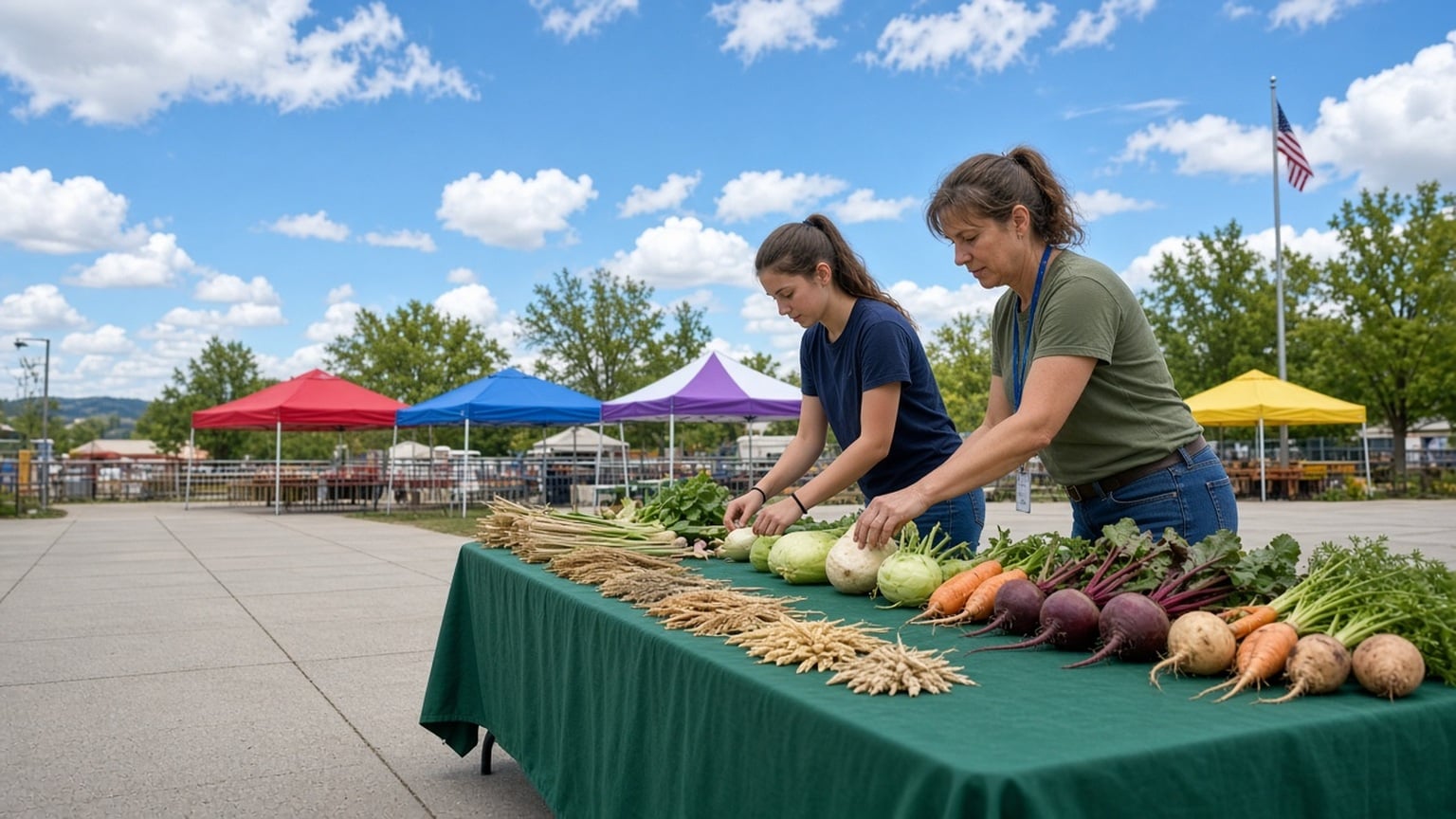
Review the space with facilities, accessibility, safety, and educational leads. The table needs usable approach space, suitable surfaces, appropriate lighting, and room for people to pause without blocking circulation or service access.
Justice Department effective-communication guidance explains ADA obligations within its scope. Plan ways for visitors with different communication needs to participate meaningfully. An educational display should not depend solely on tiny print or a fast spoken explanation.
Choose materials suitable for the setting and approved activity. Identify who handles setup, cleaning, storage, and removal. If the materials are educational samples rather than food for consumption, keep that distinction clear to presenters and visitors.
Coordinate the vendor’s involvement
Ask what the vendor can contribute without disrupting its approved operation: product knowledge, a verified ingredient story, or participation in a scheduled discussion. Do not assume the cook can leave active service to lead an unscheduled demonstration.
Define the commercial boundaries in writing. Is the activity purely educational, or does it include a promotion? Who approves statements about the stand? What happens if the ingredient or menu changes? Clear answers protect the educational partner from accidentally repeating outdated marketing.
Give one coordinator responsibility for connecting the vendor and educator. Neither should have to navigate several departments to resolve a simple question. Professional management adds value by making cooperation practical, not by taking ownership of the educational partner’s expertise.
Build reflection into a short encounter
Experiential learning includes more than doing an activity. Give visitors a simple question that helps connect the experience to a familiar meal or decision. Ask what they noticed or what surprised them rather than only delivering a memorized speech.
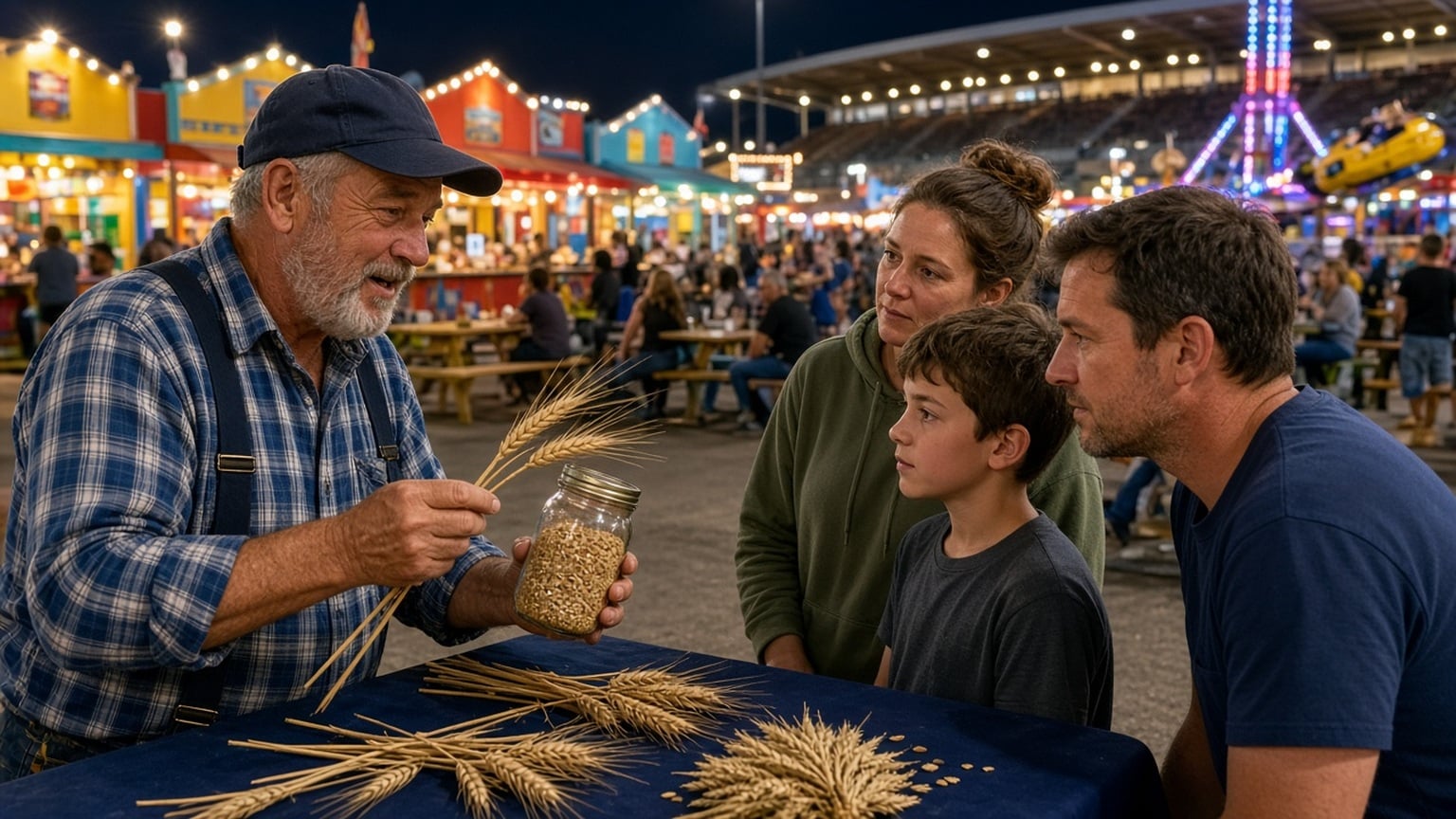
A hypothetical grain display could invite visitors to compare whole grain with a processed ingredient and describe the change. The educator should verify the explanation and select materials appropriate for the age group and setting.
Offer a credible next step through the educational partner where appropriate. Avoid gathering unnecessary personal information from children or turning participation into a mandatory marketing signup. Curiosity should not require a sales lead.
Prepare for a participant or material change
Identify an approved alternative if a presenter becomes unavailable or a demonstration material cannot be used. The replacement should preserve the learning objective and the program’s safeguards. Do not move an unfamiliar volunteer into a youth-supervision role simply because the table is already scheduled.
Tell guest-facing staff how to communicate a cancellation or revised activity accurately. A small, well-supported demonstration is preferable to an impressive promise that requires unsafe improvisation. Keep the educational partner involved in any substantive change to its planned contribution.
Let participants help improve the experience
After the activity, ask young presenters which explanations worked and where visitors seemed confused. Give them an appropriate role in revising the next version. Reflection is more meaningful when their observations can affect the plan rather than disappear into an adult-only report.
Keep feedback respectful and focused on the activity. A young person’s first public explanation does not need to sound like a professional marketing presentation. Support accurate content, genuine curiosity, and a clear process for finding answers together. That is a stronger educational result than a perfectly rehearsed slogan.
Evaluate learning without inventing impact
Ask presenters what questions visitors asked and what parts of the activity were difficult to explain. Collect practical observations about access, supervision, materials, and coordination. These details can improve the next version without an elaborate survey.
Do not claim that the activity transformed agricultural literacy, increased concession revenue, or produced future membership unless there is reliable evidence for those outcomes. Participation counts alone do not establish learning or commercial causation.
Share the useful findings with the educational partner and recognize its contribution accurately. The best result is a repeatable relationship in which the fair provides a suitable setting, the educator protects learning quality, and concessions connect the lesson to everyday food.
Talk to FairFirst Before Your Next Fair
Agricultural connections work best when education, food service, and site responsibilities support one another. FairFirst can discuss how to coordinate vendors and educational partners without blurring their roles or overstating the story.
Schedule a FairFirst consultation to connect your food court with the fair’s agricultural mission.
Build a useful learning partnership, not just another photo opportunity.
Sources
- Community Club Leader Handbook — University of California 4-H, 2018
- 4-H Food and Nutrition Project, Publication 8610 — UC ANR, 2018
- Resources for Animal Exhibitors — CDC, April 2024
- Animals in Public Settings Compendium — NASPHV/CDC, 2023
- Civil Code 1770 in Enacted SB 1524 — California Legislature, 2024
- Effective Communication — US Department of Justice, 2020


