


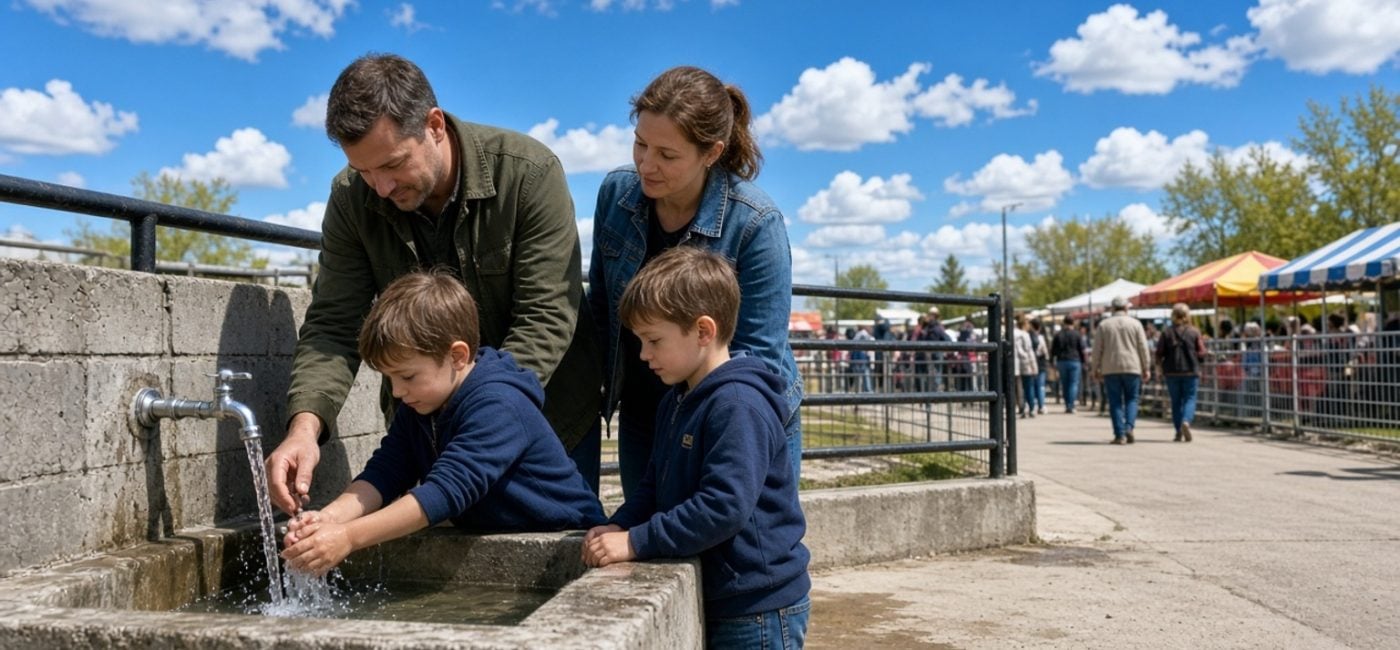
The animal exhibit ends at a gate. The food-safety problem does not. A child can leave a livestock area without touching an animal, grab a snack a minute later, and carry contamination from the exhibit environment to the dining table. A sanitizer bottle near the barn is not a complete handwashing handoff. Fair animal exhibit handwashing works only when the route from the barn to the food is planned as one system.
For fair boards and operators, this is a site-design and service-ownership issue. Livestock, concessions, grounds, and guest services each control part of the route. If no one owns the transition between them, the fair can provide attractive exhibits and good food while leaving a basic protective step inconvenient or easy to miss.
Map the journey from animals to eating
Start where guests actually walk, not where the site plan assumes they walk. Follow families leaving every public animal exit toward food stands, picnic tables, drinking fountains, and restrooms. Note shortcuts, strollers, queues, closed gates, and the routes used after a show releases a crowd.
CDC's guidance for staying healthy at animal exhibits says to wash hands after leaving animal areas even if animals were not touched. It also advises keeping food and drinks away from animal areas. Those recommendations have consequences for the map: the handwashing opportunity should come before the first convenient eating opportunity.
Walk the route at a child's pace and with the needs of guests who use mobility devices in mind. A station beyond gravel, a curb, or a blocked gate may exist on paper but fail in practice. Ask whether a visitor can find it, reach it, and use it without abandoning the route to the food court.
Make soap and running water the default for fair animal exhibit handwashing
A fair should plan for handwashing, not rely on a visitor's personal sanitizer. Visible dirt, exhibit materials, and the range of organisms involved make a practical washing opportunity important. The station needs a usable water supply, soap, a way to dry hands, and a system for wastewater.
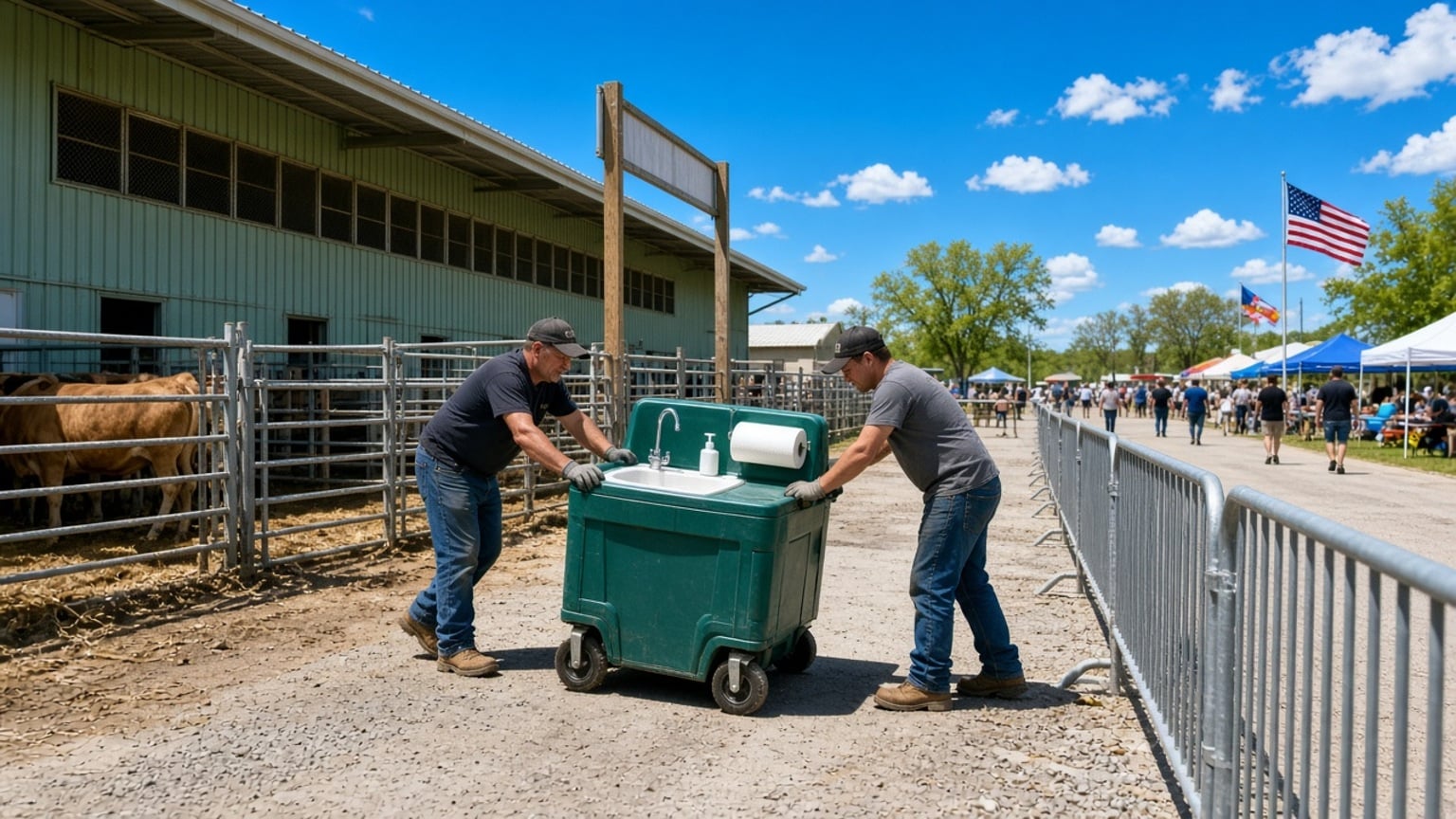
The CDC's handwashing recommendations for public animal settings call for accessible facilities sufficient for anticipated attendance and conveniently located in transition areas. They also address routine cleaning and restocking. That is an operating service, not a one-time rental delivery.
CDC notes that hand sanitizer can be used when soap and water are unavailable, followed by washing as soon as possible. Do not turn that fallback into the planned standard for a busy animal exit. If the fair knows where thousands of guests will leave an exhibit, it can plan a better handoff than hoping each family carries supplies.
Separate food from the animal environment
A convenient snack cart can unintentionally pull eating into a space where the fair is asking guests not to eat. Review vendor locations, roaming sales, picnic furniture, promotional sampling, and beverage service near animal areas. The boundary should be understandable without a guest studying a detailed map.
CDC's resources for animal exhibitors recommend separating dining and animal areas and providing handwashing stations at exits, including facilities children can reach. Use those principles with your environmental-health team to review the layout. They are not a universal distance specification for every barn and food stand.
Coordinate operational routes as well. Animal bedding, cleaning equipment, and livestock service traffic should not casually cross food preparation or dining space. When departments share a corridor, identify the risks and agree on controls before the public arrives. An attractive fence does not solve a conflicting service route behind it.
Assign maintenance to a person and a shift
The most useful question at a handwashing station is who notices when it stops working. A rental vendor may deliver and service the unit on a schedule, but a busy exit can empty soap or towels between visits. Water flow and wastewater capacity can also change during the day.
Assign a named operating role for checks and a backup for each shift. Record what gets checked: water availability, flow, soap, drying supplies, drainage or tank condition, surrounding cleanliness, access, and any damage. The interval should reflect observed use and service capacity, not an arbitrary number copied from another event.
Specify what happens when a station is unavailable. Who closes or redirects the route? Where is the nearest suitable alternative? How is a replacement requested? A radio call that says the barn sink is broken is not enough if three departments think a different team is responding.
Design for families, not just adults
A station that an adult can reach may still be difficult for a small child to use. Controls, basin height, water duration, and the space for an assisting adult all matter. Avoid adding an improvised unstable object as a last-minute height solution. Select appropriate equipment and review accessibility with the relevant specialists.
Put clear instructions where the action happens. Use plain language and useful pictures, and consider the languages your guests actually use. A message at the exhibit entrance explains expectations; a reminder at the exit helps trigger the behavior. Both should point to an obvious washing opportunity.
Think about belongings too. A parent juggling food, a stroller, and several children may skip a station that requires an awkward detour. The better response is to reduce the friction, not merely make the sign more forceful. Watch a few real journeys during opening hours and correct what the plan missed.
Connect concession staff to the boundary
Food teams need to know where the animal areas and public handwashing stations are, even if they do not maintain them. Cashiers and dining attendants are likely to hear questions, see eating near the wrong boundary, or notice a failed station before the designated checker does.
Explain the distinction between public guest handwashing and employee facilities. A public station outside a barn is not automatically an approved substitute for a food worker's required handwashing arrangement. The FDA's 2022 Food Code is a model offered for adoption by jurisdictions; local requirements and permit conditions govern the actual concession operation.
Give staff a simple response: direct guests to the proper public facilities, report failures to the assigned contact, and avoid making medical promises. The employee's job is to support the fair's plan, not to diagnose a guest or debate which animal may have carried a particular organism.
Train every department on the same route
A boundary plan fails if livestock volunteers direct families one way while guest services points them another. Hold a short joint walkthrough with the people who will actually work there. Show the intended exits, washing stations, food boundary, service routes, and the backup arrangement for equipment failure.
OSHA's training recommendations emphasize understandable instruction, role clarity, and opportunities to ask questions. Apply that practical approach to this cross-department assignment. A map emailed to department heads may never reach the evening attendant who needs to act when a station loses water.
Use a brief demonstration instead of only asking whether everyone understands. Have a team member describe what happens when an exit station is blocked or an exhibitor asks to place refreshments beside a pen. Different answers reveal an unresolved decision while there is still time to fix it.
Test the plan during a crowd release
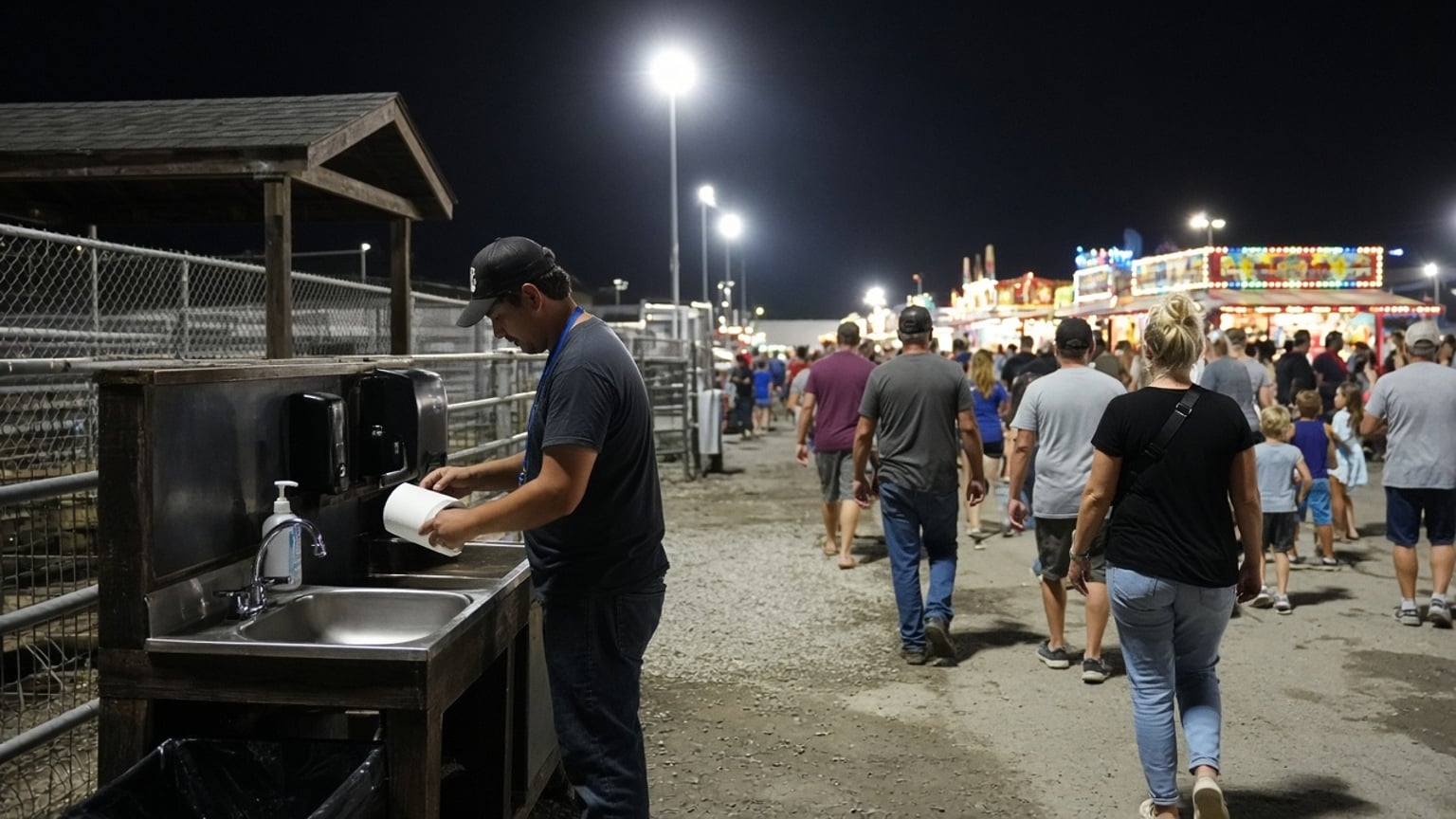
A quiet preopening inspection will not show whether guests can use the facilities after a popular animal demonstration. Observe that transition once the event is operating. Look for queues that block exits, supplies running out, guests bypassing the station, and children unable to complete washing without assistance.
Treat those observations as design feedback. A queue can indicate insufficient capacity, awkward placement, or a temporary maintenance problem. Each needs a different correction. Do not conclude that guests refuse to wash simply because the station was placed behind the flow of traffic and no one notices it.
Include after-dark checks. Lighting, closed gates, temporary displays, and changed staffing can make a route usable by day and confusing at night. If the exhibit remains open, its protective services need to remain functional. The fair's food and livestock schedules should not silently leave a gap between them.
Keep the record practical
The fair does not need an elaborate dashboard to manage this handoff. A current route plan, a station inventory, assigned checks, a failure-response contact, and a brief exception log can provide a useful operating record. Make them accessible to the people who will use them during service.
Log conditions and actions, not assumptions about visitors' health. If a station runs dry, record when it was found, how guests were redirected, who restored it, and when it returned to service. Personal medical information should not be broadcast on an open radio or added casually to a shared maintenance sheet.
After the event, compare the station plan with observed demand. Which exits needed more capacity? Which layouts encouraged bypassing? Were servicing vehicles able to reach the equipment safely? Use those answers in next year's site and rental decisions rather than simply repeating the same equipment order.
Make the safe route the easy route
The livestock-to-lunch transition is successful when guests do not have to solve it themselves. They leave the animal area, encounter a clear and usable washing opportunity, and continue to food and seating in a separate space. Staff understand the boundary and can keep it working throughout the operating day.
That outcome depends on coordination more than on another warning sign. A concession manager can help identify where food placement, guest movement, and departmental responsibilities intersect. The fair's health officials and accessibility specialists should inform the technical requirements; the operating team must then make the approved plan function.
A fair can celebrate agriculture and serve memorable food without treating those goals as separate projects. Protect the connection between them. It is a small part of the guest journey with consequences far beyond the few steps between a barn gate and a lunch line.
# Budget the transition as a shared service
Handwashing support belongs in the fair's operating budget, including equipment, supplies, servicing, staffing, and a practical backup. If it appears only in a rental order, the continuing work can disappear between departments. Agree on the owner before each team assumes another budget will cover it.
Review capacity against the actual operating schedule. A station serving an evening livestock program needs support after daytime crews leave. A temporary exhibit added late in planning may create a new public route that the original service order does not cover.
Treat those changes like other food-program changes: identify the demand, confirm the requirements, assign the resources, and verify the result. The guest should not have to discover a budget gap through an empty soap dispenser.
Review your fair's food-and-animal handoff
Schedule a consultation with FairFirst to examine the concession layout, department handoffs, and support services around your food program. Bring the site plan and the routes guests use between exhibits, dining, and public facilities.
The goal is a coordinated operating plan, not a generic checklist that ignores your grounds. Talk with FairFirst before the next layout is finalized.
Sources
- Tips for Staying Healthy at Animal Exhibits — Centers for Disease Control and Prevention
- Resources for Animal Exhibitors — Centers for Disease Control and Prevention
- Hand-Washing Recommendations for Animals in Public Settings — CDC, 2007
- Food Code 2022 and December 2024 Supplement — U.S. Food and Drug Administration
- Recommended Practices: Education and Training — Occupational Safety and Health Administration


