

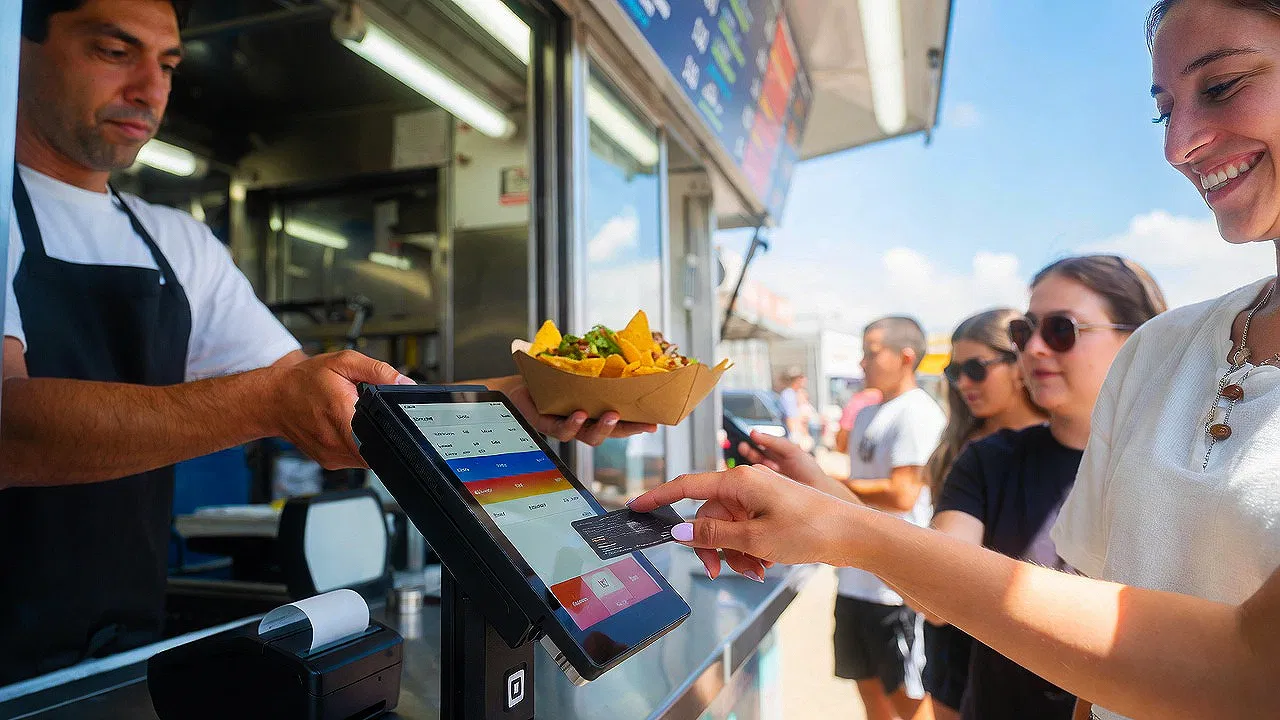



The drawer opens, the line moves, and the sale never reaches the register. By closing time, the food stand looks successful. The fair’s commission report tells a different story. Nobody can explain whether the gap came from training, an equipment problem, a refund, or something deliberate. That is the real no-sale nightmare: not a button, but a transaction without a trustworthy trail. Strong fair cash controls are what restore that trail.
For fair boards planning the rest of 2026, cashless payments can look like the obvious escape. They are not a substitute for financial controls. A card terminal can record payments while leaving the fair unable to explain gross sales, deductions, or its commission. The stronger goal is a complete point-of-sale and reconciliation system, whether guests pay with cash, cards, or both.
Stop treating the payment method as the control
The Federal Reserve’s November 2024 payments study release reported 153.3 billion general-purpose card transactions for 2022. That establishes the importance of cards nationally; it does not establish the payment mix at your fair or prove that California fairs collectively abandoned cash in 2026. The headline describes an operational choice, not a documented statewide conversion.
A useful board question is therefore not simply whether the fair should go cashless. Ask whether every sale can be traced from the menu item through the payment, daily report, commission calculation, and receipt by the fair. A digital transaction that disappears into an inaccessible account is not much help to the settlement team.
Cash introduces physical custody and counting risks. Card acceptance introduces processor settlement timing, adjustments, and outages. Both require named responsibilities. Neither should depend on one tired person remembering what happened during a Saturday dinner rush.
What California’s fair guidance actually emphasizes
The CDFA Fairs and Expositions Accounting Procedures Manual includes a dedicated carnival and concessionaire audit program. Its approach connects written procedures, register access, opening readings, daily reporting, and sales verification. These are much more durable safeguards than telling employees never to press one particular key.
The manual distinguishes district agricultural associations from county and nonprofit fairs. DAAs are directed to adhere strictly to its guidelines, while the manual presents best practices and internal-control guidance for other fair structures. A fair should confirm its own governing requirements rather than assume every provision applies identically to every organization.
Build the operating procedure around the questions an independent reviewer will ask. Who established the opening balance? Who could change prices? Who approved refunds? Who reviewed the day’s exceptions? Who confirmed the fair received the amount owed? Put those answers in the vendor agreement and staff instructions before the first transaction.
The no-sale key is a symptom worth investigating
An opened drawer does not by itself establish theft. Staff may need change, a drawer may be serviced, or a legitimate correction may be underway. The problem is allowing those events to occur without a reason, an identifiable user, and supervisory review. Accusing a vendor before checking the evidence damages cooperation without improving control.
Use individual staff access where practical. Limit refund and price-change permissions. Require a reason for manual adjustments, and review unusual patterns by shift and stand. A pattern should trigger a documented conversation and supporting-record request, not an automatic conclusion about intent.

Design fair cash controls around one daily close for every stand
Each concession should close on a consistent business-day definition. Midnight on a processor statement may not match the fair’s operating day. A late-night transaction should not fall into a different reporting period simply because nobody agreed on the cutoff. Document the cutoff and preserve the original transaction timestamps.
Start with recorded item sales. Show authorized discounts, refunds, sales tax, and any other contractually permitted adjustments separately. Then reconcile tender totals. For cash, compare expected receipts with counted funds and documented transfers. For cards, distinguish recorded sales from funds actually deposited after fees, refunds, and settlement delays.
Do not net processing expenses against the fair’s commission base unless the agreement expressly allows that treatment. A bank deposit is not automatically gross revenue, and a register total is not automatically money received. Professional reconciliation explains the bridge between those numbers instead of choosing whichever total looks convenient.
A daily close packet should contain the stand identifier, report period, source reports, cash-transfer record, adjustment support, calculation, preparer’s name, and reviewer approval. Include an exception line even when the answer is none. Empty spaces are invitations for later disagreements about what somebody intended.
Audit lessons are not abstract
The California State Auditor’s 2019 investigation of a district agricultural association identified serious internal-control and documentation failures, including credit-card purchases without supporting receipts and inadequate segregation of accounting duties. Those findings concerned the association’s expenditures and management, not proof of concession-register theft. The transferable lesson is that approval, supporting evidence, and independent review cannot be optional.
A board should resist the argument that a familiar manager makes verification unnecessary. Good controls protect honest staff by showing who did what. If one person collects funds, changes the sales record, prepares the commission calculation, and approves the reconciliation, the board has created an avoidable blind spot.
For a smaller fair, independent review does not require inventing a large department. Assign a second qualified person to examine the supporting reports and investigate exceptions. Document any compensating review where staffing prevents ideal separation. The goal is credible challenge, not a ceremonial signature after everything has been packed away.
Cash acceptance needs a local legal check
Before printing cashless signs, check the rules where the fair operates. San Francisco’s 2019 cash-acceptance ordinance generally requires covered brick-and-mortar businesses to accept cash for specified purchases. That is a local example, not a statewide mandate and not a conclusion that every temporary fair stand is covered.
Have counsel confirm the ordinance’s definitions, exemptions, and application to the particular venue and concessions. Ask about any newer applicable state or local requirements before implementation. A program that works at one fairground may require changes at another. Payment policy belongs in compliance planning, not just the technology order.
Accessibility matters operationally too. The Federal Reserve Bank of San Francisco’s discussion of cashless businesses recognizes both cash-handling advantages and the risk of excluding consumers who rely on cash. Evaluate the guest experience, staffing, and accountability for any alternative payment arrangement rather than assuming every guest has a working card.

Test the ugly scenarios before opening
A fair-ready system must survive more than a quiet demonstration. Test a dropped connection, a failed terminal, a mistaken refund, a shift change, and a guest disputing a charge. Establish who can authorize a fallback process and how transactions captured during an interruption will enter the permanent record.
Do not allow an outage to become permission to run undocumented sales. If an approved manual procedure is needed, use controlled records and reconcile them promptly. Avoid double-counting when delayed transactions synchronize. Record the interruption’s start and end, the stands affected, and the person who verified the recovery.
Also test report access from the fair’s side. If the only employee who knows the password leaves, can the authorized finance team retrieve complete reports? Specify data access and export responsibilities in the agreement. Financial oversight should not stop when a vendor changes personnel or removes equipment.
Turn exception reporting into a management habit
Choose a short daily exception review rather than a giant unread spreadsheet. Highlight missing stand reports, unmatched deposits, unexplained adjustments, and overdue commission payments. Assign each item an owner and deadline. Carry unresolved items forward until evidence supports closure, with a clear escalation route for material discrepancies.
Use reasonable comparisons without pretending they prove a loss. A stand’s average transaction value or refund pattern may suggest a question, but weather, menu mix, operating hours, and equipment problems can change results. Ask for explanations supported by records. Investigate the difference between an anomaly and an actual shortage.
The CDFA fairtime and interim rental agreement packet provides a useful reference for contractual sales-monitoring and audit rights. Align access provisions, reporting expectations, and remedies with your fair’s approved agreement. A right to inspect is useful only when somebody is scheduled to exercise it.
Give the board a decision-ready summary
Directors should not need terminal-level expertise to understand the close. Present reported concession sales, the agreed commission calculation, amounts collected, and amounts still outstanding in distinct columns. Explain timing differences separately from unresolved discrepancies. That structure keeps a processor delay from being described as missing revenue and prevents a genuine shortage from hiding inside a vague reconciliation adjustment.
Set an internal reporting cadence before the event. The finance lead should know when stand reports arrive, when reviewers finish, and when management receives the summary. If the schedule is missed, record that fact. A control performed several weeks late may help reconstruct the account, but it cannot resolve a same-night operating problem while the people and equipment remain on site.
Preserve original exports in a controlled folder rather than overwriting yesterday’s file with today’s corrected version. Retain the correction and its explanation alongside the original. Restrict editing rights and identify the approved final calculation. The point is not to multiply paperwork; it is to let a reviewer follow the sequence without guessing which spreadsheet version the fair actually relied upon.
Buy a managed process, not another dashboard
When reviewing a concessions-management proposal, ask for a sample daily close, a sample exception report, and a demonstration of the settlement calculation. Require clear ownership of cash custody, system configuration, staff training, and reporting. A beautiful interface cannot fix an undefined commission base or a missing reviewer.
Evaluate the workload honestly. Someone must verify menus, train stand teams, inspect reports during operating hours, investigate differences, and prepare a board-ready closeout. Those jobs compete with emergencies elsewhere on the grounds. A dedicated concessions-management team gives the work a home and makes accountability easier to enforce.
For the board, success is not a claim that losses are impossible. It is the ability to understand reported revenue, identify unresolved exceptions, and verify collection without rebuilding the event from scattered messages. That is how payment modernization becomes financial control rather than a new way to hide old uncertainty.
Talk to FairFirst Before Your Next Fair
If your next payment-policy discussion begins and ends with cashless signs, widen the scope. Review your contracts, daily close procedures, fallback plan, and settlement evidence together. FairFirst can discuss a coordinated concessions-management approach that fits the operating pressure of a county fair.
Build a clearer daily close before your next opening day.
Sources
- Accounting Procedures Manual — CDFA Fairs and Expositions, 2009
- Cards and Alternative Payments — Federal Reserve Board, 2024
- Report I2019-4: Investigative Results — California State Auditor, 2019
- Cash Acceptance Ordinance, File 190164 — City and County of San Francisco, 2019
- New Fed Paper Explores Impacts of Cashless Businesses — Federal Reserve Bank of San Francisco, 2019
- Fairtime and Interim Event Rental Agreement Packet — CDFA, 2019


