



Every worker signed the training sheet. Then the first shift begins, and three people follow three different cleaning procedures. One learned from a supervisor, one watched a coworker, and one could not understand the orientation well enough to ask a question. The paperwork is complete. The training is not. Fair concession crew training has to produce understanding, not just signatures.
For a fair concession program, the challenge is not delivering more information. It is making critical instructions understandable and usable across languages, literacy levels, experience, and changing shifts. Before late-May activity accelerates, operators should test whether workers can perform the job—not merely whether their names appear on a roster.
Begin with what workers must actually do
A broad orientation can mention everything and teach very little. Start with the tasks that matter in the stand: handwashing, temperature checks, chemical handling, order handoffs, emergency reporting, equipment limits, and the response when something is wrong. Identify which employee performs each task and who verifies it.
OSHA's education and training recommendations support understandable instruction, role clarity, and worksite demonstrations. They also emphasize giving workers opportunities to ask questions and report concerns. Those principles are useful in a temporary workforce because background knowledge can vary widely even among people with the same job title.
Do not assume that a returning worker knows the current stand. Equipment, menus, cleaning products, and emergency contacts may have changed. Ask what experience the person actually has, then train the differences. Repeating an identical presentation is less useful than addressing the specific decisions the worker will face today.
Find the language need without making assumptions
Ask employees which language they use most comfortably for instruction and whether they prefer demonstrations, written material, or both. Nationality, appearance, and conversational English do not tell a supervisor whether someone understands a technical warning or an unfamiliar procedure.
For hazardous-chemical training, OSHA's interpretation on comprehensible instruction explains that workers who do not understand verbal English must receive information and training in a language they comprehend. Do not reduce that requirement to handing out an English sheet and collecting signatures. Confirm the applicable requirements with the employer's safety program and advisers.
Plan qualified language support before the shift. A bilingual coworker can be helpful, but casual translation does not guarantee technical accuracy or adequate coverage. Do not place sensitive employment conversations or safety-critical interpretation on a young family member who happens to be nearby.
Demonstrate the task at the actual station
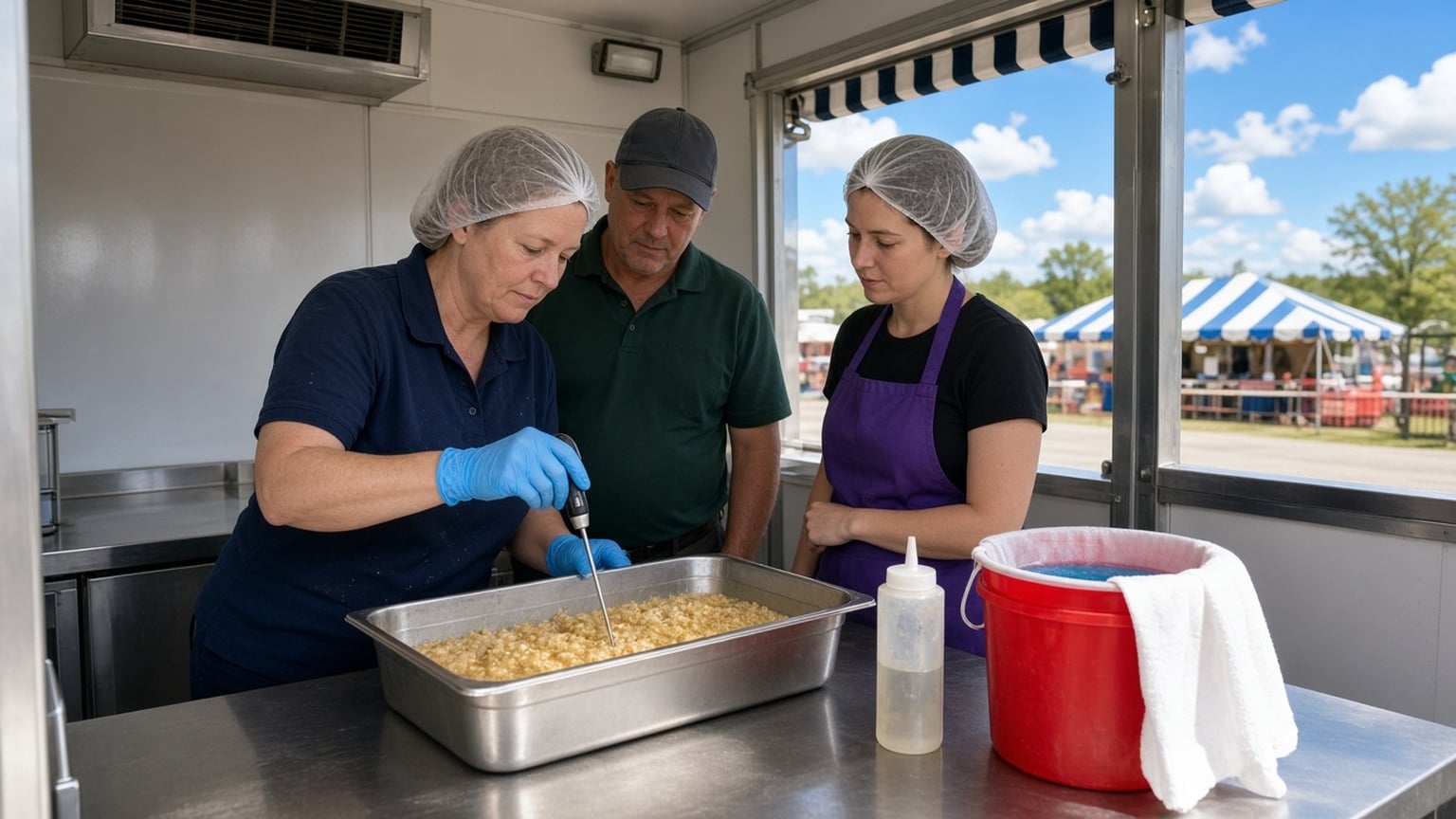
A photograph in a slide deck cannot show every practical obstacle. Train at the sink, counter, storage area, or machine whenever possible and safe. Show the correct sequence, explain why it matters, and point out the conditions that should stop the task.
For food procedures, use the operator's approved requirements. The FDA's 2022 Food Code is a model offered for adoption by jurisdictions, not a substitute for local rules or the stand's permit conditions. Training should reflect the operation that was approved, including equipment and menu-specific requirements.
Demonstrate the awkward parts too. Where is the thermometer when another employee is using it? What happens when towels are missing? Who answers when a product arrives without the expected information? Those are the moments when workers otherwise improvise around an instruction that looked simple during orientation.
Use teach-back without making it a test of pride
After demonstrating, ask the worker to show the task and describe the next step if a problem occurs. Explain that this checks the instruction, not the person's intelligence. If the demonstration fails, identify what was unclear and teach it again using a better method.
A useful prompt is practical: show me how you would check this delivery, or tell me whom you would call if this sink stopped working. Questions like do you understand invite a polite yes even when the worker is uncertain. The difference becomes visible only after the shift starts.
Give private, respectful feedback where possible. Public embarrassment can discourage future questions. The objective is a worker who can recognize uncertainty and seek help, not one who has learned to hide confusion until a supervisor walks away.
Make chemical instructions product-specific
Cleaning products are a good place to expose weak training. A worker may recognize a colored bottle but not know its contents, dilution, contact time, protective equipment, or storage restrictions. Bottle color alone is not a reliable safety system, especially when suppliers or containers change.
OSHA's food-service chemical guidance addresses effective training, labels, safety data sheets, and protective measures for hazardous products. It notes that required English information may be supplemented with other languages. Supplemental instructions should support the official hazard information, not replace or contradict it.
Have the worker locate the relevant information and demonstrate the approved procedure. Do not ask an inexperienced person to infer a chemical mixture from memory. If the correct product, measuring equipment, or protective equipment is unavailable, the task needs a controlled pause and a supervisor—not a guessed substitute.
Include illness reporting in plain language
An employee can understand cooking instructions and still miss what must be reported before coming to work. Explain the illness policy with clear examples, the named contact, and the timing of notification. Make sure the employee can reach that person outside the office's normal hours.
CDC's norovirus guidance for food workers recommends staying home while sick and for at least forty-eight hours after symptoms stop. Distinguish that prevention advice from the specific restriction, exclusion, and return requirements in local rules and the operator's reviewed policy. Workers should not have to interpret those differences alone.
Avoid burying this information in a long handbook. Ask the employee what they would do after vomiting overnight before an early shift. If the answer is find someone to cover or come in and ask, the reporting process needs clarification before the event relies on it.
Train supervisors to respond well
Workers notice what happens after someone asks a question. If the supervisor answers with impatience or treats reporting as disloyalty, the formal training message loses credibility. Supervisors need instruction on listening, clarifying, correcting unsafe conditions, and involving the right specialist when the answer is uncertain.
Give leads a reviewed decision aid for common exceptions. It should identify the immediate protective action, the contact, and the limits of the supervisor's authority. A lead should know the difference between authorizing a routine restock and deciding that questionable food is safe to serve.
Schedule enough time for coaching during the first shift. A supervisor simultaneously solving delivery problems, covering a register, and training four new workers may not be able to observe any of them properly. Training capacity belongs in the labor plan, not outside it as an unpaid assumption.
Carry the instruction across shifts
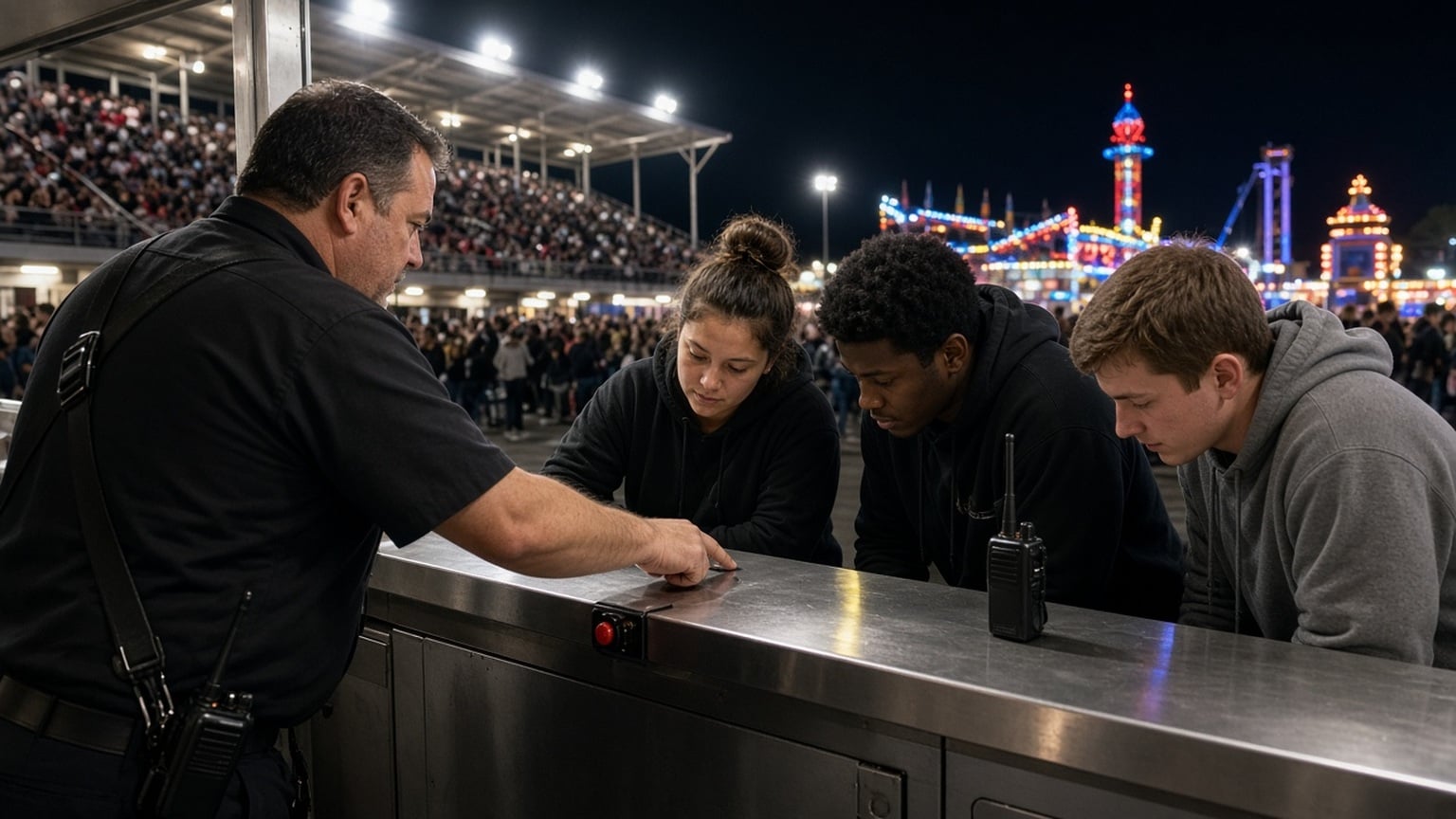
A fair's day crew and night crew may never meet. If knowledge travels only through a single supervisor, changes can stop at the shift boundary. Use a concise handoff record showing equipment issues, temporary procedures, product changes, unresolved questions, and who approved the current arrangement.
Brief the incoming lead and confirm that relevant workers receive the information in a usable form. A note saying new sanitizer is not enough. The team needs to know the product, the approved use, the changed instructions, and where the label and safety information can be found.
Do not treat a group message as proof of comprehension. It can support communication, but the receiver still needs access, language understanding, and an opportunity to ask questions. For a material task change, use a direct briefing and, where appropriate, another demonstration before work resumes.
Keep visual aids short and accurate
A good station aid answers a narrow question at the point of use. It might show a handwashing sequence, the contact for an equipment failure, or the location of an emergency control. It should not become a wall of tiny text that workers ignore because it cannot be read during service.
Use clear images and plain wording, with reviewed translations where needed. Test the aid with the people who will use it. Symbols that seem obvious to a designer may mean something different to a worker who has not seen the system before.
Give each aid an owner and revision process. Remove outdated copies when the procedure changes. A correct new instruction beside an old conflicting instruction is not a training success; it shifts the decision back to the worker at the exact moment the aid was supposed to help.
Record competence, not just attendance
Keep a practical record of the topic, date, trainer, language or support provided, and the task demonstrated. Note any follow-up needed. The record should be proportionate to the work and employer requirements, with appropriate access for personal information. It should help a supervisor know what the employee can do.
Measure training through observation and near-miss reports as well as signatures. If the same mistake appears across several stands, look for a shared instruction problem, unsuitable equipment, or a conflicting incentive. Sending everyone the same reminder may not address the actual barrier.
A strong training culture makes it normal to say I need you to show me again. That can feel slower before opening and save substantial confusion during service. For fair boards, the useful assurance is not that every vendor held orientation. It is that the operating system helps employees do critical tasks correctly when the supervisor is busy elsewhere.
# Pay attention to who cannot attend orientation
A temporary worker may join after the main briefing, a relief employee may arrive for a single evening, or a contractor may work only after closing. Those people still need the instruction relevant to their assignments. The calendar should not make the opening orientation the only doorway into training.
Assign a qualified person to deliver the necessary briefing before each new worker starts. Keep the task-specific materials available in the right languages and provide safe supervised practice. Do not ask a coworker to summarize everything while both are trying to serve a line.
Track changed assignments as carefully as new hires. Someone trained to bag meals is not automatically trained to use a different machine, handle chemicals, or respond to an equipment failure. The supervisor should identify the gap and arrange instruction before assigning the new task.
Finally, ask returning workers what was unclear during their first shift. Their feedback can reveal a confusing term, a missing tool, or a procedure that does not fit the space. Fixing that instruction benefits the next group and makes training a continuing operating service rather than a single meeting.
Make fair concession crew training an operating advantage
Schedule a consultation with FairFirst to review vendor onboarding, shift handoffs, and the practical support behind your concession program. We can help identify where instructions and real service conditions stop matching.
Bring your current materials and the recurring mistakes your team spends time correcting. Talk with FairFirst before another signed sheet is mistaken for a trained crew.
Sources
- Comprehensible Hazard Communication Training — OSHA, 1988
- Recommended Practices: Education and Training — Occupational Safety and Health Administration
- Food Services: Hazardous Chemicals — Occupational Safety and Health Administration
- Food Code 2022 and December 2024 Supplement — U.S. Food and Drug Administration
- Norovirus Fact Sheet for Food Workers — Centers for Disease Control and Prevention


