


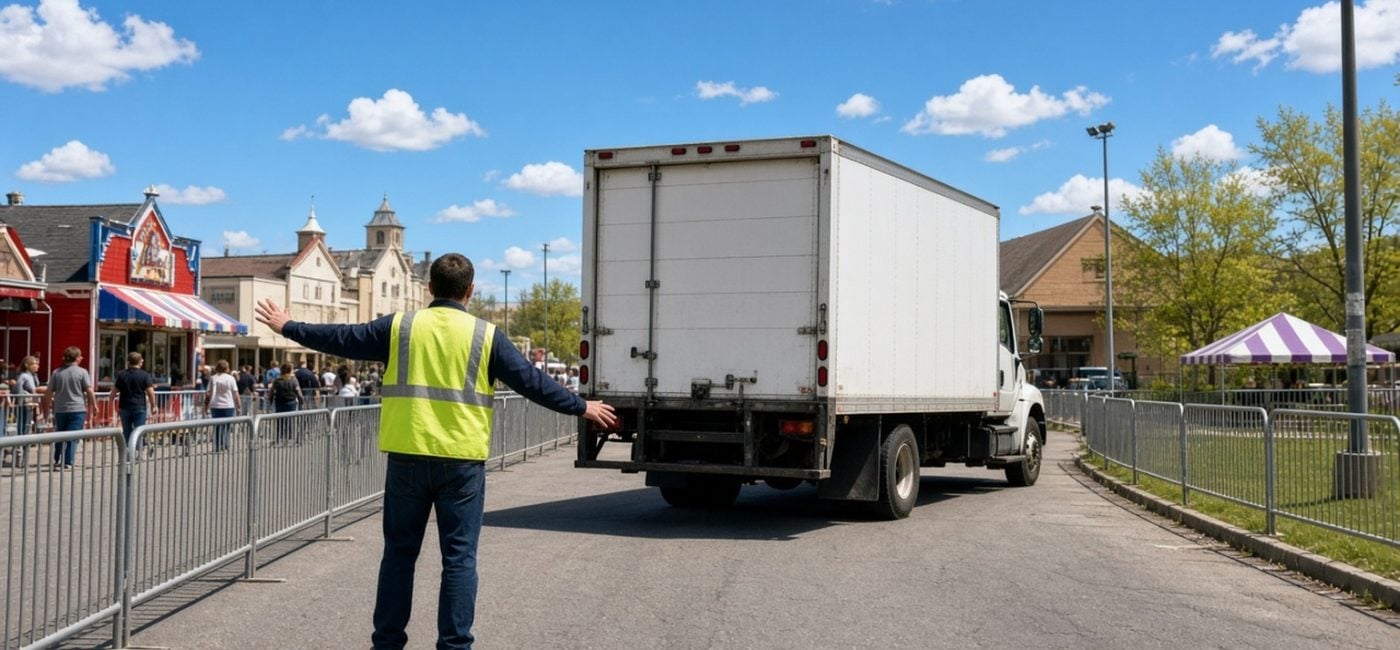
A vendor needs another delivery before dinner. The driver is already at the gate, guests are crossing the service lane, and the concession manager is trying to keep both the food line and the truck moving. What looks like a restocking problem is now a vehicle-and-pedestrian conflict created by an undefined delivery process. Fair concession delivery safety depends on settling that process before the first truck arrives.
Fair food logistics should make replenishment predictable without turning public space into a loading area. The plan needs delivery windows, receiving capacity, controlled routes, clear authority, and a practical answer for late arrivals. September review is a good opportunity to capture the near misses that a successful sales report may never show.
Plan the receiving operation, not just the gate time
A delivery window is more than permission to arrive between two hours. The fair must be able to admit the vehicle, guide it safely, receive the product, complete checks, unload, and release it. If the receiving employee is busy opening the stand, a scheduled truck may still sit in a shared lane.
Identify the types of deliveries and their needs. A small parcel, a refrigerated truck, an ice cart, and a bulk utility service do not use the same space or time. Grouping them all under vendor access hides the conflicts until several arrive together.
Use a site plan that shows actual vehicle routes, turning space, pedestrian routes, waiting areas, and receiving points. Review it with qualified safety personnel. The concession team contributes demand and staffing information; facilities and safety specialists help determine what the site can support.
Reduce backing wherever practical
A route that allows forward movement can reduce the need for difficult reversing in tight spaces. Do not assume a skilled driver can compensate for every poor layout. Trailers, crowds, temporary structures, and workers on foot can create blind areas that are hard to manage during a busy arrival.
OSHA's backover-prevention overview describes several approaches, including internal traffic control plans and ways to separate workers from operating equipment. These are useful planning concepts, not a universal fair-specific rulebook. Apply them to the actual vehicles and site with the appropriate professional review.
Walk the route with the dimensions and turning needs in mind before approving the delivery arrangement. A path that works for a pickup may not work for the larger truck a supplier sends on a substitute route. Require advance notice of material vehicle changes rather than solving the mismatch at the gate.
Use spotters as a defined role
When a reviewed plan uses a spotter, that person needs training, a safe position, agreed signals, and no competing assignment. A kitchen worker waving while answering a phone is not a dependable spotting system. Nor should a spotter stand where another vehicle can threaten them.
OSHA's backing safety solutions recommends agreement on hand signals, visual contact, and immediate stopping if the driver loses sight of the spotter. It also advises against distracting duties and supports high-visibility clothing, especially at night. The page identifies these solutions as informational rather than a list mandated by a specific OSHA standard.
Build those practices into the site's approved procedure as appropriate. Make clear who controls the movement and who can call stop. If communication fails or a pedestrian enters the controlled area, the response should be a safe pause, not louder shouting and faster unloading.
Keep public routes separate in practice
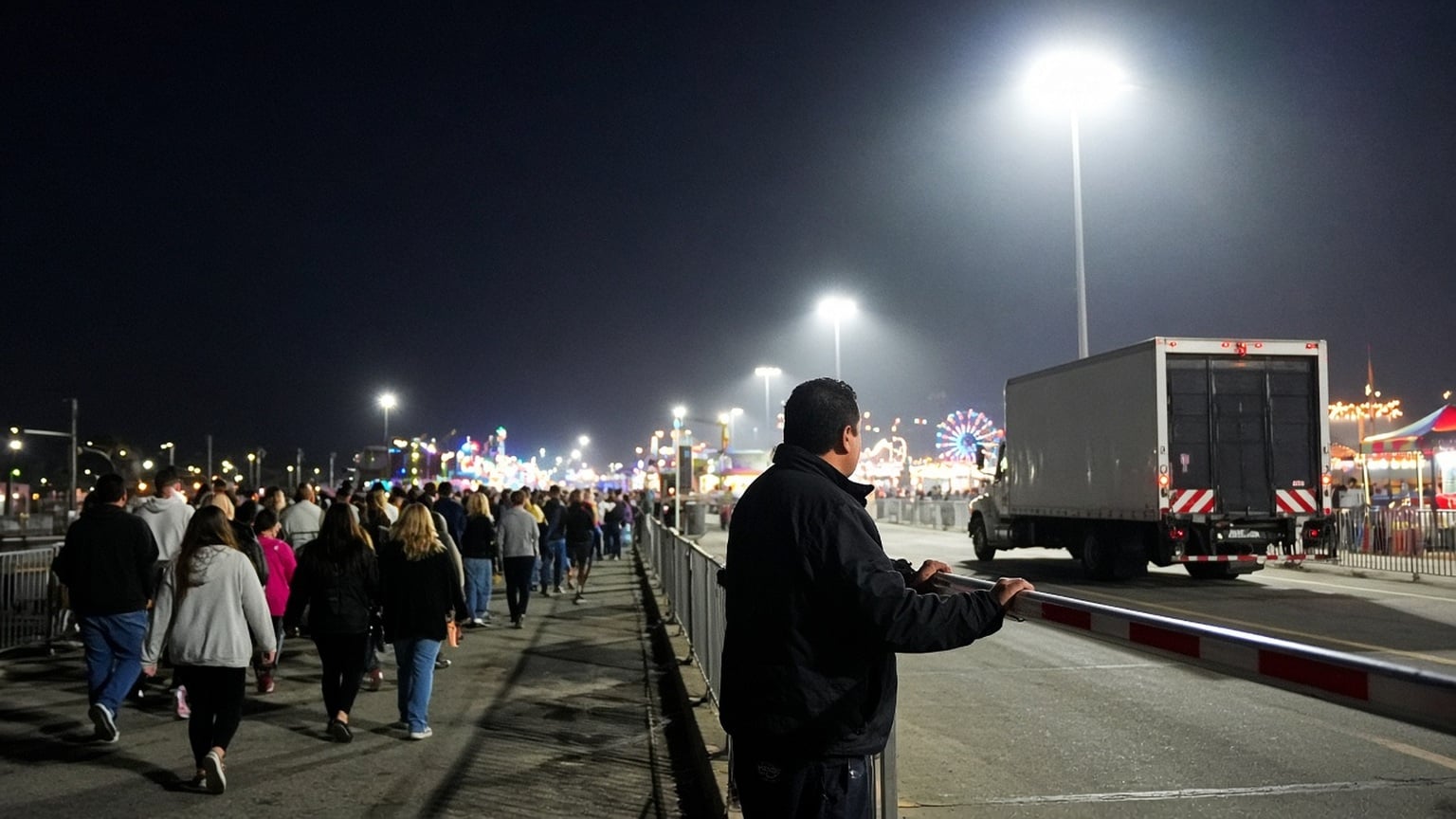
A line on a map will not stop a guest following the shortest path to a food stand. Use the approved barriers, gates, staffing, and signage needed for the actual route. Keep accessible public movement and emergency access part of the design rather than treating them as obstacles to delivery convenience.
Observe where queues expand. A service lane can be clear at opening and blocked when a popular stand receives a rush. Furniture, waste bins, stroller parking, and temporary promotions can also push people into a vehicle path. Give someone ownership of maintaining the agreed separation during operations.
Do not create an informal exception because the vehicle is only going a short distance. The risk lies in the interaction, not just the trip length. If the route cannot be controlled safely at that moment, use the approved waiting or alternative arrangement.
Connect delivery timing to food acceptance
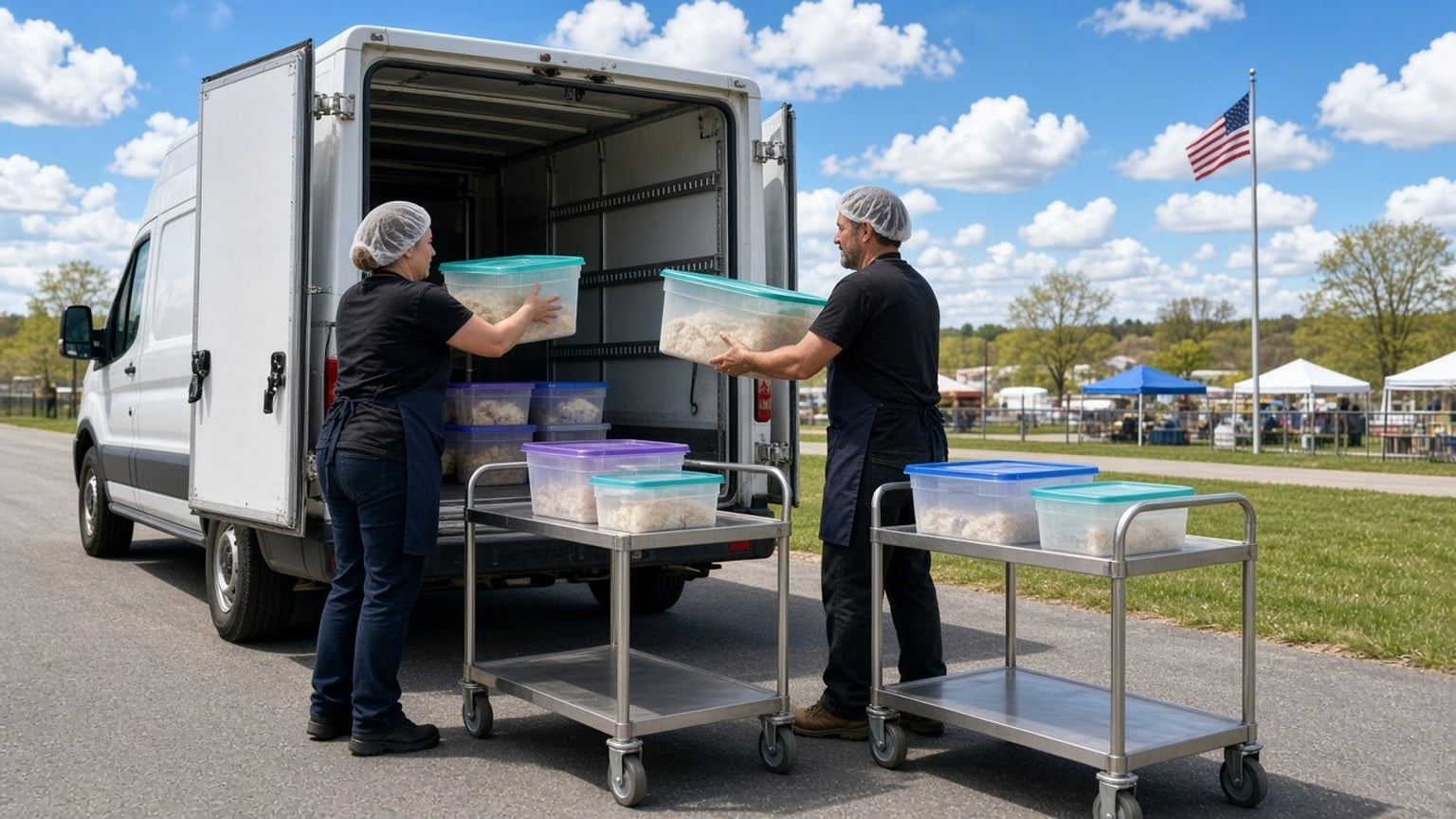
A truck admitted on schedule can still create a food-safety problem if nobody receives the product promptly. The responsible vendor needs suitable receiving staff, storage capacity, and a process for evaluating the delivery. Product should not be left in a service lane while the driver searches for the cook.
The FDA's 2022 Food Code is a model framework that includes receiving and temperature-control provisions. Confirm local adopted requirements and permit conditions for the operation. Receiving staff should know what to check, how to document exceptions, and when to reject or hold a questionable delivery.
Separate the traffic decision from the food decision. A gate attendant may authorize entry but should not be expected to accept product for every vendor. Likewise, a vendor's approval to receive food does not authorize a driver to enter a closed route. Both handoffs need clear owners.
Give late arrivals a safe answer
No delivery schedule survives perfectly. Traffic delays, substitute drivers, and urgent replenishment will occur. The fair needs an exception process that does not depend on whichever employee happens to be closest to the gate. Define who can assess and approve an alternative movement.
Provide a suitable waiting location and a verified contact method. The driver should know whether to remain outside, use another approved receiving point, or return at a different time. Do not send unfamiliar drivers around the grounds looking for a vendor, and do not let a supplier's urgency override site controls.
For critical food-service needs, evaluate approved alternatives such as controlled cart transfer or a revised service plan. Those options must still protect food, workers, and guests. A stand running low on one ingredient may need a temporary menu change rather than an unscheduled vehicle movement through a crowded area.
Put the right information in the driver's hands
Send concise arrival instructions through the supplier's actual dispatch process. Include the correct gate, appointment or contact method, vehicle restrictions, waiting arrangement, receiving location, and the instruction not to enter without authorization. Check that substitute drivers can receive the same information.
Avoid relying on a generic navigation pin that leads to the public entrance. A driver following it faithfully may create congestion before anyone realizes the error. Review maps for clarity on small screens and distinguish public parking from service access without publishing sensitive security details unnecessarily.
Give the gate team the matching record. If the driver has one set of instructions and the gate uses another, both can behave reasonably while producing a conflict. A single owner should maintain the current version and remove obsolete copies.
Train for the ordinary exception
A useful exercise is simple: a refrigerated delivery arrives late during a public program release, and the vendor says it needs the product immediately. Ask the gate attendant, concession lead, receiving worker, and safety contact to describe their next action. Different answers reveal an unresolved handoff.
OSHA's training recommendations emphasize role-specific instruction and hazard reporting. Use that approach for delivery coordination, including language needs and the ability to stop an unsafe movement. A worker should not have to choose between pleasing a supplier and following a route control they were never taught to explain.
Rehearse after-dark conditions when relevant. Visibility, fatigue, closed gates, and changed staffing can alter the route. The plan should account for the people and equipment available at the actual time of delivery rather than assume the morning setup remains unchanged.
Coordinate disruptions without opening every gate
An equipment failure, weather event, or blocked route can affect several suppliers at once. The response should preserve control while adjusting the plan. Name the person who coordinates changes and the channels used to tell vendors, dispatchers, gate staff, and receiving teams.
The SBA's emergency-preparedness guidance supports advance continuity planning. In this setting, that means realistic alternate arrangements, not a general instruction to keep food moving at any cost. A disruption may require controlled delays or reduced service while the safe route is restored.
Keep emergency responder access distinct from routine supply convenience. A lane designated for an urgent response cannot become a waiting area because the delivery schedule is running behind. Review the boundaries with the fair's emergency planning team and make them usable for frontline staff.
Review near misses before next season
The most valuable evidence may be a truck that stopped in time, a guest who crossed an unexpected gap, or a driver who entered through the wrong gate. Encourage reporting without treating every report as proof of individual misconduct. The goal is to find the design and communication weaknesses behind the event.
Record enough detail to understand the interaction: route, time, vehicle type, public conditions, instructions, and action taken. Compare incidents with delivery volumes and service demands. If the same conflict recurs, a reminder may be less effective than changing the route, staffing, or receiving window.
A reliable restocking plan protects the business of serving food by controlling how supplies reach it. Guests should not have to negotiate with a truck to reach lunch, and drivers should not have to invent a route through an unfamiliar fair. Clear delivery handoffs make both possible.
# Count the receiving workload in the labor plan
Unloading time is only part of the assignment. Staff may need to prepare storage, check the delivery, record exceptions, return carts, and restore the receiving area. If those tasks are omitted from scheduling, they tend to overlap with service in ways that undermine both jobs.
Estimate the workload using actual deliveries and representative observations, not an assumed universal unloading rate. Separate suppliers and product types where their needs differ. Then compare the receiving plan with break coverage and the stand's opening requirements.
Where several vendors share a service, agree on what the fair provides and what remains with the operator. A common cart service does not necessarily include food acceptance or storage. Clear boundaries prevent a driver from leaving product with someone who has transport duties but no authority to receive it.
Review whether the plan can function when one employee is unavailable. The safe fallback may be a controlled delay or a different approved window. It should not depend on pulling the spotter away mid-movement or asking a cashier to supervise a truck from the service counter. Receiving capacity is part of concession capacity, even when guests never see it.
Build a fair concession delivery safety plan
Schedule a consultation with FairFirst to review concession delivery windows, receiving responsibilities, and coordination with your grounds team. Bring the service map and examples of the exceptions that keep recurring.
Vehicle-control and technical safety decisions need the appropriate specialists; concession operations should support their approved plan. Talk with FairFirst before another urgent restock becomes a public-route problem.
Sources
- Preventing Backovers: Backing Safety Solutions — Occupational Safety and Health Administration
- Preventing Backovers: Overview — Occupational Safety and Health Administration
- Recommended Practices: Education and Training — Occupational Safety and Health Administration
- Prepare for Emergencies — U.S. Small Business Administration
- Food Code 2022 and December 2024 Supplement — U.S. Food and Drug Administration


