


Imagine the dinner rush beginning just as a shared circuit trips. Several stands lose service, guests keep joining the queues, and vendors start asking whether they can borrow power from the next booth. This is a hypothetical scenario, not a report of an outage at a particular fair. It captures the cost of treating electricity as a move-in detail. Fair concession power planning belongs months earlier.
Late January is a better time to ask the uncomfortable questions. What equipment is actually coming? What supply does each stand need? Which changes require technical review? Who has authority to stop an unsafe workaround? Those decisions belong before the food court is committed to a layout.
Professional concessions coordination does not replace an electrician or electrical engineer. It gets the right information to qualified people early, preserves the approved plan, and prevents operating pressure from turning an inconvenience into a hazard.
Collect equipment information, not a casual estimate
A vendor’s request for a standard hookup may conceal very different equipment combinations. Ask for an appliance schedule with manufacturer information, ratings, connection needs, and intended operating patterns. Include supporting equipment such as refrigeration, lighting, and small appliances rather than listing only the main cooking unit.
Give that information to the electrical professional responsible for design or review. Do not have concessions staff convert an incomplete list into a final circuit plan. Equipment compatibility, startup demands, distribution limits, and protective devices require appropriate technical judgment.
Record the approved schedule by stand identifier and version. If the vendor changes an appliance, the reviewer needs to know before it is connected. A plan based on last year’s setup is not reliable evidence that this year’s equipment fits.
Temporary does not mean informal
OSHA’s wiring-methods standard addresses temporary wiring as well as other electrical installations. Its temporary-wiring provisions retain applicable requirements except where specifically modified. Do not interpret the short duration of a fair as permission to improvise connections.
Determine the California requirements, adopted codes, permits, inspections, and authority having jurisdiction for your site. Federal OSHA references here explain longstanding safety principles; they are not a statement that federal jurisdiction or one installation rule applies identically to every California operation.
Schedule technical review while equipment, placement, and distribution can still change. A failed inspection immediately before opening may leave few safe alternatives. Early coordination is a planning choice, not a promise that an inspection will approve any particular arrangement.
Map the distribution, not just the booths
The concessions map should connect stand locations to approved supply points and cable routes. Identify equipment access, protected service areas, and other site uses that could conflict with distribution. Keep the electrical information aligned with the current layout rather than in a separate outdated attachment.
Ask the responsible professionals to review interactions with water service, vehicle movements, public circulation, and temporary structures. A location convenient for the vendor may be unsuitable for the connection or create a difficult route across a pedestrian area.
One coordinator should maintain the approved map and distribute changes. That person need not make engineering decisions. Their job is to ensure the electrician and site team evaluate the same arrangement and that field crews do not follow a superseded version.
Use equipment for its approved purpose
OSHA’s general electrical requirements address equipment suitability and installation and use according to listing or labeling instructions. That principle matters when a vendor proposes equipment intended for a different environment or an unfamiliar adapter.
Have qualified personnel review suitability for outdoor, damp, or other actual conditions. Do not assume a canopy transforms every device into appropriate outdoor equipment. Likewise, a product fitting physically into a connection does not establish that the arrangement is acceptable.
Keep required technical documentation accessible to the reviewer. If information is missing, resolve it before approving use. A hurried verbal assurance that the equipment always works elsewhere is not a substitute for evidence about this installation.
Protect cables without creating a new barrier
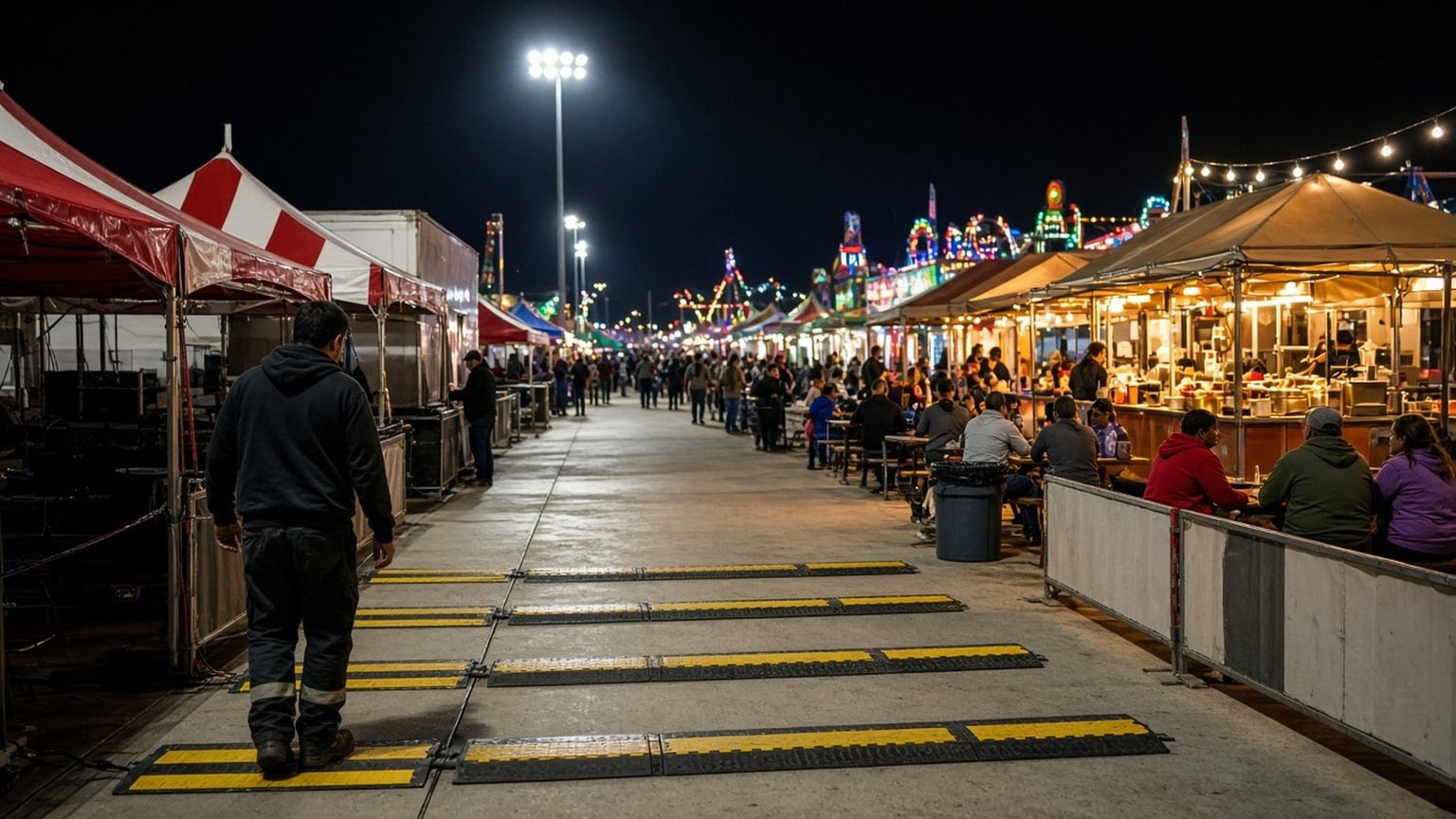
Cables can be damaged by traffic, doorways, sharp edges, and shifting equipment. OSHA’s wiring guidance addresses protection from accidental damage. The site plan should identify how the approved installation remains protected during deliveries, cleaning, and public operations.
Coordinate any crossing treatment with accessibility and crowd-flow review. The 2010 ADA Standards provide the relevant design framework for covered accessible routes and elements. A cable solution that creates an inaccessible obstacle is not a complete site solution.
Inspect protection after setup and during operations. Equipment moves, carts catch edges, and people rearrange barriers. Give staff a clear reporting route for damage or displacement rather than expecting them to make electrical repairs or invent a new crossing.
Keep working space available
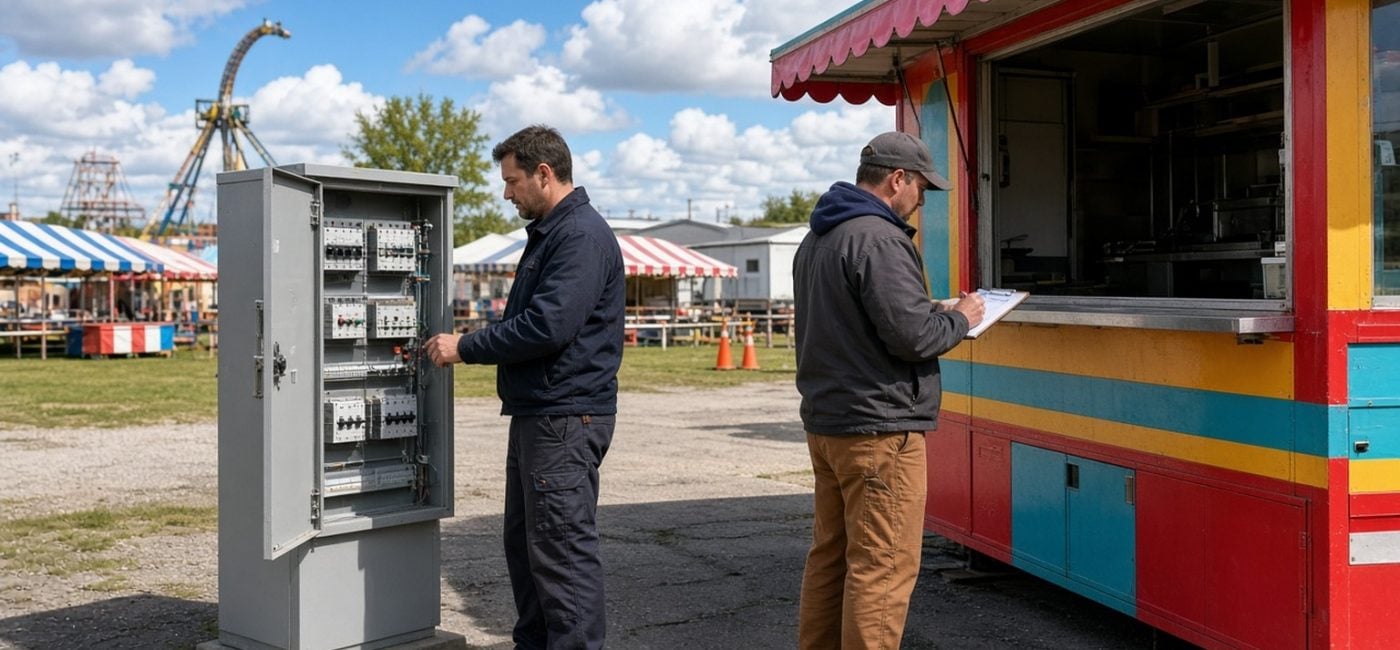
A distribution cabinet is not the backdrop for storage. OSHA’s general electrical standard includes working-space and access requirements. Have the responsible professional identify the applicable clearances and protection, then preserve them in the operating layout.
Show vendors where they can stage supplies without occupying required space. Include delivery crews and cleaners in the instruction. A cabinet that was accessible during inspection may become difficult to reach after stacks of containers accumulate behind the stands.
Restrict access where required and maintain the approved guarding. Do not leave electrical equipment available for unqualified staff to experiment with during a service interruption. The person closest to a problem is not necessarily the person authorized to address it.
Generators introduce more than extra capacity
OSHA’s portable-generator safety fact sheet identifies shock, electrocution, carbon monoxide, fire, noise, and vibration hazards. A generator is not a universal answer to an overloaded plan; it creates another system that needs competent placement and operation.
Identify the responsible supplier or operator, applicable approvals, connection arrangements, fuel handling, and inspection expectations. Follow the manufacturer’s instructions and qualified advice. Do not allow vendors to connect backup equipment directly to an existing electrical system without an appropriate approved arrangement.
Choose backup priorities before purchasing capacity. Some functions may require continued service; others may safely pause. The technical team should understand the actual loads and restoration sequence rather than receive a last-minute request to power everything.
Give exhaust its own placement review
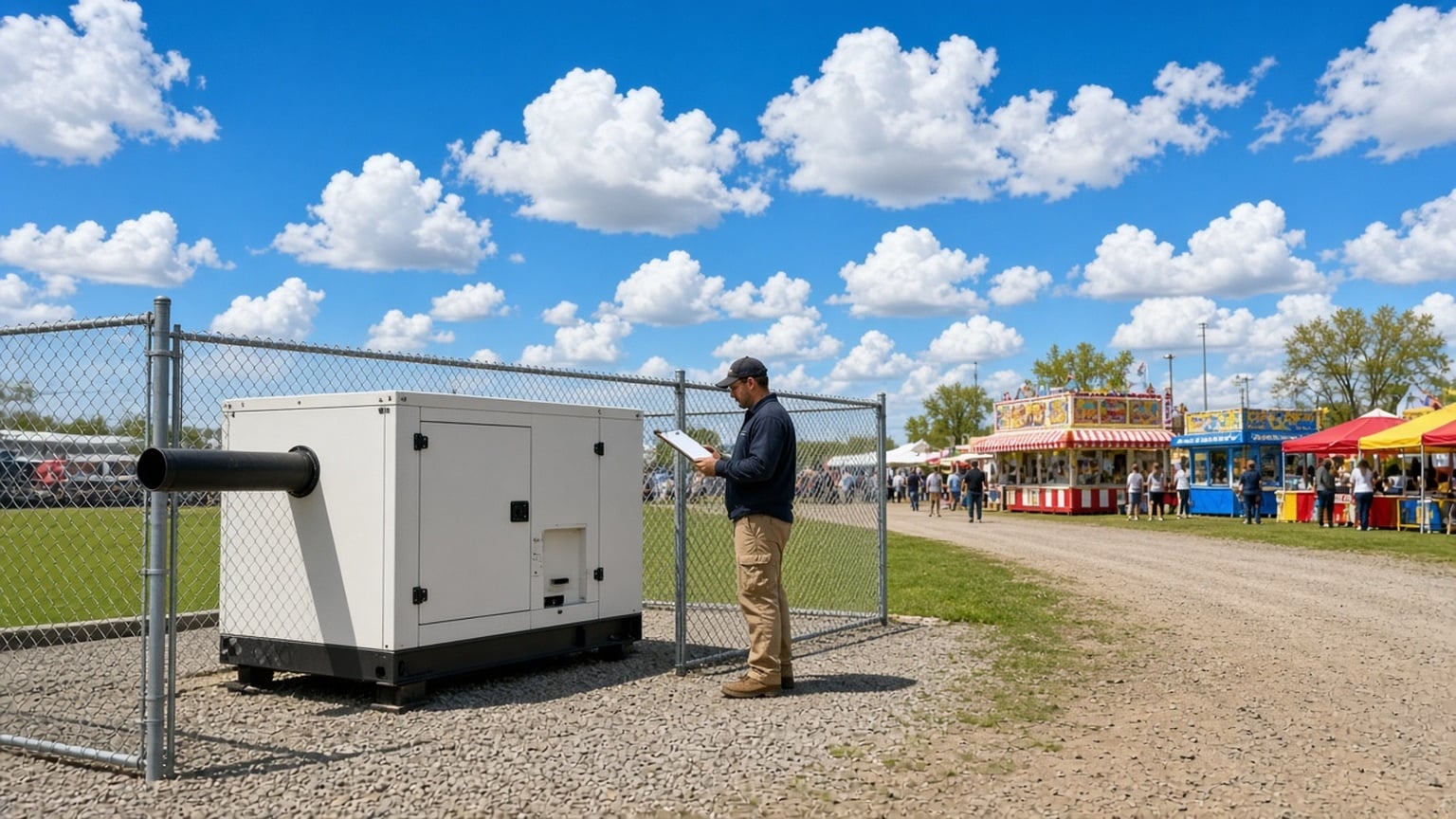
Carbon monoxide is colorless and odorless. OSHA’s generator guidance warns against indoor or enclosed use and against outdoor placement that allows exhaust into occupied spaces through doors, windows, or vents. A generator sitting outdoors is not automatically safely located.
Review nearby trailers, tents, service areas, air intakes, and guest gathering places with competent personnel. Consider actual operating conditions rather than one favorable photograph. Keep the approved placement from being changed casually to shorten a cable run or hide equipment from view.
Have an emergency response route for suspected exposure and train staff to seek fresh air and medical attention as appropriate. Nobody should reenter a potentially unsafe area to retrieve equipment until trained, properly equipped personnel determine it is safe.
Fuel and refueling need a schedule
OSHA’s fact sheet warns that generator fuels can ignite on hot components and advises shutting down and allowing cooling before refueling. Plan the service interval so an operating team does not feel pressured to refuel during an unauthorized or unsafe condition.
Use approved fuel storage and handling arrangements reviewed by the responsible authorities and supplier. Keep this work assigned to trained, authorized personnel. The concessions coordinator should know the service window and operational effect, not improvise fuel procedures for a contractor.
Include access for authorized servicing in the site plan. A fuel delivery that conflicts with public traffic creates another avoidable issue. Communicate planned interruptions and maintain the protections required for the location and equipment.
Test the operating combination before the rush
A successful connection test with one appliance does not show how the approved set operates together. Arrange a controlled commissioning or readiness test through the qualified technical team. Document the equipment involved, conditions tested, observations, and unresolved issues.
Include the vendor’s operating representative so the test reflects intended use. Do not deliberately overload equipment or defeat protection to see what happens. The purpose is to validate the approved arrangement safely under professional direction, not stage a stress test without controls.
Record any restrictions and communicate them to shift leaders. If the review depends on a particular operating arrangement, workers need to understand it. A technical instruction that remains only in an email to the owner may never reach the stand.
Do not normalize repeated trips
A recurring trip is a reason to stop and obtain qualified evaluation, not a cue to keep resetting until service resumes. Staff should know how to report the affected stand and what they observed without opening equipment or bypassing a protective device.
OSHA’s electrical overview identifies hazards involving improper cords, missing ground-fault protection, and equipment not used as prescribed. Use those longstanding principles in orientation while obtaining guidance on the standards actually governing your site.
Preserve an incident log showing time, affected equipment, authorized response, and approval to resume. That record helps technical staff identify a pattern and lets management distinguish a one-time interruption from an unresolved condition.
Manage outages as operating decisions
Assign stop-service and communication responsibilities before an outage. Determine who contacts the technical team, who informs vendors, and who gives guest-facing staff a consistent update. Avoid promising a restoration time that the responsible professional has not confirmed.
Keep customers away from affected work areas. Vendor teams should follow their approved procedures for equipment and products during interruption. Reopening may involve more than power returning; the appropriate operational and regulatory checks still need to be completed.
After service resumes, verify that the final arrangement matches the approved plan. A temporary recovery measure should not silently become the permanent setup. Document its duration, authorization, and any remaining corrective work.
Leave a usable fair concession power planning file for next season
Record actual equipment, approved changes, recurring service issues, and technical recommendations. Separate verified findings from speculation about why a stand lost power. A precise record helps next year’s planners avoid repeating assumptions that already proved unreliable.
Review ownership and removal responsibilities before departure. Qualified personnel should handle required isolation and disconnection. The last truck leaving should not determine whether a temporary installation is removed appropriately or an unresolved defect is forgotten.
Bring maintenance needs into the next budget discussion early. A coordinated food program treats electrical capacity and safety as infrastructure decisions, not emergency favors requested from the grounds crew during dinner.
Before approving the final plan, check that the concessions team, grounds staff, and technical contractor all have the same emergency contacts. Test the contact route outside office hours. A correct drawing cannot compensate for an unanswered call when an authorized decision is needed.
Talk to FairFirst Before Your Next Fair
FairFirst can help connect vendor equipment information, site coordination, and operating responsibilities with the qualified professionals your power plan requires. Start while the layout is still flexible.
Schedule a FairFirst consultation to review your concessions infrastructure planning process.
Plan the connections before the first appliance arrives.
Sources
- Electrical Safety Overview — OSHA, undated longstanding guidance
- Using Portable Generators Safely — OSHA, 2005
- 29 CFR 1910.303: General Electrical Requirements — OSHA, 2008 amendment
- 29 CFR 1910.305: Wiring Methods — OSHA, 2007 amendment
- 2010 ADA Standards for Accessible Design — U.S. Department of Justice, 2010


