


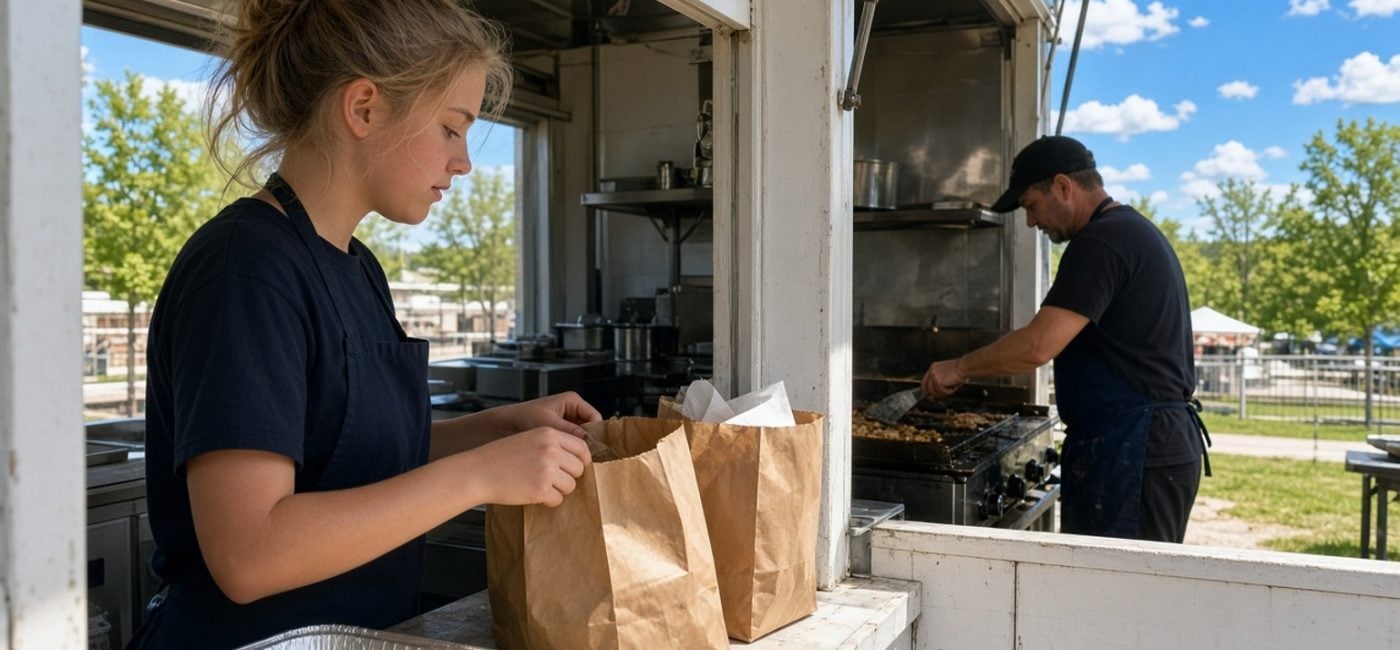
The staffing spreadsheet says the concession stand has six people. It does not say that two are fifteen, one is seventeen, and several routine kitchen tasks cannot be assigned to them. When the adult cook steps away, a supervisor may discover that the apparent coverage was never lawful coverage at all. Fair concession youth workers need a roster built around what each of them may legally do.
Youth employment can be a valuable part of a county fair. The problem is not hiring young people. It is planning around a generic job title instead of the worker's age, approved tasks, equipment, school calendar, and applicable rules. February hiring preparation is the time to resolve those details, not the first Saturday rush.
Build the roster for fair concession youth workers around tasks and ages
A label such as counter help tells a manager almost nothing about the work that will actually happen. Counter help may include taking payment, bagging food, carrying supplies, operating a fryer, cleaning a slicer, or helping unload a delivery. Those are different assignments with different risks and restrictions.
The U.S. Department of Labor's restaurant child-labor fact sheet separates requirements for fourteen- and fifteen-year-olds from those for sixteen- and seventeen-year-olds. Younger workers have both task and hour restrictions under federal rules. Older minors still cannot perform prohibited hazardous work. A fair's operating schedule does not erase those distinctions.
Create a task list for each stand and check it against the actual ages involved. Record who can do the work, who supervises it, and what happens when the qualified person leaves. Check state requirements as well; federal guidance is not a complete statement of every rule that can apply to a California fair.
Do not confuse equipment familiarity with permission
A teenager may be confident using kitchen equipment at home. That does not establish that the same commercial assignment is permitted at work. Nor does a manager's presence automatically make a prohibited task acceptable. The equipment, the operation, and the worker's age matter.
The Labor Department's cooking and baking guidance explains specific restrictions involving cooking, baking, and power-driven equipment. For example, federal rules limit the cooking tasks fourteen- and fifteen-year-olds may perform and prohibit their baking activities. Rules for minors also reach certain cleaning, setup, and maintenance tasks, not merely running a machine during service.
Avoid turning a complicated regulation into a vague sticker saying adult equipment. Identify the equipment precisely and confirm the allowed tasks with qualified guidance. A simple stand-level chart can then translate that review into instructions supervisors can actually follow. Keep the detailed basis available for questions.
Check hours against the real calendar
A fair is often open long after a younger employee's permitted work window ends. Setup, training, cleanup, and a delayed pickup can also extend time beyond the posted shift. A schedule that looks compliant before service may fail when the actual closing routine is included.
Under the federal restaurant guidance, fourteen- and fifteen-year-olds are limited to specified hours outside school, with different limits for school days and nonschool days. The federal evening limit extends during the defined summer period, not whenever the fair feels like a summer event. Confirm the applicable school calendar and state rules rather than guessing.
Build end-of-shift coverage into the plan. Someone must take over the register, finish cleaning, and manage the handoff without asking a minor to stay until the line disappears. A fixed departure is much easier to honor when the adult replacement has been scheduled before the rush begins.
California requires its own review
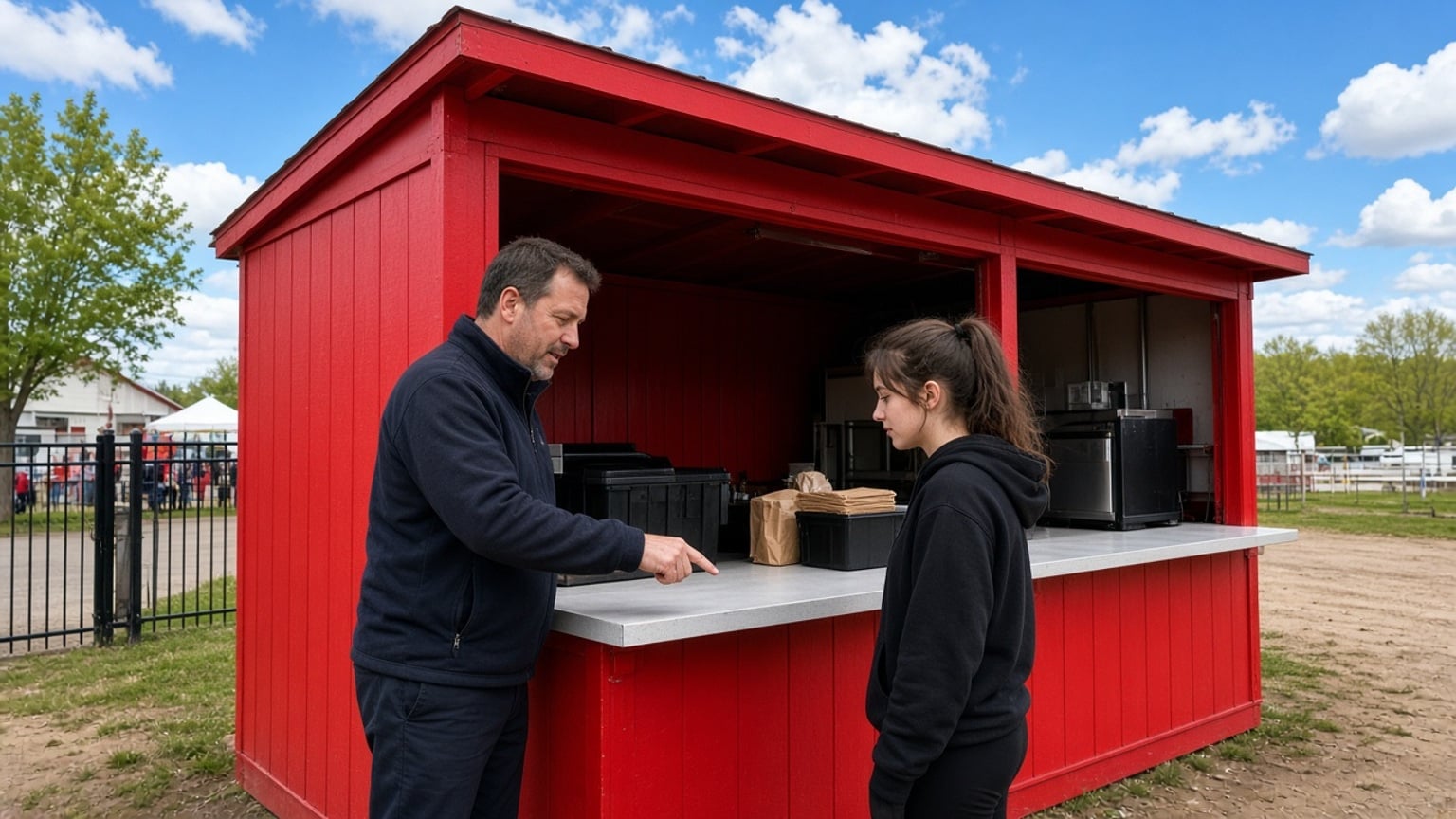
For California operations, use the Division of Labor Standards Enforcement's Child Labor Law pamphlet alongside federal information. It addresses state requirements, including work permits and restrictions that depend on age and circumstances. Have the responsible employer verify the current requirements for the actual job rather than treating the pamphlet as a substitute for advice.
The fair should know which entity employs each worker. A concession agreement does not make every payroll or supervision issue disappear, and the practical relationship should be reviewed where responsibilities are unclear. Obtain appropriate confirmation from vendors without collecting unnecessary personal documents into a shared operations folder.
Use a secure process for the records that are genuinely required. A public clipboard listing every teenager's full birth date is not an operational necessity. Supervisors need actionable assignment information; the employer needs its proper records. Design access so each person receives the information needed for the role, not everything available.
Make the supervisor's decision simple
A manager under pressure should not have to interpret a long legal document while deciding who can relieve the fry cook. Provide a concise, reviewed task matrix that reflects the stand's real equipment. Train the supervisor to use it before assigning work and whenever the assignment changes.
The Labor Department's restaurant self-assessment tool can help employers identify questions they may have overlooked. It is a screening aid, not a clearance certificate. A satisfactory answer about one worker or task does not authorize every minor in the stand to perform every kitchen function.
Include an unmistakable stop rule: when the permitted assignment is unclear, the worker does not take over until the employer resolves it. That may mean temporarily reducing the menu or pausing a station. Slower service is easier to correct than a prohibited task assignment made because everyone assumed someone else had checked.
Train for the allowed job, not a generic job
Once a task is approved, the worker still needs effective instruction. Show how to handle payment, stage meals, avoid burns from nearby equipment, move through the workspace, and report concerns. Explain what the worker must not do even if another employee asks for help.
OSHA's education and training recommendations emphasize training that workers can understand and the ability to identify and report hazards. Use demonstrations, questions, and supervised practice. A signature on an orientation sheet is not evidence that a young employee knows how to respond when hot oil spills nearby.
Make escalation safe and specific. The employee should know the named supervisor, the backup contact, and the words to use when a task falls outside the approved assignment. Adults should reinforce that asking for help is expected. Do not reward improvisation around a machine restriction as proof of initiative.
Plan adult coverage before counting headcount
A stand may be adequately staffed for routine orders but unable to operate safely when the only qualified adult takes a meal break. Count the tasks that require appropriate coverage, then build shifts around them. Headcount is the result of that analysis, not a substitute for it.
Walk through several ordinary situations: a delivery arrives, the grill operator calls out, a machine jams, closing takes longer than expected, or a supervisor is pulled into a guest complaint. Who is available and permitted to act? What service changes are necessary if that person is unavailable?
This is also where fair management can ask useful vendor questions. Rather than collecting a broad promise to comply, ask how the operator maintains age-appropriate assignments and adult coverage. Do not present a casual fair inspection as a formal legal determination. The goal is to surface operational gaps for the employer to correct.
Include nonprofits and special-purpose booths
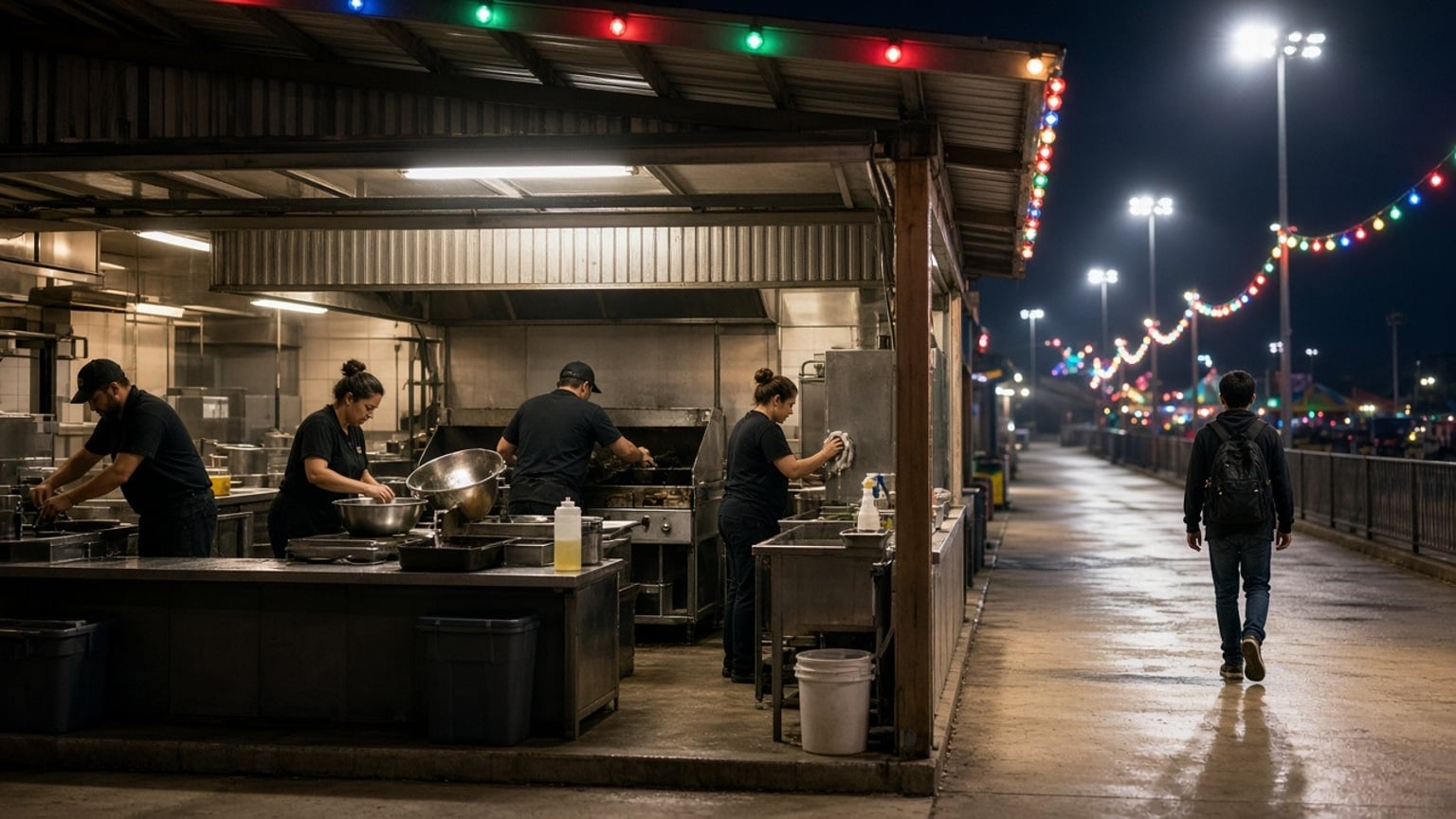
A community booth staffed by families can feel different from a commercial concession. That does not justify assuming that all child-labor or workplace rules are irrelevant. The legal analysis depends on the actual circumstances, including employment and volunteer relationships, and should be resolved before the booth opens.
Ask each organization to identify its responsible adult and explain the work young people will perform. Obtain qualified advice where coverage or exemptions are uncertain. Avoid issuing a blanket rule that every nonprofit volunteer is exempt or that every family arrangement is automatically permitted.
Even when a particular employment rule does not apply, the physical hazards remain. A young helper still needs protection from hot surfaces, sharp equipment, vehicle traffic, and chemical exposure. Separate the legal coverage question from the fair's reasonable operating expectations; neither should be used to avoid the other.
Audit assignments while service is real
Opening-day review should look at actual work, not just the schedule. Watch who uses equipment, who handles deliveries, and what happens during a break. Ask supervisors to explain their coverage plan and show where the task matrix is kept. Correct deviations immediately through the responsible employer.
Use observations to improve the system rather than surprise inexperienced workers with blame. If employees routinely cross a boundary, ask why. Perhaps the only accessible supplies are behind the cook line, the supervisor gives conflicting instructions, or the staffing model depends on an assignment that was never approved.
Record the correction, its owner, and any follow-up required. A note that simply says reminded vendor is difficult to evaluate later. A clear account of the observed task, the changed assignment, and the revised coverage gives management something it can verify on the next walkthrough.
Give young workers a good first job
A well-designed role can teach service, teamwork, reliability, and problem-solving without pushing a teenager into an inappropriate assignment. Make the job meaningful. Explain the standard, provide feedback, and recognize good judgment—including the decision to stop and ask when a task does not belong to the worker.
Before the season, review the proposed roster with payroll, operations, and the person responsible for compliance. Confirm the documents, permitted hours, task limits, supervision, and departure arrangements. Recheck when birthdays, school calendars, menus, or equipment change. A review made in February can become outdated if the operating plan changes in June.
The fair benefits when vendors build staffing around qualified coverage instead of treating every worker as interchangeable. Guests see a more dependable operation, supervisors have clearer choices, and young employees learn the job without being asked to absorb avoidable risk. That is better management, not merely more paperwork.
# Review credentials at the point of a change
Imagine a hypothetical stand that replaces a simple hot-holding station with a new cooking appliance after hiring. The original assignment review may no longer describe the work. The employer needs to check the revised tasks before asking a young employee to use or clean the equipment.
Add that checkpoint to menu changes, substitutions, and temporary relief assignments. A worker's permission to perform one task should not silently expand because the stand is short-handed. Supervisors should be able to explain the boundary without asking the employee to interpret the law during service.
Keep the update connected to scheduling. If the change needs different adult coverage, adjust the roster before approving the revised operation.
Put an age-safe staffing plan in place
FairFirst can help your team connect concession staffing assumptions with the way stands actually operate. Schedule a consultation with FairFirst to review coverage, vendor expectations, and the handoffs that become difficult during a rush.
Bring your proposed operating hours, vendor requirements, and known staffing constraints. Employment-law questions belong with qualified counsel or the appropriate agency; operating plans should make those answers usable. Talk with FairFirst before the hiring season accelerates.
Sources
- Fact Sheet 2A: Child Labor Rules in Restaurants — U.S. Department of Labor
- Fact Sheet 58: Cooking and Baking Under Federal Child Labor Provisions — U.S. Department of Labor
- Employer Self-Assessment for Child Labor in Restaurants — U.S. Department of Labor
- Child Labor Law Pamphlet — California Division of Labor Standards Enforcement
- Recommended Practices: Education and Training — Occupational Safety and Health Administration


