



One fly at a service window can make a guest question everything happening behind it. A pest complaint can also send fair staff into a scramble: the vendor wants help, the grounds crew points to the dumpster, and nobody knows whether the problem was already reported. Fair concessions pest prevention has to start long before that first complaint.
That is an illustrative operating scenario, not a claim about a particular fair. The useful response starts well before a complaint. As spring setup approaches, concessions teams need a pest-prevention plan that connects booth condition, service-lane housekeeping, waste collection, monitoring, and qualified professional response.
The answer is not to spray everything before opening. Integrated pest management begins with understanding the pest and the conditions supporting it. Professional coordination gives each preventive task an owner and makes sightings actionable instead of turning them into rumors passed between shifts.
Fair concessions pest prevention starts with a shared definition
The EPA’s integrated pest management principles describe monitoring and identification, prevention, action thresholds, and appropriate controls. IPM is a decision process, not a promise that an outdoor venue will never encounter an insect.
Translate that process into a practical event plan with the relevant environmental-health officials and qualified pest-management professionals. Identify what staff should report, how quickly they should report it, and who determines the necessary response. A threshold used in one setting does not automatically establish an acceptable condition in food service.
Do not let a general monitoring program override immediate reporting of suspected contamination or a regulatory concern. Prevention routines and urgent escalation must work together. Workers should not have to decide whether a sighting is serious enough to protect the fair’s reputation.
Know what you are looking at
Correct identification matters because different pests use different resources and require different responses. A staff member may notice small flies near a wet area without being able to identify their source. Recording the location and conditions is more useful than guessing at a species.
UC IPM’s 2015 Pest Notes on flies discusses the importance of sanitation, breeding sources, and exclusion. It explains why controlling visible adults alone does not resolve the underlying conditions. Use qualified help to interpret what is happening at the site.
Give staff a simple way to preserve observations without handling pests or disturbing potentially contaminated material. Include the time, exact location, observed activity, and any immediate protective action. Photographs, when appropriate and permitted, should support the report rather than replace it.
Inspect the booth before filling it
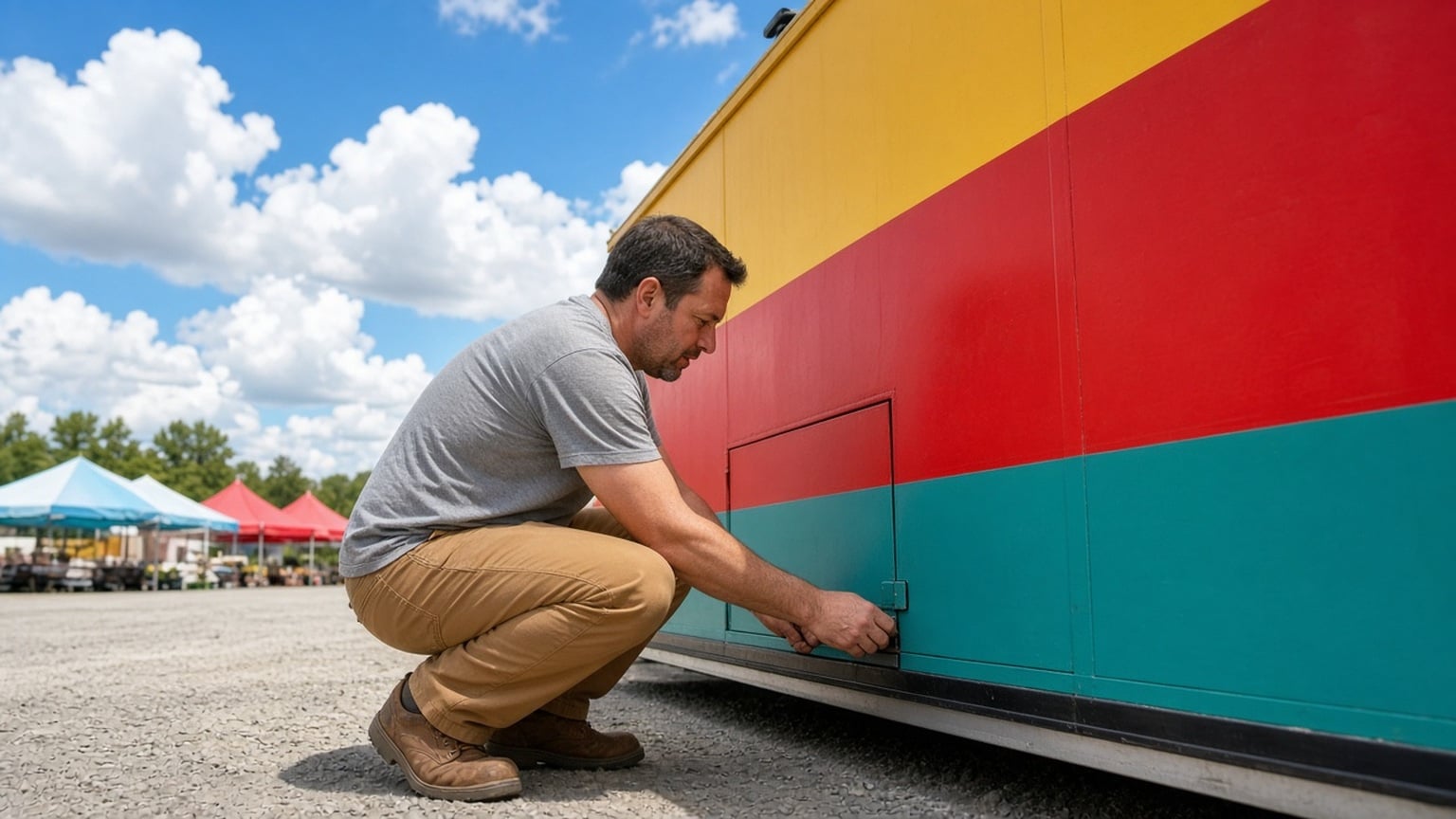
Walk the stand when doors, lower edges, service openings, and storage areas remain accessible. Look for damage or gaps that need professional assessment. Check whether screens and closures function as intended. Equipment loaded against a wall can hide a defect until the fair is operating.
Imperial County’s 2023 temporary-food guide describes booth protection from insects and other contamination sources, with specific requirements for different operations. It is a local example; confirm the requirements for your location and permit classification.
Record any necessary repair and verify completion before it disappears beneath setup activity. Do not describe an opening as resolved because somebody promised to bring tape. Use suitable authorized materials and methods, especially where alterations affect ventilation, equipment, or other approved conditions.
Service openings need an operating habit
A screen or closure is useful only when it is used correctly. Explain which openings may remain open, what protection is required, and how workers should report damage. Review the actual arrangement with the vendor instead of relying on a general note in an application packet.
Observe the stand during normal service. A worker may prop a door open because supplies have no practical delivery route. Address that operating conflict rather than issuing a warning that will be ignored at the next delivery.
Never compromise required exits or ventilation to solve a pest issue. Bring conflicting requirements to the relevant professionals and authorities. The objective is an approved arrangement that workers can maintain while doing their jobs, not a barrier that creates a different hazard.
Waste collection is part of exclusion
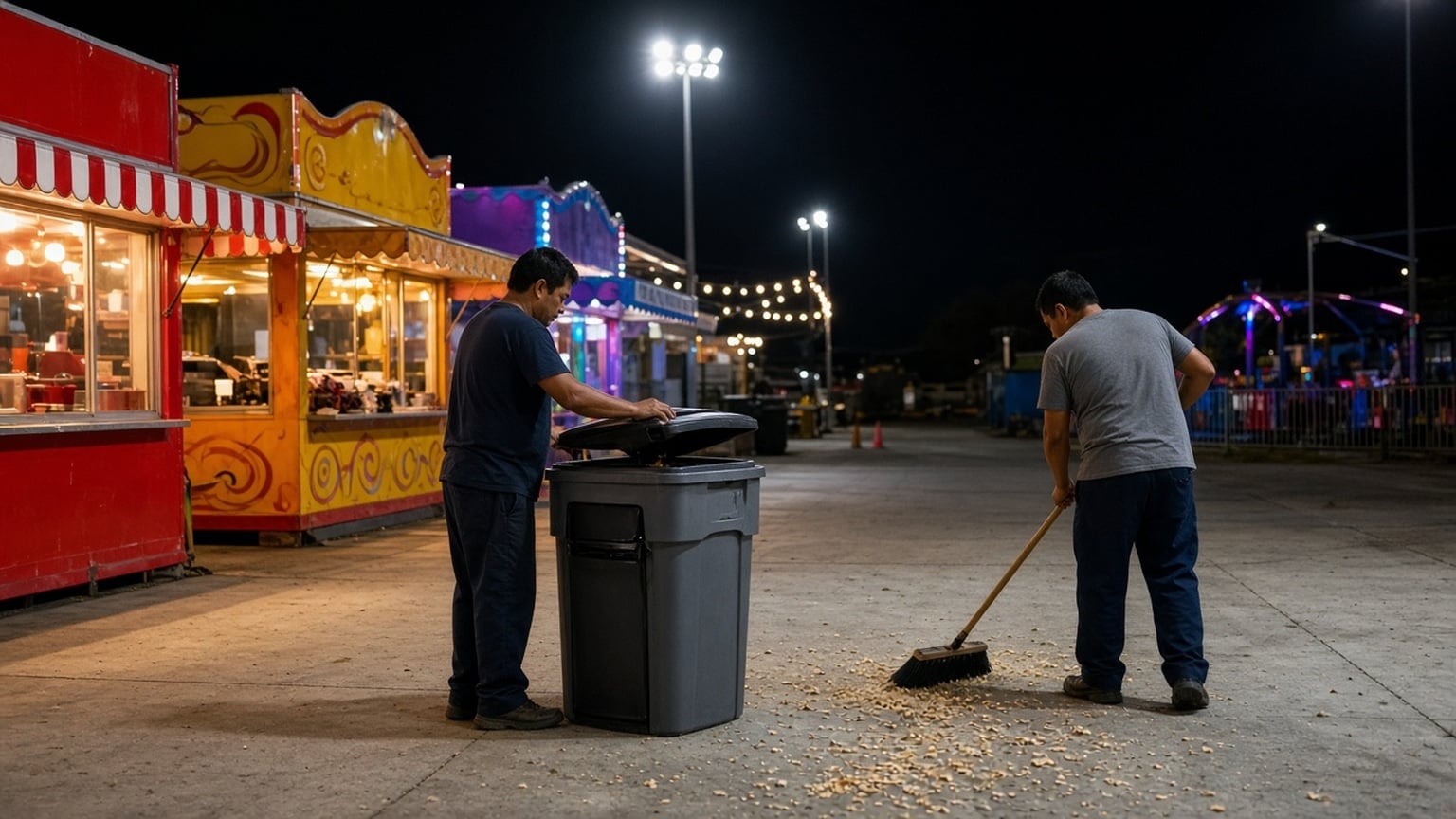
Covered containers, prompt removal, and clean collection areas help reduce available food and breeding opportunities. UC’s fly guidance emphasizes sanitation rather than treating chemical control as a substitute for removing sources. Connect the booth’s routine to the grounds collection schedule.
Ask who handles spills around bins, who cleans reusable containers, and who responds when collection is delayed. A vendor can maintain a tidy interior while an unattended shared waste area undermines the surrounding food court.
Check conditions after the evening rush as well as before opening. The collection area should not become a temporary dumping place for leaking bags or food residue. Give crews the equipment and approved access they need to complete the assigned work.
Water and residue deserve attention
Include leaks, standing liquid, greasy residue, and organic buildup in routine observations. Have facilities or qualified personnel evaluate suspected sources. Surface cleaning may not resolve a hidden drain or infrastructure problem, and staff should not dismantle unfamiliar systems to investigate.
Coordinate the cleaning responsibility for spaces under and behind equipment. A task described as vendor cleaning can remain undone if the vendor assumes the grounds crew handles exterior areas. Define the actual boundary and the process for reporting inaccessible places.
Make repairs part of the work order rather than leaving crews to clean the same recurring leak indefinitely. Preventive management connects the symptom to the responsible service. It does not rely on housekeeping staff to solve a plumbing defect with another round of mopping.
Ant trails are information, not a treatment instruction
UC IPM’s 2012 Pest Notes on ants discusses identification, exclusion, sanitation, and management options. A visible trail can help a qualified professional locate entry points and resources. It is not an invitation for staff to place unapproved products around food operations.
Ask workers to report where the activity begins and ends, nearby food or moisture, and any affected storage. Avoid disturbing evidence before the responsible person can assess it, unless immediate protective action is necessary under the approved procedure.
Keep all pest-control decisions within the authorized process. Product selection and placement depend on the pest, site, legal label, and applicable restrictions. This article intentionally provides no pesticide application instructions or improvised recipes.
Storage must stay inspectable
Arrange stock and equipment so authorized staff can inspect and clean the space. Follow the relevant requirements for food storage and protection. Crowding a booth with materials can conceal leaks, damage, or activity even when the visible counter looks immaculate.
Check incoming materials for obvious evidence of damage or pests through the vendor’s approved receiving procedures. Report concerns before questionable materials enter the stand. Do not move a suspected problem to another location simply to clear the service area.
San Diego County’s temporary-food training material illustrates the emphasis on protective booth construction and organized operating facilities. Confirm your own local directions and use the older material as background, not a substitute for the permit conditions governing your event.
Make the report useful on the first call
A good report identifies the stand, precise area, time, observed activity, and person who can meet the responder. Distinguish firsthand observations from a guest’s description. Avoid public speculation about infestation or fault before the appropriate assessment.
Assign one coordinator to track the issue through response and follow-up. Multiple people calling different service providers can produce conflicting instructions or uncoordinated treatment. The fair needs a single, current account of what was observed and what was authorized.
Keep the affected vendor informed about the steps relevant to its operation. If regulators or qualified professionals require protective action or a pause, communicate clearly and record the conditions for resuming. Customer service should never become pressure to overlook a concern.
Use qualified help, not a bottle from somebody’s truck
Establish the authorized pest-management relationship before the event. Confirm appropriate licensing, qualifications, insurance arrangements where required, and the scope of service with the relevant California authorities and advisers. Different activities can fall under different rules; do not assume one credential covers every task.
Keep unauthorized products out of the response process. A familiar household product is not automatically appropriate for a food operation. Any pesticide use must comply with its legal label and applicable requirements, under the responsible qualified person’s direction.
Coordinate treatment timing, access restrictions, food protection, and reopening instructions with the appropriate professionals and authorities. Staff should not invent their own waiting period or assume a treated area is ready because the odor has faded.
Follow up on conditions, not just sightings
After a response, verify the agreed preventive work: repairs, collection changes, cleaning access, or removal of an attractant. A service visit is not the same as a resolved source. Ask the responsible professional what follow-up monitoring is appropriate.
Review reports by location and time to identify repeated operating conflicts. Perhaps the same waste area needs a collection change, or a damaged screen needs a durable repair. Do not manufacture a trend from unverified reports, but do not discard recurring observations either.
Share relevant changes across shifts. The opening crew needs to know about overnight instructions, and the closing crew needs to understand any new restrictions. Keep the current direction accessible without circulating unnecessary personal or sensitive incident details.
Include the shared edges of the food court
Walk the boundary between concessions, landscaping, seating, and service areas with the grounds team. The vendor may not control the space producing a recurring concern. Assign the appropriate maintenance or assessment task rather than asking each stand to solve a shared-site problem independently.
Keep the review specific: describe a damaged closure, accumulated material, or unresolved leak rather than making unsupported claims about its cause. Ask the qualified professional to interpret the evidence. When the solution involves another department, track the handoff through completion so the concessions supervisor does not assume that forwarding a message ended the responsibility.
Clear boundaries make cooperation easier because every team knows what it owns and where another team must act.
Leave the grounds ready for the next use
Include exterior residue, discarded materials, equipment storage, and unresolved repairs in closeout. A clean public counter does not establish that the service area has been restored. Continue the approved collection and housekeeping arrangements until departure work is complete.
Retain a short list of preventive improvements for the next event. Focus on physical conditions and assigned tasks rather than blaming a vendor based on a single sighting. The strongest plan makes favorable conditions for pests harder to create and easier to recognize.
That is the practical contribution of professional concessions coordination: exclusion, housekeeping, facilities work, and expert response stop being separate conversations. They become one managed process with clear ownership.
Talk to FairFirst Before Your Next Fair
Protect the guest experience by organizing the conditions behind it. FairFirst can discuss a coordinated concessions approach that connects vendor upkeep, shared service areas, reporting, and qualified specialist support.
Schedule a FairFirst consultation to strengthen your pest-prevention coordination.
Give prevention an owner before a complaint forces the conversation.
Sources
- Integrated Pest Management Principles — EPA, longstanding IPM guidance
- Pest Notes: Flies — University of California IPM, 2015
- Temporary Food Facility Operator’s Guide — Imperial County Public Health, 2023
- Pest Notes: Ants — University of California IPM, 2012
- Temporary Food Training — San Diego County, 2014 original document


