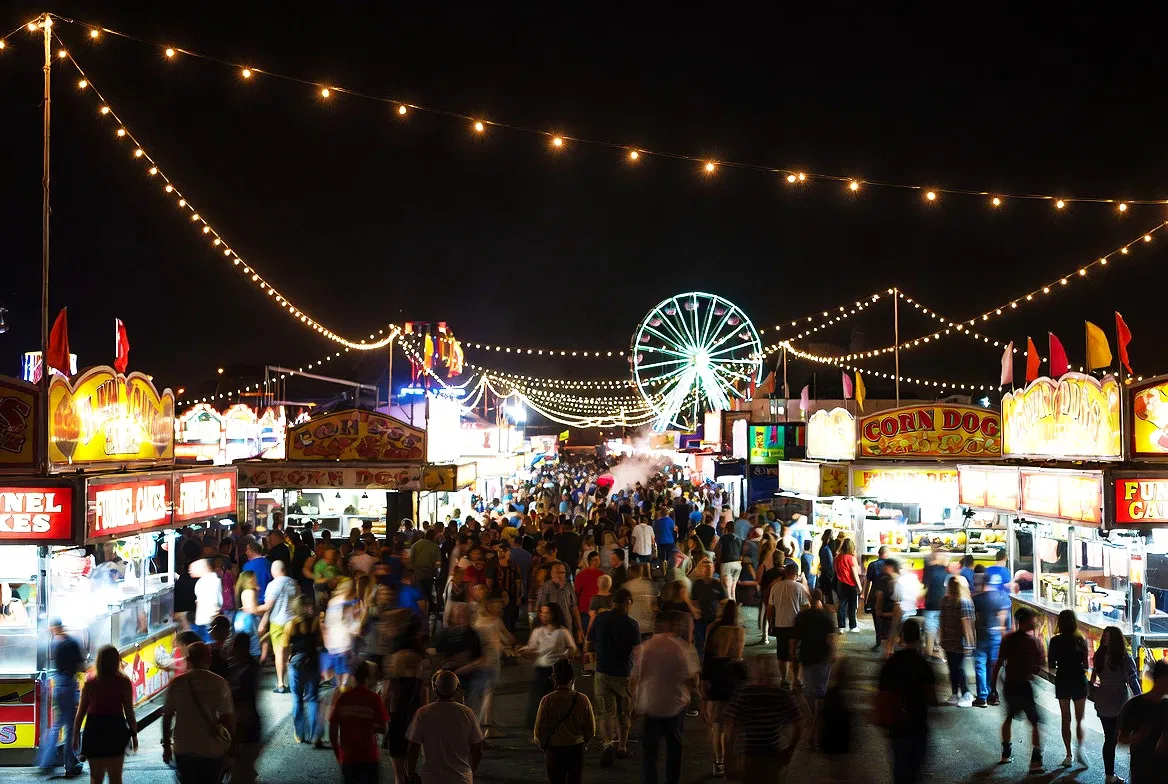
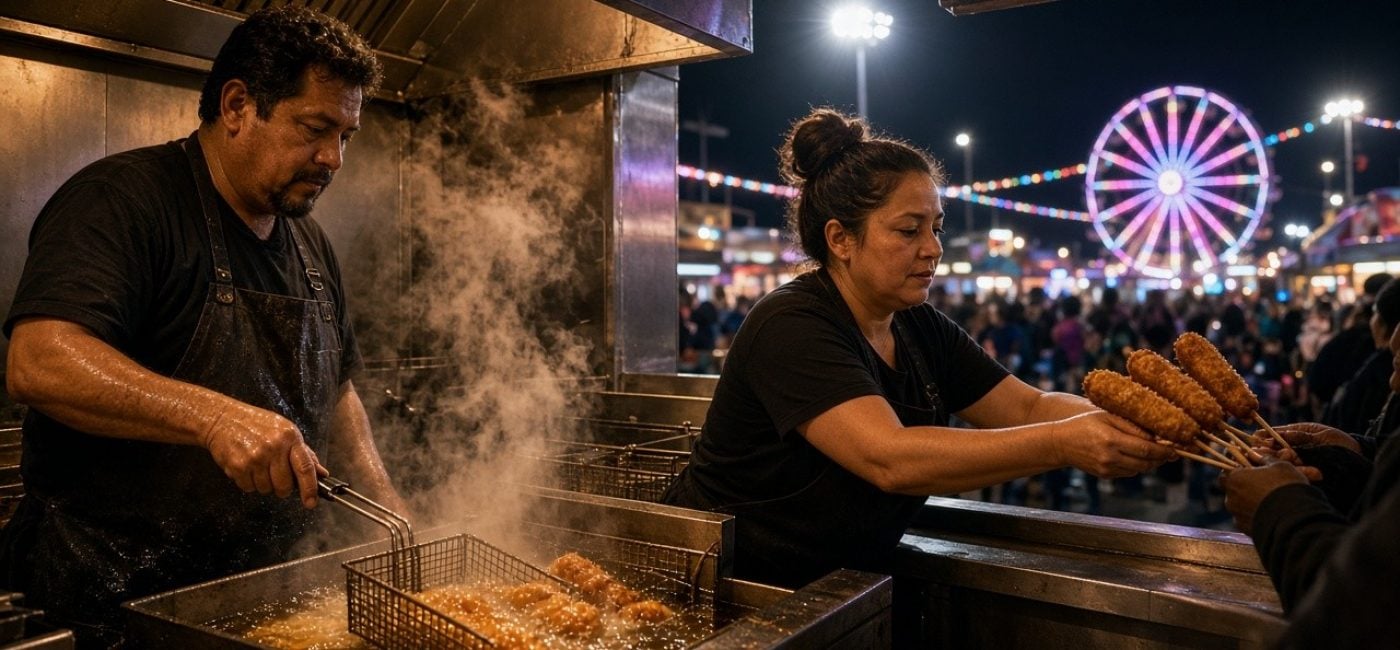
January is when fair budgets get real. Vendor contracts go out, menu boards get approved, and somebody on the board asks the question nobody wants to answer: do we raise prices again this year? After the run of menu inflation since 2021, most fair boards already know what happens when a family of four walks past a $16 lemonade and a $20 plate. They stop buying, they start bringing coolers, and the per-cap spend that funds your operating budget shrinks. Fair food costs 2026: the numbers are below, along with the vendor strategies that hold prices steady.
The good news is that the fairs best positioned for 2026 are not the ones raising ticket prices or pushing every menu item up another dollar. They are the ones that understand exactly where food costs were climbing, which items absorb the hit, and how to build a vendor mix that protects both the fair’s commission and the concessionaire’s margin. Here is what the data shows heading into 2026, and the strategies that are working.
Fair Food Costs 2026: The Numbers Every Fair Board Should See
The most recent Consumer Price Index from the U.S. Bureau of Labor Statistics covers the 12 months ending November 2025. According to the BLS November 2025 CPI release, the food away from home index rose 3.7 percent over the year, while food at home rose only 1.9 percent. Full service meals were up 4.3 percent and limited service meals were up 3.0 percent. The category that looks most like a fair midway, food from vending machines and mobile vendors, rose 5.7 percent.
One caveat: BLS did not collect survey data for October 2025 because of the federal funding lapse, and it could not go back and collect it later. The agency explains the gap on its shutdown impact page. The 12-month numbers are still the best read we have, but treat month-to-month swings in late 2025 with some caution.
The averages hide the real story, which is how unevenly costs moved by ingredient. Over the same 12 months, BLS reported:
- Beef and veal: up 15.8 percent, with uncooked ground beef up 14.9 percent
- Coffee: up 18.8 percent
- Candy and chewing gum: up 10.1 percent
- Frankfurters: up 4.4 percent
- Chicken: up 1.3 percent, and pork up just 0.9 percent
- Eggs: down 13.2 percent
- Cheese: down 2.4 percent, fats and oils down 1.7 percent, and potatoes down 3.7 percent
The beef number is not a one-year blip. The USDA Economic Research Service notes in its cattle and beef sector overview that the U.S. cattle herd stood at 86.7 million head on January 1, 2025, down 8 percent from its 2019 peak. Rebuilding a herd takes years, so tight beef supplies are likely to stay with us through the 2026 fair season.
Looking ahead, the USDA ERS Food Price Outlook forecasts released in late summer 2025, the last ones published before the shutdown pause, projected food away from home prices to rise about 3.9 percent for 2025 and about 3.3 percent in 2026. That is slower, but it is still an increase stacked on top of the last four years. Labor is moving the same direction. California’s minimum wage rose to $16.90 an hour on January 1, 2026, up from $16.50, according to the California Labor Commissioner’s minimum wage FAQ. Every booth on your midway feels that in its staffing budget.
Why Raising Prices Across the Board Backfires
When costs rise, the reflex is a flat increase: add a dollar to everything and move on. The problem is that fair food is an impulse purchase made by guests who already paid for admission, parking, and rides. Push the whole menu up at once and you hit the price-sensitive families hardest, the same guests who buy two or three items over a long day when prices feel fair. A flat increase also ignores the data above. A corn dog’s ingredients did not go up 15 percent. A smash burger’s ingredients might have.
Fairs that hold the line on prices do it item by item and stand by stand. They know which menu items are exposed to the worst inflation, which ones are quietly getting cheaper to make, and how to balance the two across the whole midway.
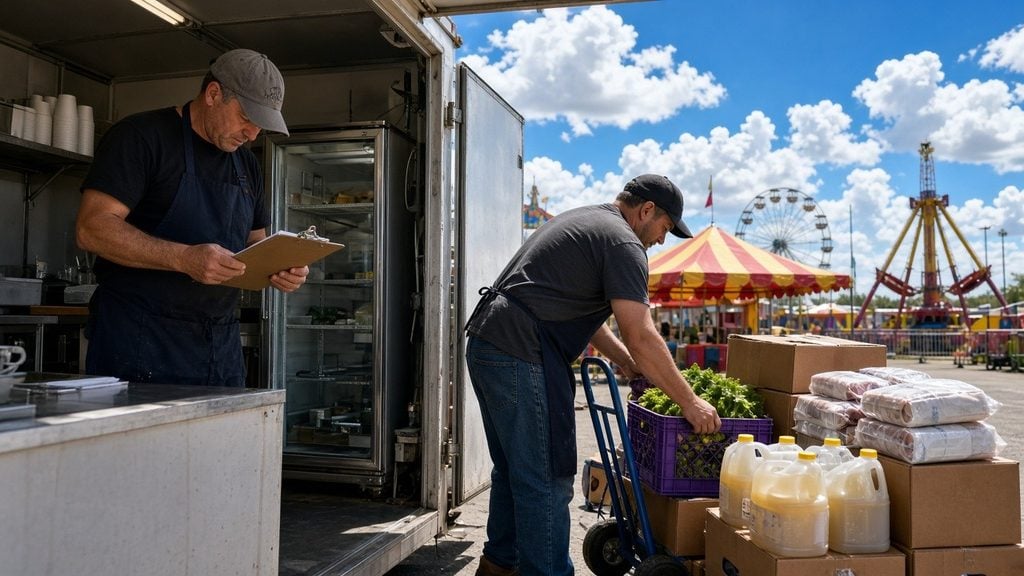
Corn Dogs vs. Fusion Items: An Illustrative Cost Breakdown
To show how this works, here is an illustrative estimate comparing a classic corn dog to a trendy beef-based fusion item, the kind of loaded bulgogi fries that have become a midway favorite. These figures are not from any specific vendor or fair. They are round-number estimates to show the math, and your own vendors’ numbers will differ.
Classic corn dog (illustrative estimate)
- Frankfurter: $0.75
- Batter mix: $0.15
- Fryer oil share: $0.12
- Stick, wrap, and condiments: $0.13
- Estimated food and paper cost: about $1.15
- Assumed menu price: $9.00, for a food cost near 13 percent
Loaded bulgogi fries (illustrative estimate)
- Marinated beef, about 4 ounces: $2.50
- Fries: $0.55
- Kimchi, sauces, and toppings: $0.75
- Boat, fork, and napkins: $0.25
- Estimated food and paper cost: about $4.05
- Assumed menu price: $17.00, for a food cost near 24 percent
On paper the fusion item earns more gross profit per sale: roughly $12.95 versus $7.85. But look at what happens when you apply the BLS changes. If beef costs rise another 15 percent, the beef line alone climbs about 38 cents, and the fusion item’s food cost creeps toward 26 percent with no change on the menu board. The corn dog, built on a frank, flour, and oil, saw much milder pressure. Its biggest inputs rose modestly or fell.
Speed matters too. A corn dog line can turn a guest in under two minutes. A built-to-order fusion plate takes longer and needs more hands on the line, and those hands now cost at least $16.90 an hour in California. When you measure profit per labor minute instead of profit per item, the gap narrows fast. The lesson is not that fusion items are bad. They draw crowds, social media posts, and repeat visits. The lesson is that a midway loaded with beef-heavy specialty items is carrying concentrated cost risk, and nobody on the board can see it unless someone is doing the math.
Vendor Mix Strategies That Keep Everyone Profitable
Here is how professionally managed fairs are protecting margins without hitting guests with across-the-board price hikes.
1. Diversify the protein mix across the midway
If six of your top ten stands depend on beef, one bad year for cattle prices squeezes your whole food program at once. A balanced lineup spreads commodity risk across chicken, pork, seafood, dairy, and plant-based items. When beef runs hot, chicken and pork stands carry more of the load, and the fair’s commission stays steadier.
2. Keep a value anchor at every stand
Ask each concessionaire to offer at least one item at an approachable price point, like a basic corn dog, a single taco, or a small fry. Value anchors keep families buying and make premium items look reasonable by comparison. Guests who feel they got a fair deal on the first purchase come back for a second.
3. Re-engineer portions and builds before touching prices
Small changes protect margins without guests noticing a price change. Swap part of the beef in a loaded item for grilled onions, peppers, or cheese, which dropped in price last year. Offer a half-portion of a premium plate. Use a smaller, sturdier serving boat that holds the same perceived value. These are menu decisions a good food program director works through with each vendor, not decisions vendors should be left to make alone in July.
4. Let fusion items rotate, and let classics carry the base
Treat specialty items as limited features rather than permanent fixtures. A rotating “new this year” lineup builds buzz, and the fair can feature the ones whose ingredients are holding steady on price. Meanwhile, the classics with stable input costs carry the volume.
5. Use tax-included, round-number pricing
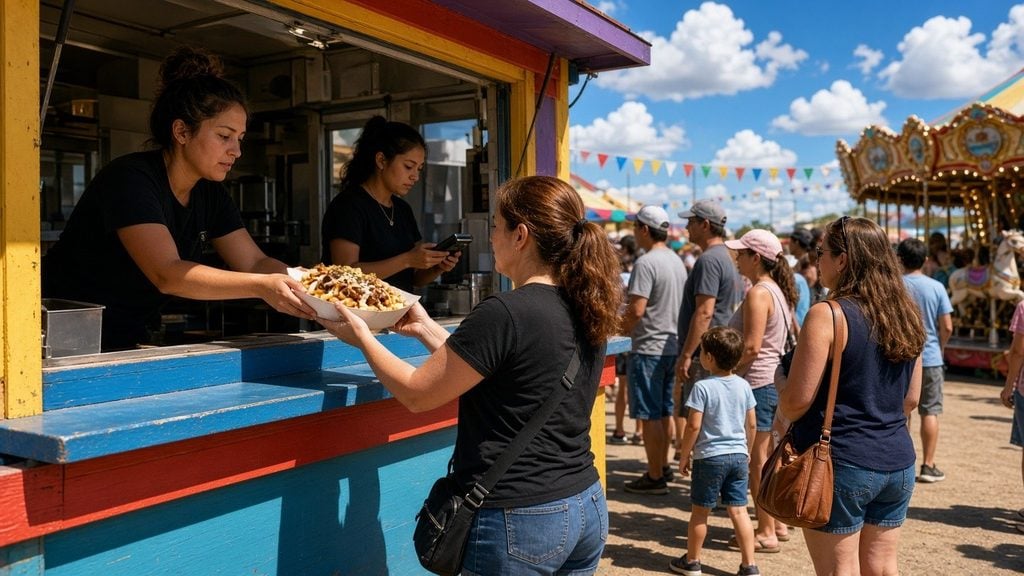
Round prices move lines faster and make cash handling simpler. In California, vendors who want to charge tax-included prices must post the required notice. The California Department of Tax and Fee Administration’s restaurant tax guide spells out the exact sign language. A $10 tax-included corn dog often sells better than a $9.25 item that rings up at an odd total, and the faster transactions add up over a long fair day.
6. Revisit the commission structure, not just the menu
Flat commission rates can push vendors toward the highest-priced items they can sell. Some fairs are experimenting with tiered structures, where vendors who keep a value item on the board or hit certain service standards earn a better rate. Any change should fit your fair’s contracting rules. The CDFA Fairs and Expositions branch, which provides fiscal and policy oversight of California’s network of fairs, publishes resources and guidelines that boards should review before restructuring concession agreements.
7. Buy smarter as a group
Individual operators pay individual prices. A managed food program can coordinate purchasing for common items like fryer oil, paper goods, ice, and beverages, and pass the savings through to vendors. Lower input costs give vendors room to hold their prices, which keeps guests spending.
Your January Checklist
Before vendor contracts and menus are finalized, make sure your team can answer these questions:
- What share of your top-grossing stands depend on beef or coffee, the two categories with the steepest increases last year?
- Does every stand have at least one value anchor item?
- Which menu prices went up last year, and did unit sales hold or fall?
- Is your commission structure rewarding volume and guest satisfaction, or just high ticket prices?
- Who is reviewing vendor menus against current cost data before they go on the board?
If the honest answer to that last question is “nobody,” that is the real margin problem. Inflation is not going away in 2026, but a fair that manages its menu mix with real numbers can hold the line on prices and still grow food revenue.
Talk to FairFirst Before Your Next Fair
FairFirst manages food concessions for county fairs, including the Alameda County Fair, and we do this math for every stand on the midway. We build vendor lineups that balance classics and new features, track ingredient costs against menu prices, and structure programs so concessionaires stay profitable while guests feel they got their money’s worth. If your board is staring at rising costs and a tired menu heading into 2026, schedule a consultation with FairFirst and we will walk through your current food program and show you where the margin is hiding.
Book your free FairFirst consultation today.
Sources
- Consumer Price Index, November 2025, U.S. Bureau of Labor Statistics, 2025
- 2025 Federal Government Shutdown Impact on the CPI, U.S. Bureau of Labor Statistics, 2025
- Food Price Outlook, USDA Economic Research Service, 2025
- Cattle and Beef: Sector at a Glance, USDA Economic Research Service, 2025
- Minimum Wage Frequently Asked Questions, California Labor Commissioner’s Office (DIR), 2026
- Tax Guide for Restaurant Owners: Industry Topics, California Department of Tax and Fee Administration, 2025
- Fairs and Expositions, California Department of Food and Agriculture, 2025


