


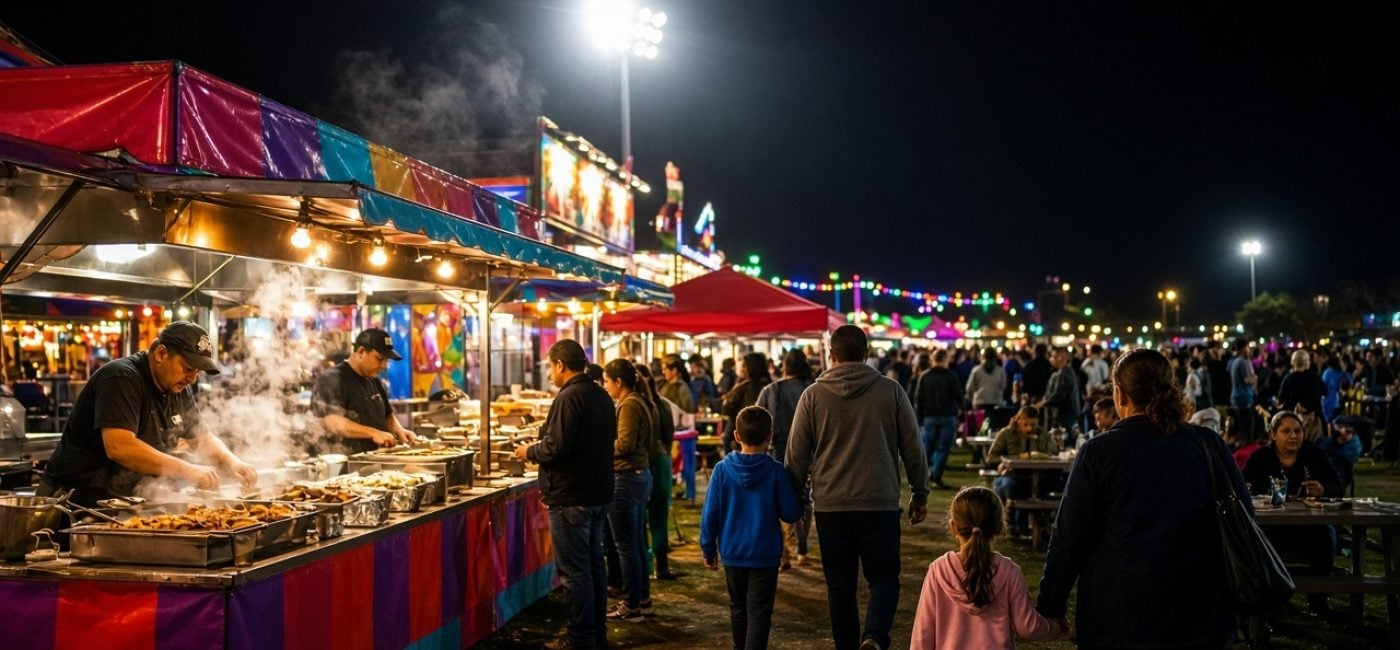
The fair food court after dark needs an operating plan
The concert ends and guests walk toward the smell of food, only to find half the shutters down and the remaining queues stretching across the midway. This is an illustrative scenario, not a report about a named fair. It captures a planning mismatch: entertainment encourages people to stay, while food service, lighting, cleaning, and transport operate on different closing assumptions. Treating the fair food court after dark as its own service period closes that gap.
October 2025 is a useful time to review how next season’s evening food court should work. A lively after-dark atmosphere does not require extending every stand indefinitely or promising a new event every night. It requires coordinated hours, willing vendors, safe circulation, and a clear finish. Treat the evening as a distinct service period with its own demand pattern and support needs. The goal is a reliable guest experience, not a slogan about keeping the grounds open later.
Map the evening from the guest’s point of view
Start with the likely release points from concerts, rides, exhibits, and evening programs. Walk the route to food, seating, restrooms, exits, and transportation. Observe where guests actually go when appropriate records or site observations are available. Do not assume every concertgoer wants dinner, and do not invent a sales forecast to justify the idea.
Build a realistic sequence: the guest leaves the attraction, sees which food options are open, finds the queue, collects the order, sits if desired, and reaches the exit. Identify where that sequence breaks. A stand may technically remain open but look closed because neighboring lights are off or the public route is being cleaned. Resolve those signals with operations before promoting a night-food experience. A coordinated small cluster can be clearer and easier to support than scattered vendors operating alone across a darkening site.
Agree on hours with vendors before advertising them
Late service has costs. Discuss the proposed period, menu, staffing expectations, utilities, cleaning, and closing sequence with participating vendors. Obtain clear agreement through the applicable contract process rather than treating a public announcement as permission to change their obligations. Distinguish the time for accepting the last order from the time the area closes to guests.
Use actual demand information where available and identify assumptions where it is not. A pilot evening or limited participating area may be appropriate if the fair has approval and vendor support. Do not promise that later hours automatically produce profitable sales. Vendors need a workable production plan and a reliable end point. A fair benefits from partners who understand the arrangement, not reluctant stands trying to comply with an unexpected extension while the rest of the grounds begins shutting down around them.
Keep the menu suited to the service period
A focused evening menu can help a stand maintain quality and finish predictably, provided the selection and availability are communicated honestly. Decide how orders near closing are handled and who updates public information when an item is unavailable. Do not leave guests waiting in a line for a product staff already know they cannot provide.
Food-safety responsibilities remain unchanged by the hour. The FDA’s 2022 Food Code is a model reference for handling and holding, while the locally adopted requirements and permit conditions govern the operation. A late rush is not a reason to keep food outside the approved process or improvise with unavailable equipment. Vendors should plan preparation, holding, cleaning, and shutdown for the full agreed period. An inviting evening experience depends on a meal that is prepared and served properly, not simply on the presence of an illuminated counter.
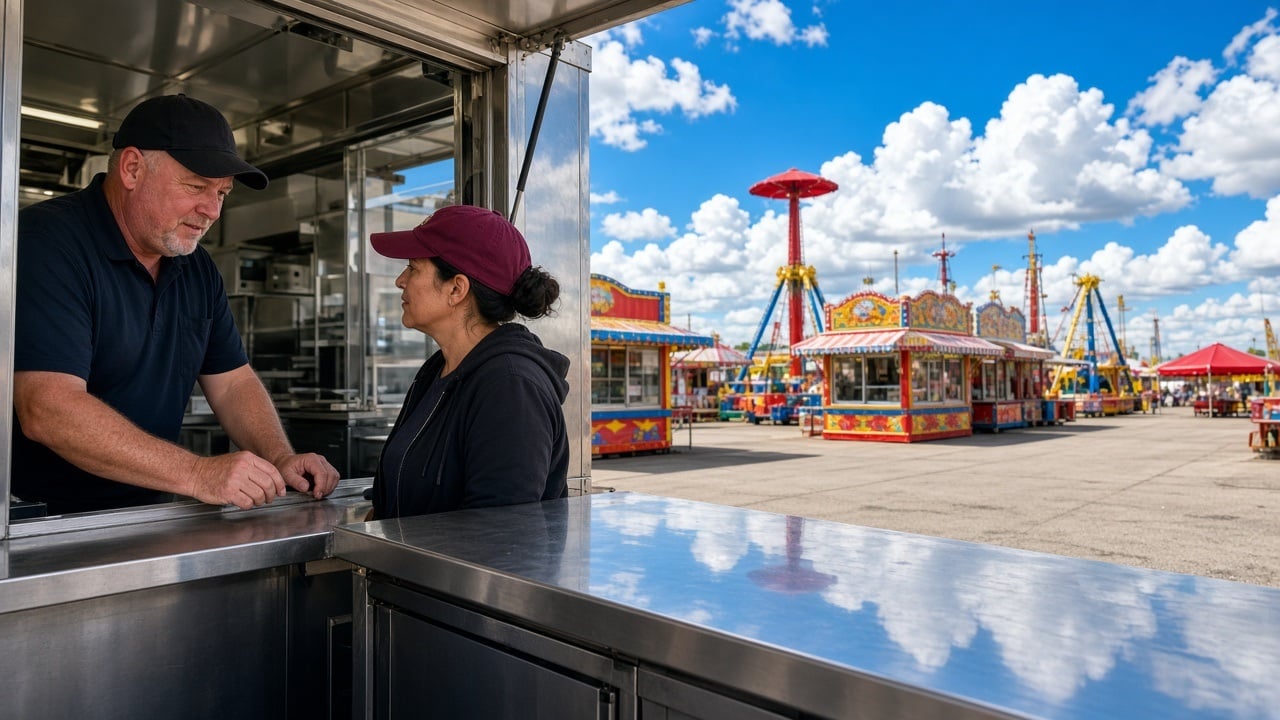
Walk the food court after the sun goes down
Daytime visibility can hide nighttime problems. Inspect the area under its actual evening lighting with queues, tables, and barriers in place. Look at approaches, changes in surface, counter visibility, waste stations, and routes to exits. Avoid relying on decorative lighting alone to make practical tasks visible. Qualified facilities personnel should assess the lighting arrangement and any electrical work.
Review accessible routes and use areas with reference to the 2010 ADA Standards and the fair’s applicable requirements. A route that exists on the daytime map may be obstructed by a nighttime pickup crowd or equipment moved for teardown. Assign responsibility for ongoing checks. Make sure visitors can distinguish an open service point from a closed one without walking into a service lane. Good lighting supports clarity, safe work, and circulation; it is more than atmosphere for a promotional photograph.
Use atmosphere without creating a new noise problem
Music and activity can support an evening dining area, but the fair must confirm the local conditions governing sound and hours. Review permits, lease terms, neighborhood requirements, and existing event commitments with the appropriate local contacts. There is no single statewide nighttime noise limit that this article can responsibly apply to every fairground.
Worker exposure is a separate issue. Cal/OSHA’s occupational noise provisions address exposure limits and controls for employees; they are not the neighborhood sound ordinance. Have qualified safety staff evaluate the relevant work conditions rather than assuming a public sound check covers employee protection. Position activities and speakers through a reviewed plan, maintain communication between stands and security, and give neighbors a defined contact where appropriate. A welcoming food area should not depend on sound levels that interfere with staff instructions or create an avoidable conflict outside the grounds.
Make alcohol service boundaries explicit
An evening food court may include licensed beverage service, but food hours and alcohol hours are not automatically identical. Confirm the applicable authorization, service footprint, conditions, and responsible-service requirements with the license holder and California ABC. Do not imply that extending food availability extends a beverage privilege.
The ABC model alcohol management policies provide suggestions for event service procedures and coordination. They are guidance, not a replacement for the actual license conditions. Brief food vendors and security on the approved closing sequence so guests receive consistent answers. Keep alcohol pickup and general food queues from obscuring service boundaries. Staff should know how to request assistance and should not negotiate exceptions because the concert finished later than expected. A coherent evening plan respects the difference between a convenient meal option and a regulated beverage operation with its own responsibilities.
Keep support services open with the food
Food service creates needs beyond the booth. Coordinate restroom access, waste collection, dining-area cleaning, first aid, security, and guest assistance for the period advertised. A late-open stand is not a complete guest experience if nearby support has already closed or staff cannot identify where help is available.
Write the service overlap into the operations schedule and give each function a closing contact. The plan should show who confirms the last guests have cleared the area and who authorizes equipment movement. Avoid sending carts through active dining spaces simply because the nominal fair closing time has passed. Support crews need accurate information about remaining queues and meals being collected. This is a coordination issue, not a request for everyone to remain indefinitely. Clear start and finish conditions make the evening more predictable for vendors, staff, and visitors while preserving the support the service actually requires.
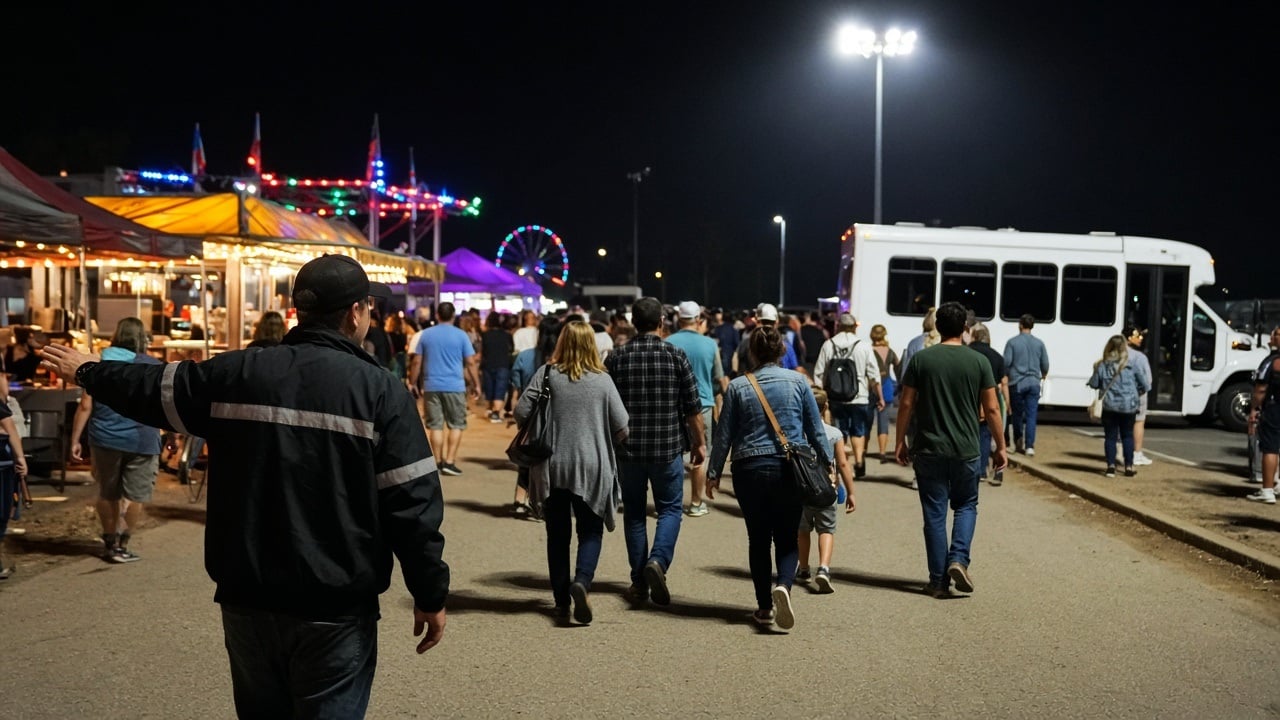
Connect the last meal with the last ride home
Review departure options with the transport and security teams. Guests should know how to reach parking, pickup zones, and any scheduled shuttle or transit connection. Verify actual service information before advertising it. Do not imply that public transportation operates later than its published schedule or that a private ride will always be immediately available.
Make directions usable in more than one format. The Department of Justice’s effective-communication guidance is relevant when visitors need help understanding service and exit information. Staff should know where to direct a person who cannot use the usual phone-based route. Observe whether late dining competes with the time required to reach transportation. A food-court promise that encourages guests to remain beyond available transport can create a frustrating finish, even if the meal itself was good. Build that final movement into the plan rather than treating departure as another department’s separate problem.
Include nighttime conditions in the emergency plan
Evening service must fit the fair’s response to weather and other interruptions. The National Weather Service’s Event Ready guidance emphasizes monitoring, decision authority, and predefined action. Confirm how the evening food area receives alerts and how guests are directed if operations change. Lower visibility, entertainment noise, and a departing crowd can make an improvised message harder to deliver.
Review emergency access under the actual nighttime layout. A line that was manageable in the afternoon may shift after a concert release, and a previously clear service lane may fill with closing equipment. Test the communications path with the staff who will work the evening, not only the opening managers. Ensure that decisions about pausing orders, protecting staff, and reopening are coordinated. A later food-service period should inherit the fair’s safety structure, not operate as an informal afterthought after the main briefing ends.
Measure the pilot without overselling the result
Choose a few useful review questions before trying an adjusted evening plan. Were the advertised options available? Did queues remain within their intended area? Could guests find seating, restrooms, assistance, and exits? Did participating vendors consider the arrangement workable? Use sales information only with the appropriate permissions and context, and separate observation from estimates.
Avoid claiming that the plan increased spending or attendance unless the evidence supports that conclusion. A stronger evening may be valuable because it improves reliability even before a financial effect can be established. Review operational costs as well as revenue. Include cleaning, security, utilities, and the time needed to close safely. A fair board can make a better decision from a modest, transparent pilot report than from a confident forecast built around an attractive nighttime photograph and a few enthusiastic comments.
Make the next season’s evening promise deliverable
Before placing the evening offer on the calendar, confirm participating vendors, hours, support services, lighting review, transport information, and the closing sequence. Put the guest-facing message through the same review so it describes what the operation can actually provide. “Select food stands remain open” may be more accurate than implying that every concession serves until the last departure.
Give the concession coordinator responsibility for maintaining that alignment as plans change. If a concert time moves or a vendor cannot participate, update the service plan and communication together. The food court after dark can feel intentional without becoming complicated or overstated. The essential work is connecting the departments and vendors that already shape the guest’s evening. Professional concession management turns those separate commitments into one usable sequence, from the first evening order to the last table cleaned and the final guest directed toward the exit.
Talk to FairFirst Before Your Next Fair
Professional concession management should connect the policy on paper with the decisions made on the grounds. FairFirst can help your team define responsibilities, coordinate vendors, and build practical operating procedures around your fair’s needs. Schedule a consultation with FairFirst to review your food-service operation and identify the next steps.
Start the conversation about your next fair.
Sources
- 2022 Food Code — U.S. FDA (2022)
- 2010 ADA Standards — U.S. DOJ (2010)
- Occupational Noise Exposure, Section 5096 — Cal/OSHA (regulation applicable 2025)
- Model Alcohol Management Policies — California ABC (undated guidance)
- Effective Communication — U.S. DOJ (2020)
- Event Ready — National Weather Service (undated planning guidance)


