



The guest needs an owner, not another referral
A guest has an incorrect meal, an unanswered refund request, or a concern about how a food stand handled a question. They ask one employee, get directed to another, and eventually contact a board member because nobody seems responsible. This is an illustrative scenario, not an account of a particular fair. It shows how a small service problem can become a larger credibility problem when the handoff fails. Fair food court guest recovery gives that concern one owner from the first conversation.
December 2025 is a useful time to design next season’s guest-recovery process while the operation is not in the middle of a rush. The objective is not to keep complaints away from leadership. It is to make assistance easy to find, distinguish urgent concerns from ordinary adjustments, and assign clear authority to resolve each issue. The board should remain informed appropriately, but it should not be the first place a guest can obtain a practical answer about lunch.
Create more than one usable entry point
Give guests a clear in-person help route, an appropriate phone or digital route, and staff who know how to connect the two. A person should not need to search social media for a manager’s name to report an order problem. Make the process visible without overwhelming the food court with notices or requiring every vendor to invent different instructions.
The Department of Justice’s effective-communication guidance explains that covered entities must communicate effectively with people with communication disabilities. A complaint process is part of that service relationship. Do not rely only on a QR code, a voice-only hotline, or a small printed form. Train staff to ask what assistance is useful and provide the appropriate method. The goal is access to the process, not a requirement that a guest disclose private information publicly before anybody will listen.
Triage the concern before discussing compensation
Start by asking what happened and whether anyone needs immediate assistance. Separate a routine service issue from a medical emergency, a possible food-safety concern, a security issue, or an accessibility problem. Staff should know which situations require prompt escalation to the fair’s emergency, health, security, or accessibility contact. A refund is not a substitute for an appropriate safety response.
For food concerns, FoodSafety.gov’s reporting guidance directs people toward the responsible health authorities for the type of problem involved. Fair staff should not diagnose illness, dismiss a report because no one else complained, or claim they have established a cause. Document the guest’s account accurately and route it through the approved procedure. Do not require someone to accept a replacement meal before the concern will be taken seriously. Service recovery and public-health reporting are separate responsibilities.
Give the first employee a short, useful script
A practical opening sounds like this: “I can help connect you with the right person. Tell me the stand and what happened, and let me know if you need urgent assistance.” Staff do not need a long apology script or permission to argue about fault. They need enough information to triage and a reliable contact who will take ownership.
Explain what happens next and avoid promising an exact result before the facts are reviewed. If the employee cannot authorize an adjustment, the handoff should identify the person who can, not simply tell the guest to “ask management.” A warm transfer where feasible is better than sending a visitor across the grounds without confirmation. Keep the ordinary queue moving by assigning support rather than making the guest repeat the story while several employees debate it at the service window. Calm clarity is an operating skill worth rehearsing.

Define refund and replacement authority before opening
Write a simple authority matrix for ordinary issues: missing item, incorrect order, duplicate transaction, unavailable product, and dissatisfaction that needs supervisor review. Define who may approve a replacement or refund, what verification is appropriate, and when the concession coordinator becomes involved. Review the policy with legal and financial advisers so it fits consumer obligations and the actual vendor agreements.
Do not assume the fair can reverse a vendor transaction without a defined arrangement. Equally, do not leave a guest with no practical route because the payment record belongs to a booth. Coordinate the workflow and record the result. Avoid a universal “no refunds under any circumstances” statement unless qualified review confirms the policy and presentation are lawful for the situation. A good matrix gives staff useful discretion within clear limits instead of forcing every modest adjustment through a chain of unavailable managers.
Collect enough information, not everything possible
A complaint record may need the stand, time, order reference, issue, action, and a way to respond if follow-up is requested. It rarely needs a full identity-document copy or an unrelated personal history. Let the issue determine what information is necessary, and keep sensitive medical or payment details out of routine notes unless the authorized procedure specifically requires them.
The FTC’s personal-information guide recommends taking stock of information, limiting collection, protecting it, and planning appropriate disposal. Apply that discipline to forms, shared spreadsheets, email forwarding, and paper notes at the booth. Do not ask staff to photograph a guest’s card as evidence of a transaction. Use the approved financial process. A guest seeking assistance should not create a new privacy problem because the fair designed a detailed form without deciding who would read or retain the answers.
Make the physical help point accessible
Review the route, counter, seating if provided, and surrounding queue with the accessibility lead. The 2010 ADA Standards provide an important design reference for applicable requirements, but the actual setup needs review under the rules that apply to it. A help desk is not useful if reaching it requires crossing a service lane or entering an inaccessible temporary enclosure.
Think about noise, lighting, and privacy as well as movement. A guest with a communication need may require a quieter place or an alternative format. A person raising a sensitive concern should not be expected to describe it across a crowded dining area. Staff need a way to obtain appropriate assistance without abandoning the visitor. Test the help point under realistic conditions with barriers and nearby lines in place, not only in an empty preopening photograph that makes every route appear clear.
Keep food-safety escalation distinct from guest recovery
The concession team should have a direct procedure for notifying the appropriate food-safety lead and local environmental health authority when needed. The 2022 FDA Food Code is a model reference for food-service controls; the locally adopted requirements and regulator instructions govern the actual operation. A manager should not invent an investigation process based solely on general customer-service training.
Preserve relevant operational records according to the approved procedure and follow qualified directions about food or equipment involved. Staff should describe observations and the guest’s report without speculating publicly about a cause. Do not promise that a refund closes the matter or ask a guest to waive reporting rights in exchange for ordinary assistance. The purpose of the recovery process is to help the person and route the concern correctly, not to suppress information that the fair or health authorities need to evaluate.
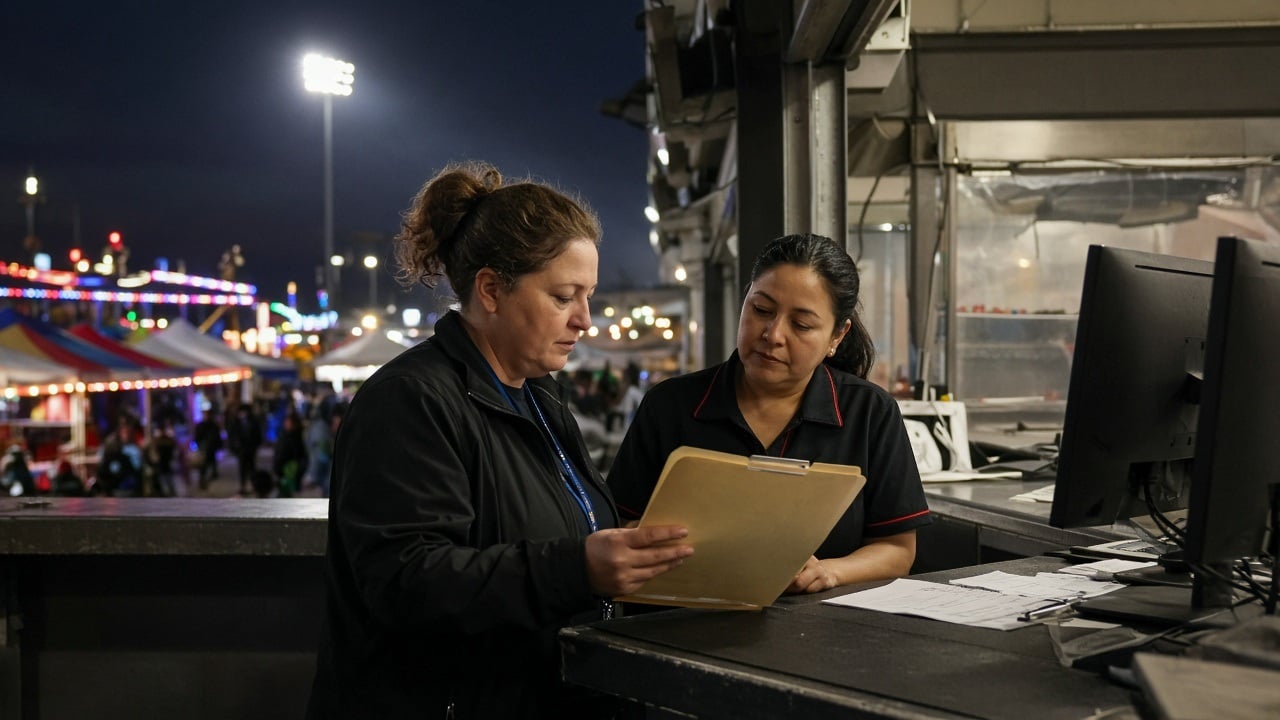
Close the fair food court guest recovery loop across departments and vendors
Assign one case owner for follow-through even when several teams must act. Record the referral, confirm that the receiving person accepted it, and identify what response remains due. A message sent to a general inbox is not proof that the guest received help. Set realistic internal response targets and an escalation path when they are missed; label them as the fair’s service standards rather than legal deadlines unless a specific requirement applies.
Keep the guest informed about what the fair can and cannot determine. If the matter belongs to a vendor, explain the connection without abandoning ownership of the handoff. If a regulator handles the investigation, avoid promising its outcome or timing. A useful closeout states the action taken, the remaining contact, and any practical next step. The guest should not have to reconstruct the fair’s organization chart to find out whether anyone is still working on the issue.
Give the board patterns instead of private case files
Leadership needs to know recurring problems and significant issues through the appropriate reporting process. Routine summaries can show complaint categories, affected locations, response progress, and corrective actions without circulating personal guest details. Escalate serious matters under the fair’s governance and legal procedures rather than trying to reduce every issue to a dashboard count.
Do not treat fewer complaints as automatic proof of better service. It may mean guests could not find the channel or believed it would not help. Look at access, follow-through, and the quality of resolution as well as volume. Compare periods cautiously when the channels or attendance patterns changed. A board report should distinguish confirmed facts from allegations and illustrative training examples. That keeps oversight useful without turning a guest’s unresolved account into a public accusation against a vendor or employee before appropriate review.
Train the handoff with realistic examples
Practice a missing side dish, a failed phone confirmation, an accessibility concern, and a possible illness report. Use invented scenarios and make that status clear. Ask the employee to identify the category, contact the correct lead, explain the next step, and record only necessary information. Include an unreachable supervisor so the backup path is tested rather than assumed.
Bring vendors and guest-services staff into the same exercise. A fair policy cannot work if the booth follows a different refund process and nobody has reconciled the two. Check the radio or phone connection from the actual help point. Review the result with staff without using the exercise to embarrass individuals. The aim is consistent confidence: employees should know when they can solve a small problem and when they need support. That is more useful than a training signature attached to a policy nobody has tried under realistic conditions.
Use each resolved issue to improve the operation
After the fair, group the operational lessons: unclear menu language, difficult pickup identification, missing authority, inaccessible channels, or slow vendor communication. Assign an owner and deadline for each improvement. Avoid collecting more personal detail simply to make the analysis feel complete. The useful question is what process should change, not how much information the fair can retain about a dissatisfied visitor.
Before next opening, verify that the corrections reached the booth, help desk, supervisor, and vendor agreement where relevant. A recovery process should become easier to use over time. Professional concession management helps connect these handoffs so an ordinary problem can be addressed promptly and an urgent concern reaches the right expertise. Guests should never have to choose between giving up and contacting the board because the food court has no visible owner for the next step. Make the assistance route as deliberate as the ordering route.
Talk to FairFirst Before Your Next Fair
Professional concession management should connect the policy on paper with the decisions made on the grounds. FairFirst can help your team define responsibilities, coordinate vendors, and build practical operating procedures around your fair’s needs. Schedule a consultation with FairFirst to review your food-service operation and identify the next steps.
Start the conversation about your next fair.


