


The decision needs to exist before the gust
The dinner line is long, the grill is full, and a canopy begins moving more than anyone likes. In this hypothetical scene, the most dangerous delay is not a missing weather application. It is a conversation about who has permission to stop service. The vendor wants direction, the concession manager is trying to reach operations, and each person assumes somebody else has already checked the structure’s limits. A fair food court weather plan settles that permission before the wind picks up.
An August 2025 weather plan should remove that uncertainty before opening. Wind, lightning, rain, and other hazards do not follow the food court’s revenue schedule. A useful plan connects forecasts and observations to named decision makers, practical actions, and clear guest instructions. It also recognizes that pausing service can take time. Waiting until a hazard is obvious to every customer may leave too little time to secure equipment and move people safely.
Start with the structures actually on the grounds
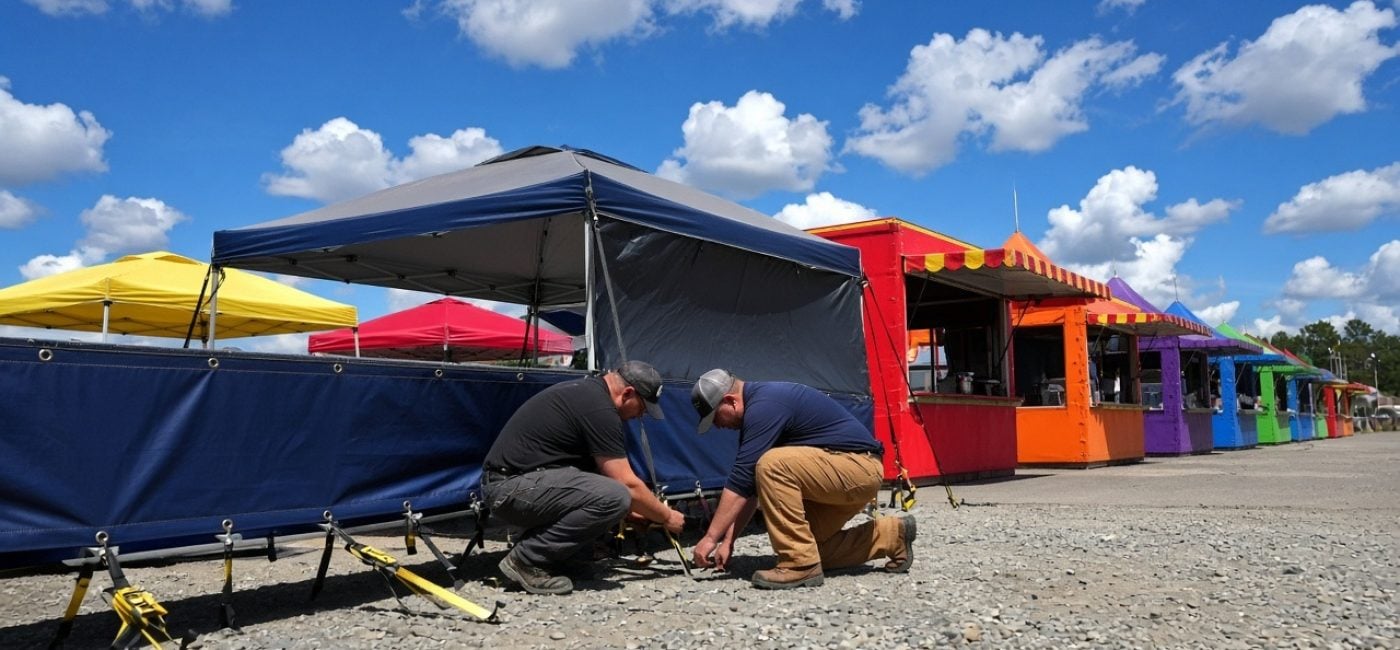
Inventory temporary canopies, signs, shade structures, umbrellas, and other equipment that may be affected by wind. Obtain the relevant manufacturer instructions and the installation information required by the approving authority. Ask qualified providers and the local authority to resolve missing documentation. A familiar-looking canopy is not evidence that its anchorage or operating limits suit the location.
The National Weather Service’s Event Ready guidance specifically asks event planners to consider wind and snow limits for temporary structures. There is no responsible universal wind threshold to copy into every fair’s handbook. Site exposure, structure design, installation, and permit conditions matter. Record the applicable limits and the actions required before reaching them. Include lead time for stopping orders and moving people; an instruction that becomes actionable only after the structure is already outside its limits is not a useful plan.
Name a weather watcher who can watch the weather
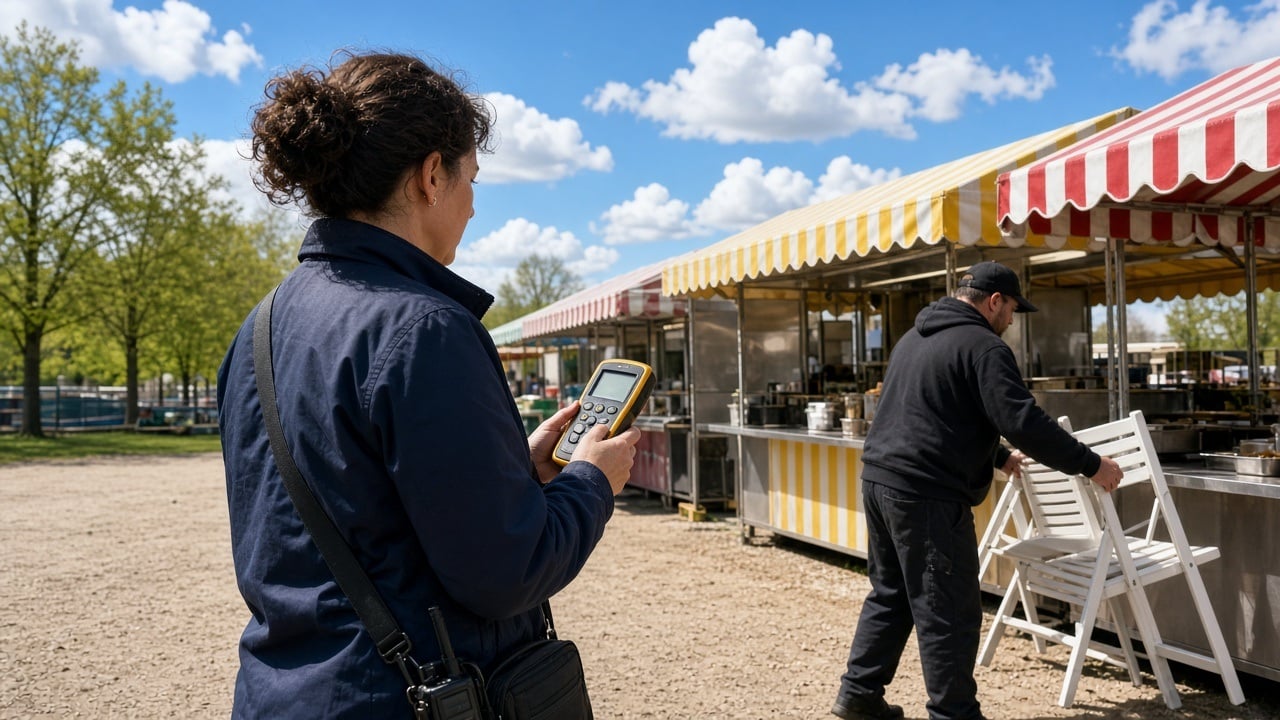
Assign monitoring to someone with time, tools, and a reliable communications path. Do not simply add “keep an eye on the sky” to a cook’s responsibilities. The watcher needs access to official forecasts, current conditions, and warnings relevant to the grounds. Give that person a backup and define how responsibility transfers during breaks and shift changes.
NWS outdoor-event planning advice recommends a designated watcher who can activate the plan or report to someone with authority. Spell out that connection. If the decision maker is unreachable, who acts next? A radio message should identify the hazard, affected area, required action, and confirmation request. Keep the record factual. A weather application screenshot is not a substitute for documenting the operating decision that followed or verifying that each affected vendor received it.
Turn your fair food court weather plan into a short action matrix
For each hazard, define the monitoring input, decision owner, affected locations, staff action, and guest message. Separate preparations from suspension and reopening. Early preparations may include securing loose items, checking communication equipment, and confirming shelter availability. More serious conditions may require stopping new orders, shutting equipment down through the approved process, and moving people according to the emergency plan.
The NWS hazardous-weather action-plan template offers a framework for connecting hazards with responses. Adapt it with local emergency management and qualified advisers rather than copying every example value. A threshold is only useful when the action can be completed in time. Work backward from the movement and shutdown task. If a row says “evacuate food court,” it should also identify where people go and how staff avoid directing them into a different hazard.
Do not confuse a canopy with lightning shelter
A food booth roof may keep rain off lunch, but that does not make it safe lightning shelter. The NWS lightning guidance explains that substantial buildings provide protection and that open-sided shelters are not safe places during a nearby thunderstorm. The guidance also identifies hard-topped metal vehicles with windows closed as an alternative where a substantial building is unavailable.
Plan for the actual crowd rather than the number of people standing nearest an office door. Identify suitable locations with the fair’s emergency team, assess usable capacity, and keep the routes clear. Do not publish a shelter arrow toward a locked building. Staff should know which areas are suitable and which are not, and they should communicate the approved direction consistently. Avoid suggesting that guests wait under vendor awnings while management decides what to do next.
Give lightning its own timing rules
Lightning planning needs more than a rain forecast. The NWS toolkit for outdoor venues emphasizes designated safe structures, communication, and a written plan. Account for how long it takes to notify guests and move them, including people who need assistance. Loud entertainment and the food court’s ambient noise can make informal observation unreliable.
NWS recommends waiting at least thirty minutes after the last thunder before resuming outdoor activities. That recommendation is not a blanket authorization to reopen every concession. Other hazards, local instructions, damaged equipment, or unsafe routes may require a longer closure. Put the lightning timing rule into the larger decision process so staff understand both parts: the minimum waiting recommendation and the separate site review. Do not allow the absence of rain at one booth to become an unofficial reopening decision.
Make the shutdown procedure safe for the worker
A weather interruption does not justify sending an untrained employee into hazardous work. Vendors need equipment-specific shutdown procedures and staff who know when to stop and seek qualified assistance. The plan should distinguish ordinary closing tasks from electrical, fuel, or structural work that requires authorized personnel. Do not ask counter staff to improvise repairs or climb onto a moving canopy.
Clarify priorities. People come before inventory, unfinished meals, or signs. If conditions require immediate movement, the emergency plan governs; staff should not linger to save a batch of food. Agree in advance on the circumstances in which equipment can be shut down safely and when the area must be left. Include that sequence in vendor orientation. A practical plan protects the person carrying it out rather than assuming every asset can always be secured before anyone moves.
Communicate the action, not a debate about the forecast
Guests need a direct message: what is paused, where to go, and where the next update will appear. Avoid speculation about exact reopening times unless the decision team has a sound basis for making that statement. A calm, consistent explanation is better than different booths offering different predictions about when service will restart.
The Department of Justice’s effective-communication guidance is relevant to emergency instructions as well as ordinary service. Plan audible and visual communication methods, and provide appropriate assistance for people with communication disabilities. Do not rely only on a smartphone alert or an announcement that cannot be heard beside the stage. Coordinate public messages with the fair’s emergency leadership so a food-court notice does not contradict instructions being issued elsewhere on the grounds. Test the process with the people expected to deliver it.
Protect the routes before you need them
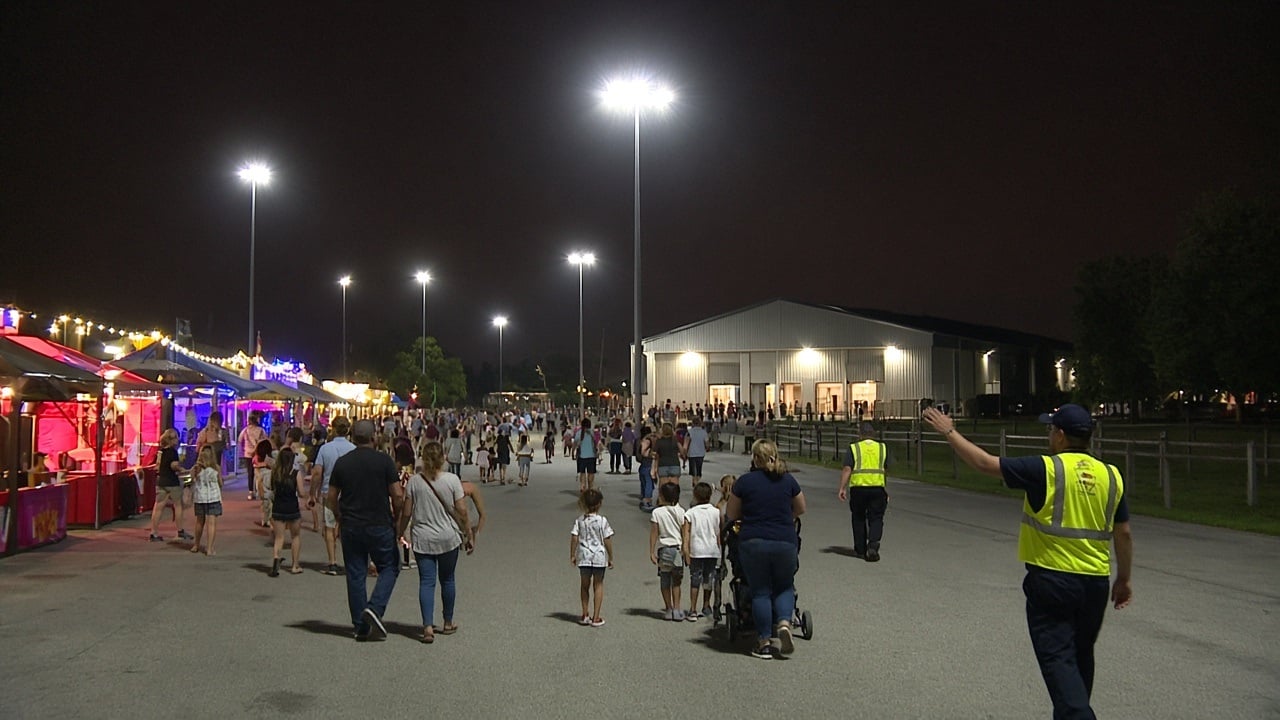
A shelter plan depends on clear circulation. Delivery carts, pickup crowds, temporary barriers, and vendor storage can change a route during the day. Assign someone to check the designated paths during operations rather than relying solely on the preopening walkthrough. Coordinate accessible movement and emergency access with the grounds team.
Practice the route from the busiest service locations. Think about families carrying food, guests using mobility devices, and staff leaving behind a hot kitchen. Identify assistance responsibilities without assuming that a stranger will solve the problem. The route should not require people to cross active service traffic or move toward a structure that is unsuitable for the hazard. When the layout changes, update the operating map and briefing. An accurate map is a live management tool, not a document that becomes untouchable after the first board presentation.
Reopen through a checklist, not a rumor
Once the immediate weather concern has passed, confirm the decision with the authorized fair lead. Review structures and utilities through the appropriate qualified personnel, check routes, and address any damaged or displaced equipment. Vendors should not reopen independently because they see another stand serving customers. That creates conflicting signals and can bring guests back into an area still under review.
Food that was interrupted during preparation or holding needs assessment under the stand’s approved food-safety procedures and local requirements. Do not use appearance alone to decide whether it remains suitable. The operating plan should identify who coordinates that assessment and how unusable product is documented. Reopening is a controlled transition: permission, equipment readiness, food readiness, staff briefing, and guest notification. Skipping the sequence to recover a few minutes of sales can undo the care taken during the initial suspension.
Rehearse a realistic interruption with vendors
Choose a hypothetical change in conditions and walk the decision through every role. Ask the watcher to send the message, the manager to identify the action, and each vendor to describe the next steps. Include a missing supervisor, a guest who cannot hear announcements, and an inaccessible usual route. The exercise should expose assumptions before a real interruption does.
Time the communications and movement tasks as planning observations, not guarantees. If the exercise reveals a delay, change the process or trigger earlier action. Keep a short improvement list with owners and completion dates. Repeating the exercise after a layout revision is more valuable than asking staff to sign that they read a lengthy document. The most important test is whether the person standing at the food window can explain what happens next without waiting for an improvised chain of phone calls.
Make weather coordination part of concession management
Food-service operations should connect to the fair’s emergency structure from planning through closeout. The concession coordinator needs current vendor contacts, equipment information, and a way to confirm messages reached every affected location. The emergency lead needs accurate information about queues, staff, and service areas so decisions reflect the real grounds layout.
After an interruption or drill, review the handoffs without assigning unsupported blame. Did the right person make the call? Did vendors receive consistent instructions? Were suitable destinations open and routes usable? Did reopening follow the agreed process? Those questions produce concrete improvements for the next operating day. Nobody can promise weather-proof operations, but a fair can insist that responsibility is explicit. Give the revised instructions to relief crews too, and confirm their contacts before the next shift takes responsibility for service. That is the difference between a weather plan stored in a binder and a decision system the food court can actually follow.
Talk to FairFirst Before Your Next Fair
Professional concession management should connect the policy on paper with the decisions made on the grounds. FairFirst can help your team define responsibilities, coordinate vendors, and build practical operating procedures around your fair’s needs. Schedule a consultation with FairFirst to review your food-service operation and identify the next steps.
Start the conversation about your next fair.
Sources
- Event Ready — National Weather Service (undated planning guidance)
- Hazardous Weather Action Plan — National Weather Service (undated guidance)
- Lightning Safety and Outdoor Sports — National Weather Service (undated guidance)
- Lightning Safety Toolkit for Outdoor Venues — National Weather Service (undated guidance)
- Effective Communication — U.S. DOJ (2020)


