


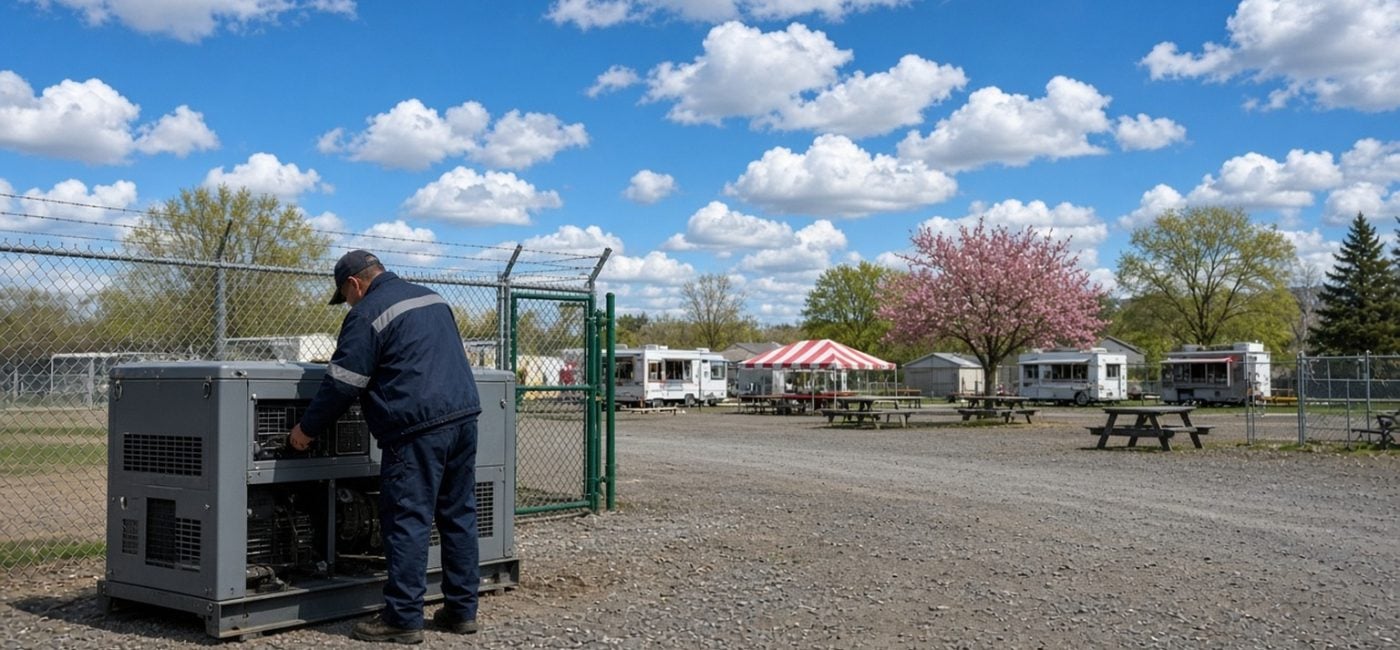
The generator is outdoors, so the placement must be fine. That assumption can leave a concession window, staff break area, or dining table in the path of exhaust. A unit behind a trailer may be hidden from guests while sitting beside an intake, an open door, or a partially enclosed work area. Fair food truck generator safety starts with where the exhaust goes, not where the unit is hidden.
For fair operators, generator planning is not finished when electricity reaches the stand. The site needs an approved equipment arrangement that accounts for exhaust, electrical connections, fire safety, fuel handling, access, and changing conditions. July's operating pressure makes it especially important that a last-minute relocation does not bypass that review.
Start with exposure, not concealment
A generator's visual impact is a secondary concern. First ask where people work, eat, rest, and sleep, and where exhaust can travel. Include food-truck windows, building vents, tent openings, neighboring booths, and temporary enclosures. A rear service lane is still an occupied space when workers use it all day.
CDC's carbon-monoxide basics explains that carbon monoxide is colorless and odorless and can cause sudden illness or death. The absence of a noticeable smell does not establish that an area is safe. Conversely, a complaint about engine fumes deserves attention without a supervisor pretending to identify every pollutant by scent.
Use a coordinated site review with qualified fire, electrical, facilities, and safety personnel as appropriate. The concession manager should bring the operating layout and explain how people actually use the space. A technical plan cannot account for a staff break table that someone adds after approval without telling anyone.
Understand what general guidance does and does not mean
CDC advises using portable generators outside, more than twenty feet from windows, doors, and vents. That is an important public-health precaution. It is not a universal commercial clearance rule that resolves every food-truck, fairground, fire-code, or manufacturer requirement by itself.
The CDC's power-outage guidance also warns about combustion equipment in enclosed or partially enclosed spaces. Apply the warning thoughtfully to tents, trailers, awnings, and other fair structures. Open sides or an open door do not automatically make an unsuitable location acceptable.
Have qualified people determine the arrangement for the actual equipment and site, including any stricter requirements. Record the approved location and operating conditions. Do not turn an article's summary into a substitute for the manufacturer instructions, regulatory approvals, or professional assessment needed for the installation.
Check the neighbors, not just the owner
One vendor may place equipment with its own service window in mind while affecting the next stand's kitchen entrance. Shared dining areas, accessible routes, public queues, and staff camping areas can sit outside the owner's immediate view. Review the surrounding space as a system rather than a collection of independent vendor footprints.
Walk the site from both public and service sides. Look for doors held open during restocking, fans moving air, temporary curtains, nearby vehicles, and overnight occupancy. Ask vendors how the setup changes during a rush and at closing. The safe-looking preopening arrangement may not remain the operating arrangement.
Keep approval boundaries clear. A vendor should not redirect exhaust, build an enclosure, or relocate a unit as an informal noise fix. Any material change needs the appropriate technical review. Solving a guest-experience complaint must not create an exposure or fire problem elsewhere.
Plan demand before choosing equipment
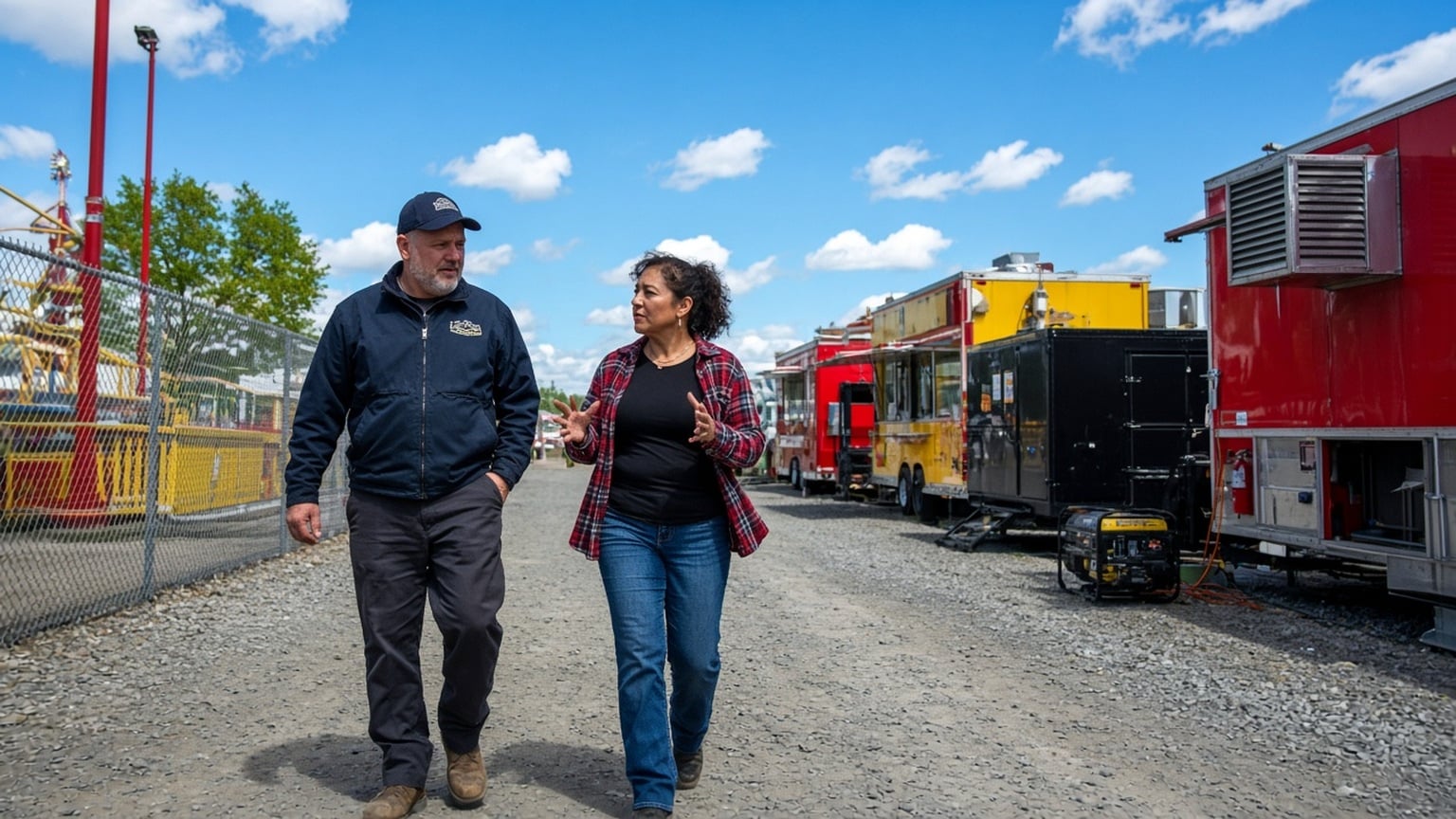
The operating team should identify what power is actually needed and when. Refrigeration, lighting, cooking appliances, payment equipment, and small accessories have different demands. Qualified electrical personnel should assess capacity, starting loads, connections, protection, and the suitability of the proposed supply.
Do not assume a quieter unit, a battery system, or an alternative fuel is automatically suitable for the entire stand. Each option has limitations and its own requirements. An attractive specification is not an approved installation. A smaller menu or different equipment arrangement may be more practical than trying to power every desired appliance.
Connect that assessment with continuity planning. The SBA's emergency-preparedness guidance recommends planning before disruption. At a fair, that means approved alternatives and decision owners—not simply keeping a spare generator that someone will figure out how to connect during service.
Keep fuel and servicing out of improvisation
Define who is authorized to refuel, maintain, move, or shut down equipment, using the applicable instructions and approved procedures. Store fuel only in arrangements allowed for the site. Keep guest access, deliveries, and waste handling from encroaching on the operating area.
The schedule matters. If the unit needs service during the busiest meal period, the team needs a planned safe interruption rather than a worker trying to keep production moving around a maintenance task. Never allow food-service urgency to override shutdown, cooling, or other precautions required by the equipment and authorities.
Provide a clear access route for qualified responders. A generator fenced for security can become difficult to reach if pallets, carts, or parked vehicles block its gate. Review how access will work after dark and during a crowd release, not just while the grounds are empty.
Treat complaints as information, not inconvenience
A guest says the dining area smells like exhaust. A worker reports a headache near the service lane. The supervisor's job is to act on the possible hazard, not debate whether the person is overreacting. Move people away from suspected exposure, follow the emergency plan, and obtain appropriate assistance.
CDC's clinical guidance describes symptoms of carbon-monoxide poisoning as variable and nonspecific. Headache, dizziness, weakness, nausea, chest pain, and altered mental status can occur. Fair staff should not use that list to diagnose someone or rule out exposure because a symptom is missing.
If poisoning is suspected, call emergency services and follow professional direction. Do not send an untrained worker into a hazardous area to retrieve a device or restart equipment. Keep others away and leave evaluation and medical treatment to qualified responders.
Monitoring supplements a safe setup
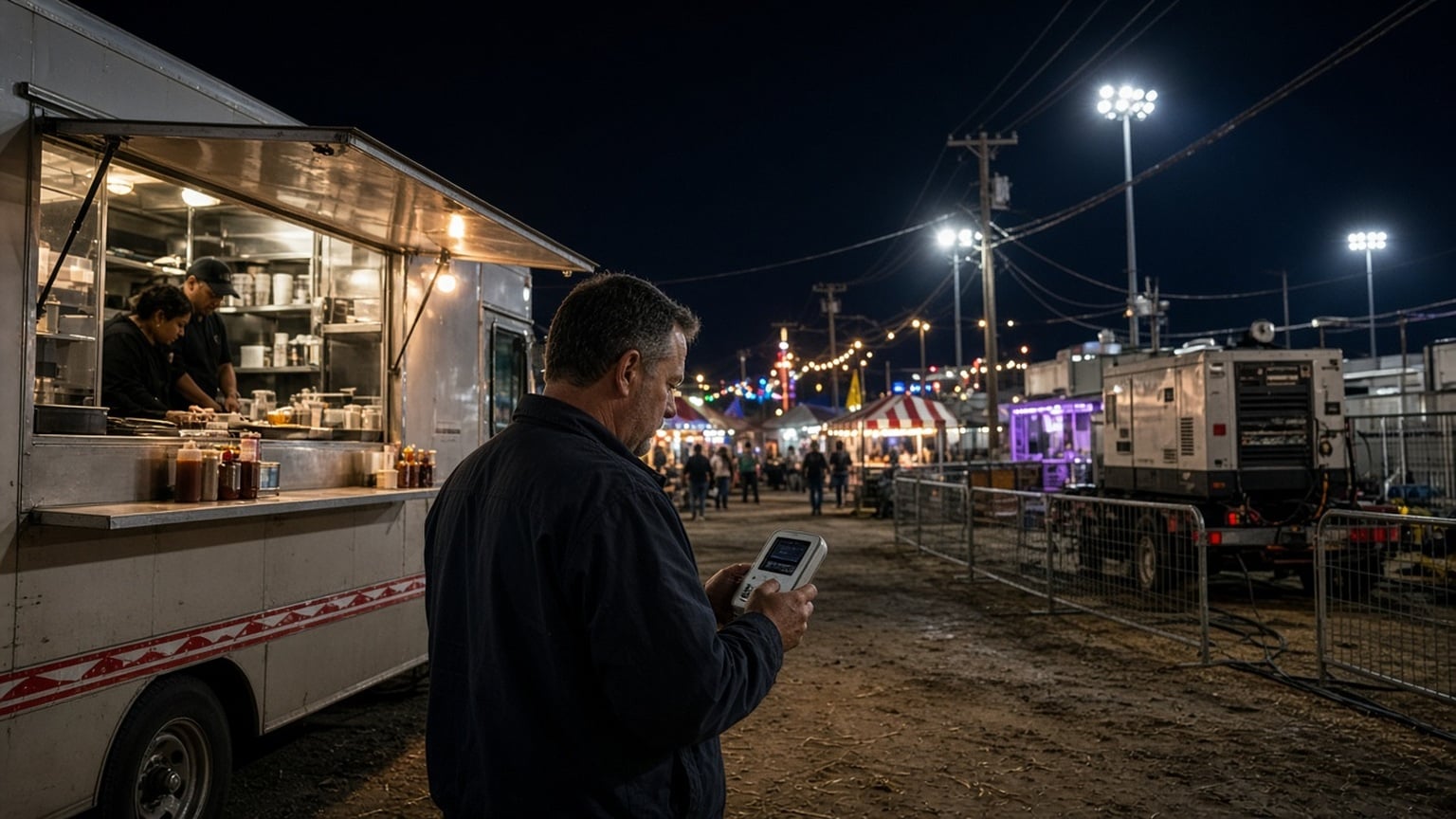
Appropriate monitoring may be part of a qualified safety plan, but a detector does not authorize poor placement. Selection, location, maintenance, alarm response, and the limitations of the device matter. An alarm with no assigned response can become another signal that staff ignore during a busy shift.
Ask the responsible safety professional what monitoring is appropriate for the actual exposure and setting. Train users on the equipment and the actions required if it indicates a problem. Do not invent a fair-wide threshold or assume a household device answers every workplace question.
Document checks and faults in a practical form. If a monitor is unavailable or unreliable, follow the established response rather than treating silence as proof that conditions are acceptable. The objective is to prevent exposure through the approved arrangement and use monitoring to support that plan.
Recheck after the layout changes
A wind shift is one reason to reassess conditions, but it is not the only one. A new vendor, a closed sidewall, a parked delivery vehicle, a relocated picnic table, or a service door held open can change how the space functions. Add a review trigger for material changes to the approved setup.
Give supervisors a simple rule: do not move, enclose, or reconnect equipment without the appropriate authorization. They should know whom to call and what service fallback applies while the review happens. Otherwise, an operational adjustment can quietly become an unreviewed technical decision.
Include nighttime and closing conditions. Staff may congregate behind a stand after guests leave, or a vendor may close panels that were open all afternoon. The plan should cover those occupied periods rather than end when the public gate closes.
Train staff on shutdown and escalation
The employee who notices a problem needs a response they can remember. Identify the reporting contact, safe assembly or relocation area, emergency call process, and limits on who may operate controls. Do not assume every cashier should touch a generator because they work beside the equipment it powers.
OSHA's education and training recommendations emphasize role-specific instruction, understandable language, and hazard reporting. Use a brief practical exercise so workers can show where they go and whom they contact. A technical document held in the office is not enough for the evening crew.
Reinforce that reporting is expected. Workers should not feel they are risking their shift or the vendor's sales by raising an exhaust concern. A prompt report can allow the responsible team to correct a condition before it becomes an emergency affecting several operations.
Make the review part of vendor coordination
Collect equipment and utility information early enough for qualified review. Confirm that the arriving setup matches what was approved and document material changes. Coordinate neighboring stands instead of accepting separate assurances that ignore the shared environment. The fair's operating map should show the equipment areas, not only the selling footprints.
After the event, review complaints, relocations, alarms, service interruptions, and unplanned equipment additions. Identify which problems began with incomplete applications and which arose during operation. Improve the relevant handoff rather than adding another general warning to the vendor handbook.
A well-run food court should not force guests to choose between a convenient meal and a comfortable place to breathe. Good generator planning protects the people around the stand as well as the power supply inside it. Outdoors is the beginning of the discussion, not the end.
# Keep noise complaints in the same review process
Noise can prompt well-intentioned changes that alter exhaust or equipment conditions. A worker may propose a screen, a box, or a tighter position behind the trailer to make a generator less noticeable. Do not approve those changes casually. The proposed solution needs the same qualified review as the original arrangement.
Start by documenting the actual complaint and operating conditions. Then ask the appropriate professionals to evaluate options, which may include a different approved location, equipment, power arrangement, or service adjustment. Avoid promising that a particular material or enclosure will be safe without that assessment.
Tell vendors how to request the review and what they may do while waiting. If the fair offers no workable process, an operator under pressure may improvise to satisfy the neighboring stand or nearby guests. A clear contact and realistic response time can prevent that shortcut.
The practical goal is not to choose between noise and exhaust. It is to coordinate a technically suitable arrangement that considers both, along with access, electrical capacity, fire safety, and the people using the surrounding space. The concession manager's contribution is making those operating needs visible.
Coordinate fair food truck generator safety with your other utilities
Schedule a consultation with FairFirst to review vendor coordination, site handoffs, and the support plan behind concession service. Bring your utility layout and recurring equipment concerns so the right technical reviews can be built into the operating process.
Fire, electrical, and exposure decisions require qualified professionals; concession management should make their approved plan workable. Talk with FairFirst before another last-minute power fix changes the risk.
Sources
- Carbon Monoxide Poisoning Basics — Centers for Disease Control and Prevention
- Protect Yourself During a Power Outage — Centers for Disease Control and Prevention
- Clinical Guidance for Carbon Monoxide Poisoning — Centers for Disease Control and Prevention
- Prepare for Emergencies — U.S. Small Business Administration
- Recommended Practices: Education and Training — Occupational Safety and Health Administration


