



A fair can have a full vendor map and still have an underperforming food program. More windows may shorten a line, but they do not automatically create more appetites, more spending money, or more time to eat. When the same demand is divided among too many stands, the fair can lose the reliable operators it needs next season. Setting the right fair food vendor count is a demand question first.
January is the right time to challenge the vendor-count assumption. Before renewing every space and adding another exciting concept, ask a more useful question: how much service capacity can the fair actually support, by location and meal period? The answer should come from the fair's records, not a universal trucks-per-attendee rule.
Set the fair food vendor count from food demand, not the gate total
Attendance is a useful starting point, not a meal forecast. An admission count may include exhibitors, repeat visits, complimentary entries, or guests who arrive after eating. A school group staying two hours behaves differently from a family spending the afternoon and evening. Neither should be reduced to a guaranteed food transaction.
The Small Business Administration's market-research guidance recommends examining demand, market size, location, saturation, and pricing. Apply those questions inside the fairgrounds. Who is likely to buy a complete meal? Who wants a snack? Which guests are near the food court during those decisions? What other food options compete for the same spending?
Separate paid attendance from attendance definitions used for other purposes. Then compare the best available guest counts with actual food transactions, sales, weather, entertainment schedules, and operating hours. Missing information should stay visibly missing. Inventing precision makes an attractive spreadsheet less useful, not more credible.
Measure a stand's real capacity
A vendor's maximum output at a demonstration is not necessarily its sustainable fair throughput. Orders vary. Payment takes time. A cook may be sharing a griddle between products. Food can be ready while pickup space is blocked. A menu with five assembly steps is not equivalent to a packaged dessert counter.
Ask returning vendors for practical service information: completed orders during a normal rush, staffing used, average transaction composition, production constraints, and recovery time after restocking. Observe a representative service period when possible. Define whether you are counting tickets, meals, items, or people served. Those units are not interchangeable.
Use a range rather than a single number. A well-run operation still has breaks, equipment interruptions, and unusually complicated orders. Planning every window at its theoretical maximum leaves the fair with no cushion. Planning every stand as if it were equally slow can create unnecessary oversupply.
Put vendor economics beside guest service
The fair needs adequate access to food; the vendor needs a plausible operating business. Those goals are related. An operator who repeatedly loses money may cut hours, shrink the menu, decline next year's invitation, or arrive without enough help. None of those outcomes improves the guest experience.
The SBA break-even calculator expresses the core relationship as fixed costs divided by price minus variable cost. For a fair engagement, classify costs carefully. Some labor may vary by service volume, while minimum staffing and travel commitments may not. Commission arrangements can also change the contribution from an additional sale.
Consider a purely illustrative stand with $1,800 in event-specific fixed costs and $6 left per transaction after applicable variable costs. Its break-even point is 300 transactions. That is arithmetic, not a prediction or an industry benchmark. If the proposed lineup implies far fewer transactions for each comparable stand, the booking decision needs another look.
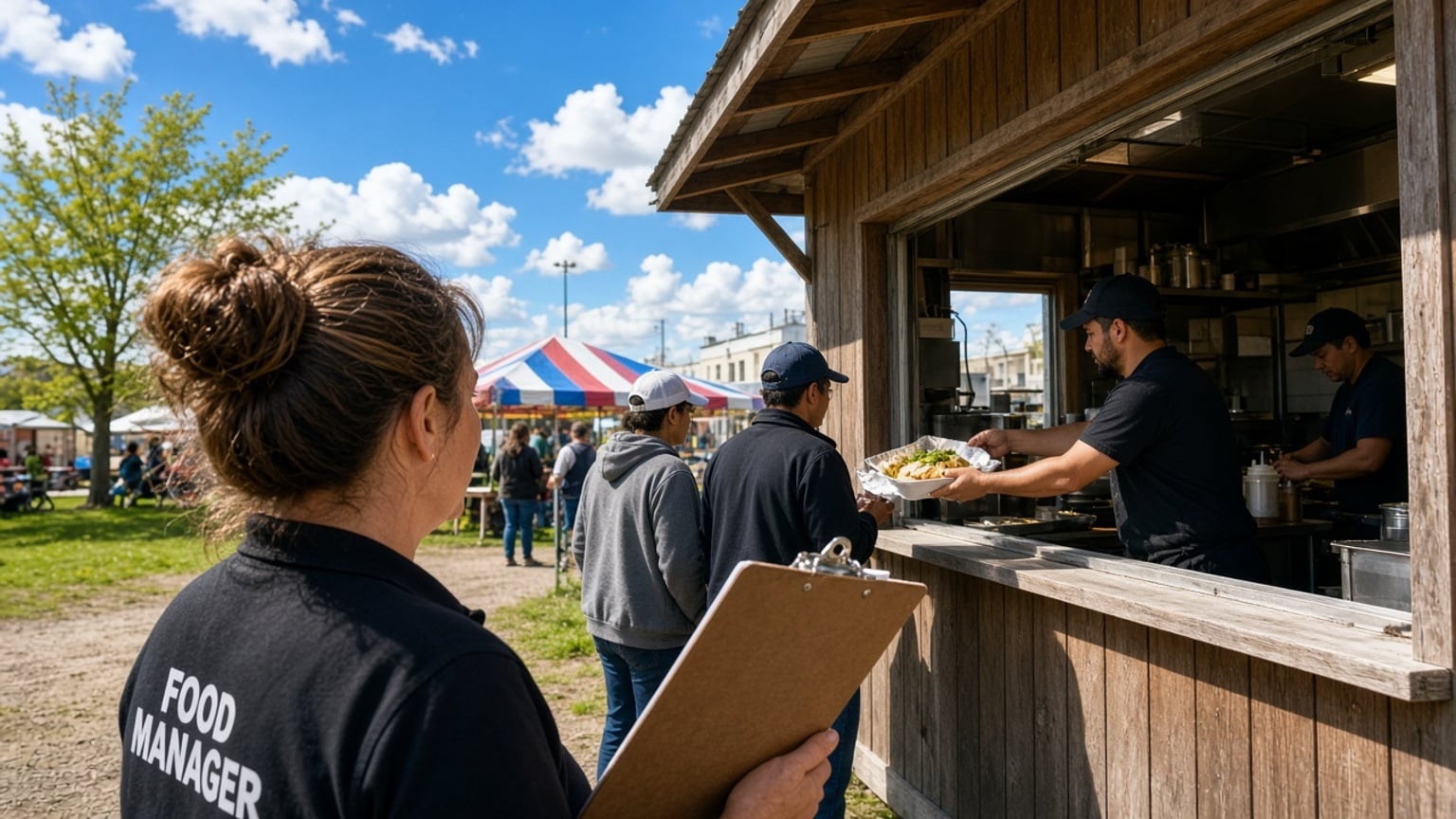
Build the lineup by meal period and zone
A whole-fair average can hide a serious mismatch. The main midway may be busy while a remote exhibition zone has intermittent demand. A concert release can overwhelm one corridor even though the daily food total looks comfortable. Add capacity where and when the gap exists, not wherever a trailer will fit.
Create a simple grid showing zones across the top and service periods down the side. Enter expected demand ranges, available windows, practical capacity, and restrictions such as delivery access or nighttime closure. Then test the lineup against a lighter day, a normal day, and a concentrated rush.
A stand serving breakfast to exhibitors may justify its place differently from a dinner concept aimed at concertgoers. Record that distinction. Otherwise, a vendor with a valuable specialized role can look weak in an all-day average, while a duplicative stand appears necessary because the fair never separated the demands it serves.
Variety does not require unlimited duplication
Boards understandably want an interesting food program. The mistake is treating every additional vendor as an additional guest benefit. Six stands selling nearly identical meals may create less useful choice than a smaller lineup with clear differences in portions, preparation, dietary information, and service speed.
Review the actual menu, not just the vendor's headline concept. Two trucks with different names may compete for the same lunch purchase. A dessert stand may add a second transaction rather than substitute for dinner. A smaller portion can serve a need that another large-format meal does not.
This is not an argument for guaranteeing any vendor a protected profit. It is an argument for deliberate selection. Explain the fair's menu-review process, any approved exclusivity, and how changes are handled. Do not promise a sales level or a competition restriction that the fair is unwilling or unable to honor.
Share assumptions before collecting commitments
Vendors cannot evaluate a booking honestly when an optimistic attendance headline is presented without context. Provide the operating dates, required hours, known food locations, major program patterns, and the services included in the agreement. Distinguish confirmed facts from estimates and explain that attendance does not guarantee sales.
The SBA's startup-cost guidance is useful because it encourages identifying expenses before making commitments. Ask operators to include travel, setup, labor, supplies, permits, utilities, and cleanup in their own planning. The fair should disclose charges early rather than let apparently workable economics collapse at move-in.
Do not circulate one vendor's confidential cost structure to others. Use aggregated information for planning and give individual operators enough detail to make their own decisions. A transparent application process can be commercially realistic without becoming a public comparison of private margins.
Treat additions as controlled changes
The lineup often expands one seemingly harmless decision at a time. A sponsor requests a special booth. A late applicant brings an appealing product. An entertainment partner wants another stand near its stage. Each addition may be defensible, but the combined effect can undermine the original plan.
Require a short change record: the demand being served, the location, the operating period, the effect on existing menus, utility needs, and the approval owner. If the new concept solves a peak-capacity problem, explain why a targeted operating arrangement is better than adding full-event capacity everywhere.
Document the plan in a form that operations, sales, and leadership can all use. The SBA's business-plan guidance emphasizes connecting market analysis with operations and financial projections. Within a fair, that means the vendor map, food strategy, and budget should describe the same program rather than three unrelated versions of it.
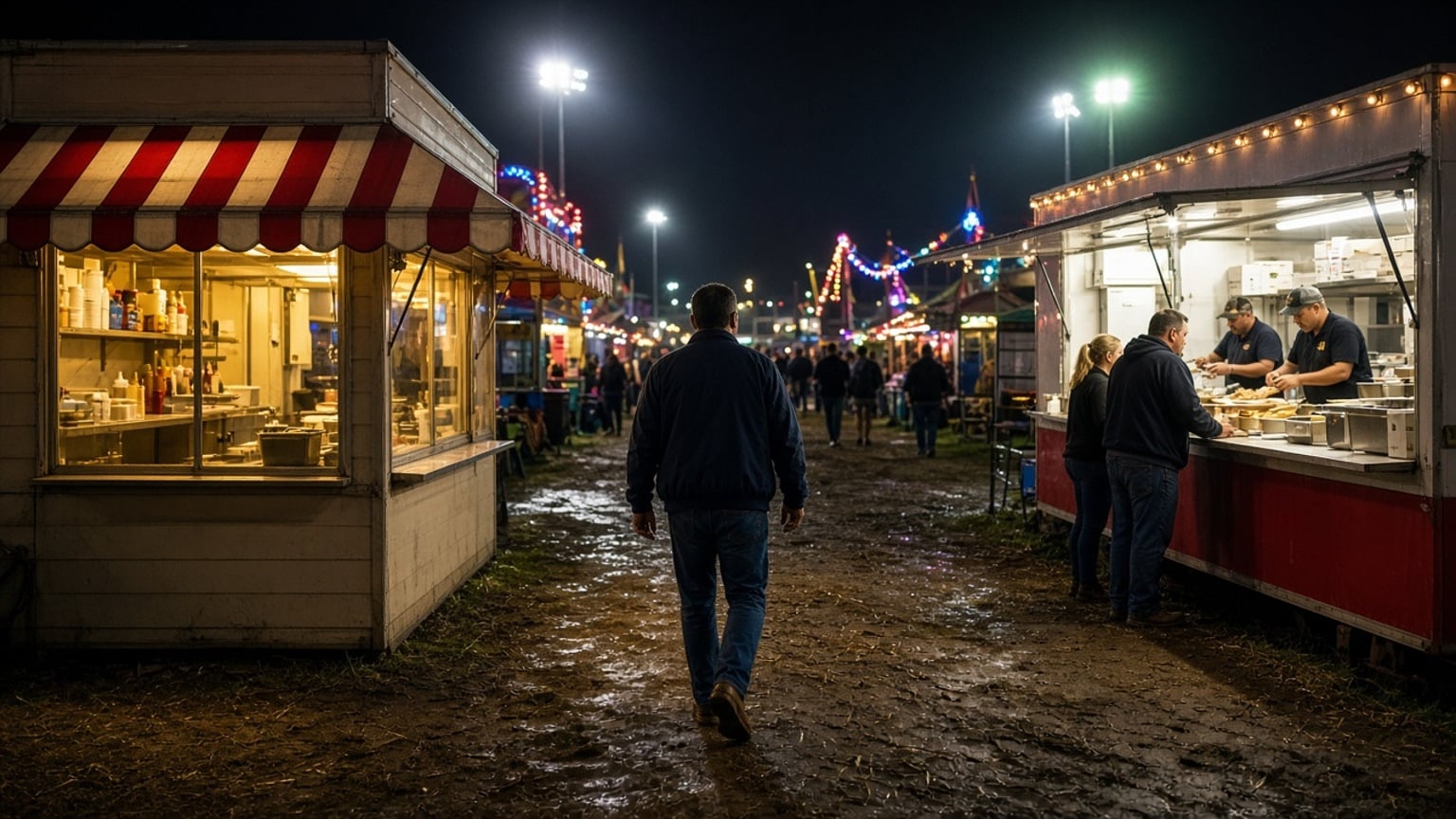
Stress-test the disappointing day
A lineup should not depend on perfect weather and every promotion exceeding expectations. Model what happens when attendance falls, a headline attraction changes, or one end of the grounds receives less traffic. Ask which commitments remain fixed and what flexibility the contracts actually allow.
The SBA's emergency-preparedness guidance recommends planning for disruption before it happens. For food operations, that includes contact ownership, communication, and practical continuity decisions. It does not mean casually cancelling vendors after they have purchased inventory. Any adjustment to hours, placement, or fees needs lawful, agreed terms.
Use the scenario to identify avoidable exposure. Could a phased opening, a limited-service concept, or a better distribution of stands meet guest needs with less unnecessary capacity? Could signage and seating improve access to an existing vendor before another one is added? Test operational alternatives before making permanent commitments.
Give the board a decision, not just a map
The board packet should explain the recommended count, the evidence behind it, and the uncertainties that remain. Show the intended menu mix, geographic coverage, rush-period capacity, and the reason for material additions or reductions. A marked-up site plan is helpful only when the reasoning travels with it.
Choose a few measures for the season: transactions by zone and period, observed service times, guest complaints about availability, vendor operating compliance, and renewal interest. Interpret them together. Short lines can mean excellent throughput, weak demand, poor visibility, or too many stands. A photograph of an empty queue cannot distinguish those explanations.
Assign someone to gather observations during the event, including less glamorous periods. If every inspection happens at the busiest dinner rush, the fair will overestimate all-day demand. A modest record collected consistently is more valuable than an ambitious dashboard no one maintains once the gates open.
Make renewal a learning process
After the fair, compare the original ranges with results and explain meaningful differences. Did a new seating area change traffic? Did a scheduled program shift the meal window? Did a vendor's promised capacity prove unrealistic? Preserve those lessons beside the next application cycle instead of leaving them in individual memories.
Invite specific vendor feedback without promising that every complaint will change the lineup. Ask where demand was missed, what operating assumptions were wrong, and which support services affected production. Evaluate those observations against records. The loudest operator is not automatically the least successful, and a quiet one is not automatically satisfied.
The objective is a food program that works for guests and remains worth operating. Professional concession management makes those tradeoffs visible before the fair sells another space. It is a discipline of demand, capacity, communication, and follow-through—not a contest to put the most trucks on the map.
# Learn from other fairs without copying their scale
The Minnesota State Fair's official 2025 wrap-up reports attendance separately from its descriptions of new foods and vendors. That distinction is useful: an attendance headline describes the event's reach, while the food lineup is a separate operating choice. The report is not a formula for how many stands another fair should book.
Use another fair's public information to ask better questions, not to borrow a ratio without its context. Compare event length, geography, programming, visitor behavior, and the kinds of service offered. A county fair with a different footprint and dwell time needs its own evidence before adopting a larger event's approach.
Build a stronger food lineup with FairFirst
If your board is balancing variety, service capacity, and vendor viability, schedule a consultation with FairFirst. We can help turn a vendor list into an operating plan with clear assumptions, practical coverage, and decisions your team can explain.
Bring your previous lineup, available sales reports, event schedule, and site map. Start with the records you have and identify what needs measuring next. Talk with FairFirst before the next booking commitment.
Sources
- Market Research and Competitive Analysis — U.S. Small Business Administration
- Break-Even Point Calculator — U.S. Small Business Administration
- Calculate Startup Costs — U.S. Small Business Administration
- Write Your Business Plan — U.S. Small Business Administration
- Prepare for Emergencies — U.S. Small Business Administration
- 2025 Great Minnesota Get-Together: Official Wrap-Up — Minnesota State Fair, 2025


