


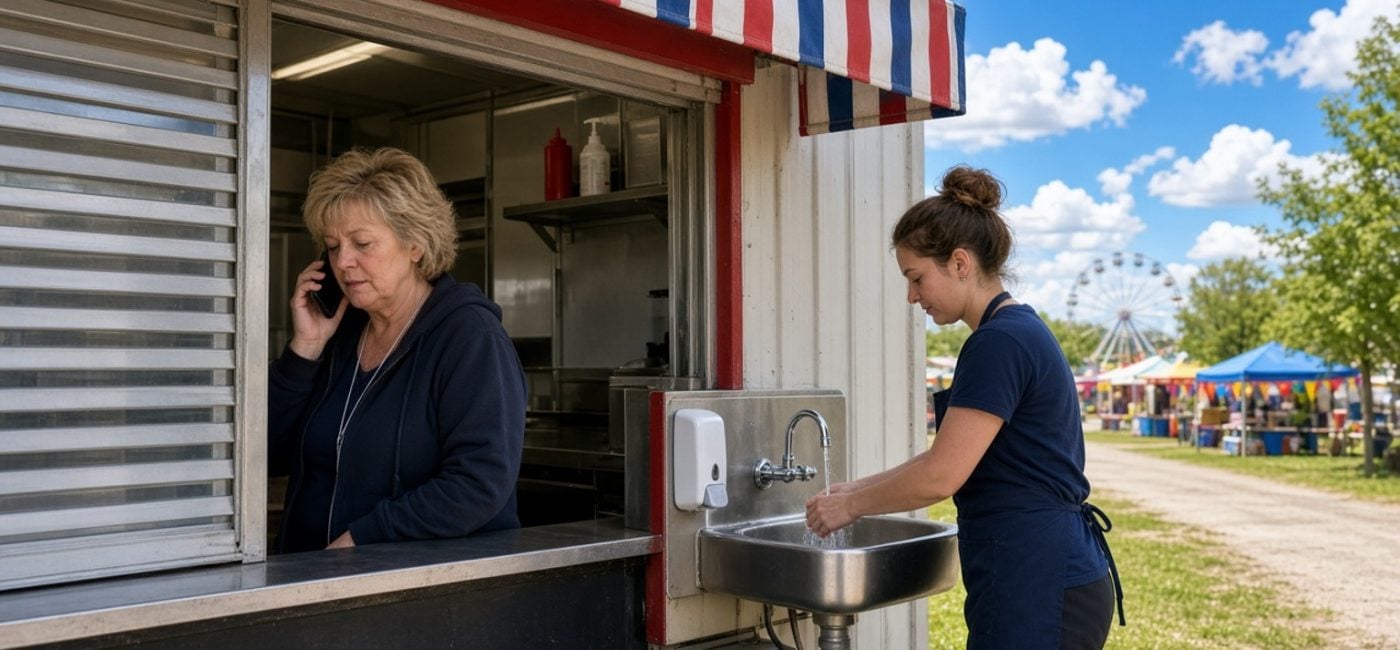
The concession manager gets the call before opening: a worker spent the night vomiting but says they can probably manage the shift. The line will be long, the replacement list is thin, and the supervisor wants to know whether the employee can just work the register. That is a food-safety decision, not a negotiation about loyalty. A written fair food worker illness plan makes that decision before the phone rings.
A fair needs an illness plan that survives ordinary staffing pressure. It should tell workers what to report, give managers a clear response, protect appropriate privacy, and provide a service fallback. Without those pieces, a written policy can be overridden by the first difficult sick call.
Make reporting easier than improvising
Workers should know which symptoms and diagnoses they must report under the applicable food rules and whom to contact before arriving. Explain the process during onboarding and keep the contact available outside normal office hours. A message left in an unmonitored application is not a reliable opening-shift notification.
The FDA's 2022 Food Code provides a model framework for employee-health reporting, restriction, and exclusion. It is not automatically the controlling law in every jurisdiction. Have the responsible operator review the adopted requirements and permit conditions with local environmental health, then translate them into a stand-level response.
Keep the first conversation factual. Ask the questions required by the reviewed policy, record only what is necessary, and explain the next step. Do not ask an employee to publicly prove they are sick in a group chat. A system that humiliates reporting can encourage people to hide symptoms.
Do not substitute a different station for exclusion
Moving a symptomatic worker from food preparation to payment may feel like a compromise. It does not necessarily resolve the risk or satisfy the applicable exclusion rules. The worker may still touch shared surfaces, handle cups, enter the kitchen, or expose coworkers who then handle food.
CDC's norovirus fact sheet for food workers advises staying home while sick and for at least forty-eight hours after symptoms stop. That is CDC prevention advice, not a universal statement of every legal reinstatement condition. Diagnoses, symptoms, and local requirements can require specific decisions, including regulatory involvement.
The operating policy should make that distinction explicit. A supervisor should not invent a shorter return period because a worker feels better, nor assume a generic time period overrides instructions from health authorities. When the situation is unclear, contact the appropriate authority and keep the worker out of the prohibited role while the answer is resolved.
Budget for the safe answer
A policy is weak when following it makes service impossible. Build replacement coverage, menu reduction, and station closure into the operating plan. The fair does not need to guarantee uninterrupted production from every window regardless of who is available. It needs a controlled way to continue without overriding food-safety decisions.
Identify which roles can be covered by trained employees and which cannot. A replacement must understand the equipment, food procedures, and emergency contacts before taking over. Someone who is available is not automatically qualified. If qualified coverage is unavailable, reduce the operation to what the remaining team can safely manage.
Review applicable sick-leave and employment requirements with the employer's advisers. Do not make workers find their own replacement as a condition of reporting illness. Operationally, that can turn a straightforward warning into a bargaining exercise between employees who may not understand the food-safety consequences.
Separate illness management from incident cleanup
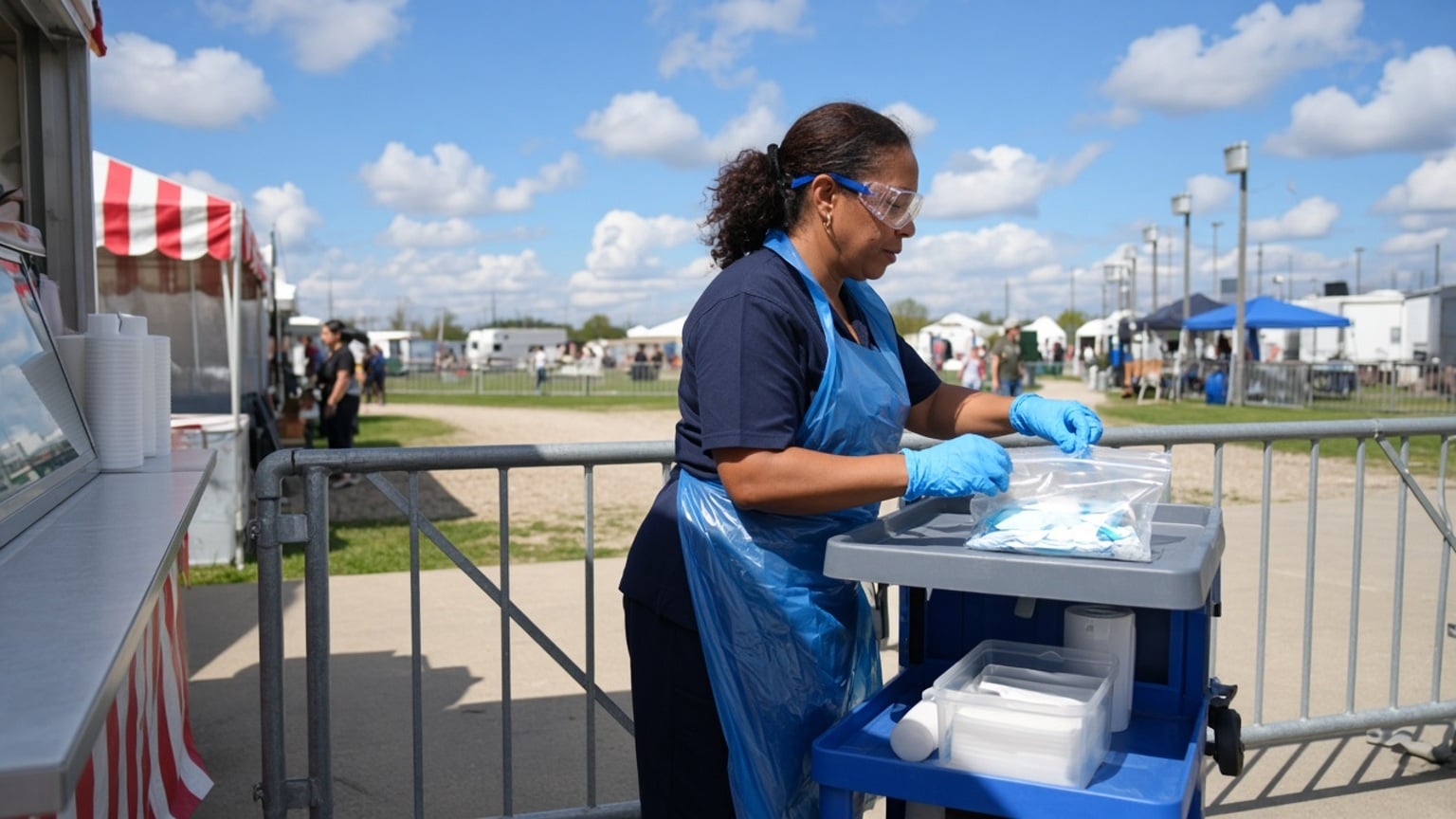
A worker calling in sick and a vomiting event in the food court are related but different problems. The first requires employee-health decisions. The second also requires controlling an affected area, protecting food and equipment, and activating a trained cleanup response. One supervisor may coordinate both, but the procedures should be distinct.
CDC's norovirus prevention guidance explains the importance of prompt cleaning and disinfection after vomiting or diarrhea. A routine wipe with a dining-table cloth is not an adequate plan. Identify who can respond, what supplies are needed, and how exposed food and food-contact surfaces will be evaluated.
Prepare the response before the event. Keep the kit accessible to trained personnel, separate from normal food tools, and complete enough to use. A sealed box with missing protective equipment or an empty disinfectant bottle can create false confidence while delaying the actual response.
Choose products for the job
Cleaning, sanitizing, and disinfecting are not interchangeable terms. A product appropriate for routine food-contact sanitation may not be suitable for a suspected norovirus contamination event. Use products and procedures approved for the intended purpose and follow the applicable label, including contact time and any required food-contact follow-up.
The Environmental Protection Agency's pesticide-label guidance explains that labels provide important directions and precautions for pesticide products, including registered disinfectants. Do not copy a concentration from a different container or assume that more chemical is safer. Product formulations and permitted uses differ.
Worker protection matters too. OSHA's food-service chemical guidance addresses training, hazard information, and protective measures for hazardous cleaning products. The employee who responds should understand the product, required equipment, spill precautions, and escalation procedure. Urgency is not a reason to mix chemicals or improvise a stronger solution.
Give the area a clear owner
A guest incident near several vendors can produce a responsibility gap. One stand thinks the dining crew will respond. The dining crew thinks medical staff has taken over. Security moves people around the site but does not know whether food service can continue. Meanwhile, the affected space remains in use.
Name the coordinating role in advance. Specify who protects the area, requests medical assistance when needed, contacts environmental health, evaluates food exposure, conducts cleanup, and authorizes reopening within the relevant requirements. Those responsibilities should align with the fair's broader incident plan and each employer's obligations.
Use a shared location vocabulary. Stand numbers, dining zones, and nearby landmarks should mean the same thing to concession staff and responders. A radio report saying by the lemonade stand is unhelpful when several lemonade stands operate on different sides of the grounds.
Reopening needs more than a dry floor
The absence of visible material does not demonstrate that an affected area is ready for normal service. The response needs to address the approved cleaning and disinfection steps, potentially exposed food, equipment, waste, worker protection, and any required regulatory direction. Keep guests and untrained employees out until the responsible decision is made.
Document the completed actions and who authorized the next step. A brief operational record can identify the affected zone, time, contact made, products used, instructions followed, and disposition of food. Avoid speculative statements about the cause of illness or the identity of a pathogen.
If a service pause affects nearby vendors, communicate the practical instructions without spreading personal medical details. Tell them whether to hold orders, protect exposed items, redirect guests, or wait for clearance. Conflicting informal messages can undo a carefully controlled response.
Keep medical information off the open radio
A fair needs enough information to respond, but not every department needs an employee's diagnosis or personal history. Use open channels for location, assistance, and operational restrictions. Share sensitive information only through the appropriate process with people who have a legitimate need to receive it.
Train supervisors to avoid promises they cannot make. They should not tell a guest that an incident definitely is or is not foodborne, guarantee there is no risk, or announce that a specific vendor caused it without evidence. Public-health authorities determine investigation needs; medical professionals assess people who require care.
Guest communication can still be direct and useful. Explain that an area is temporarily unavailable, point to alternatives, and provide the fair's established contact for follow-up. Clear operational information is more helpful than either silence or unsupported reassurance.
Rehearse a realistic sick call
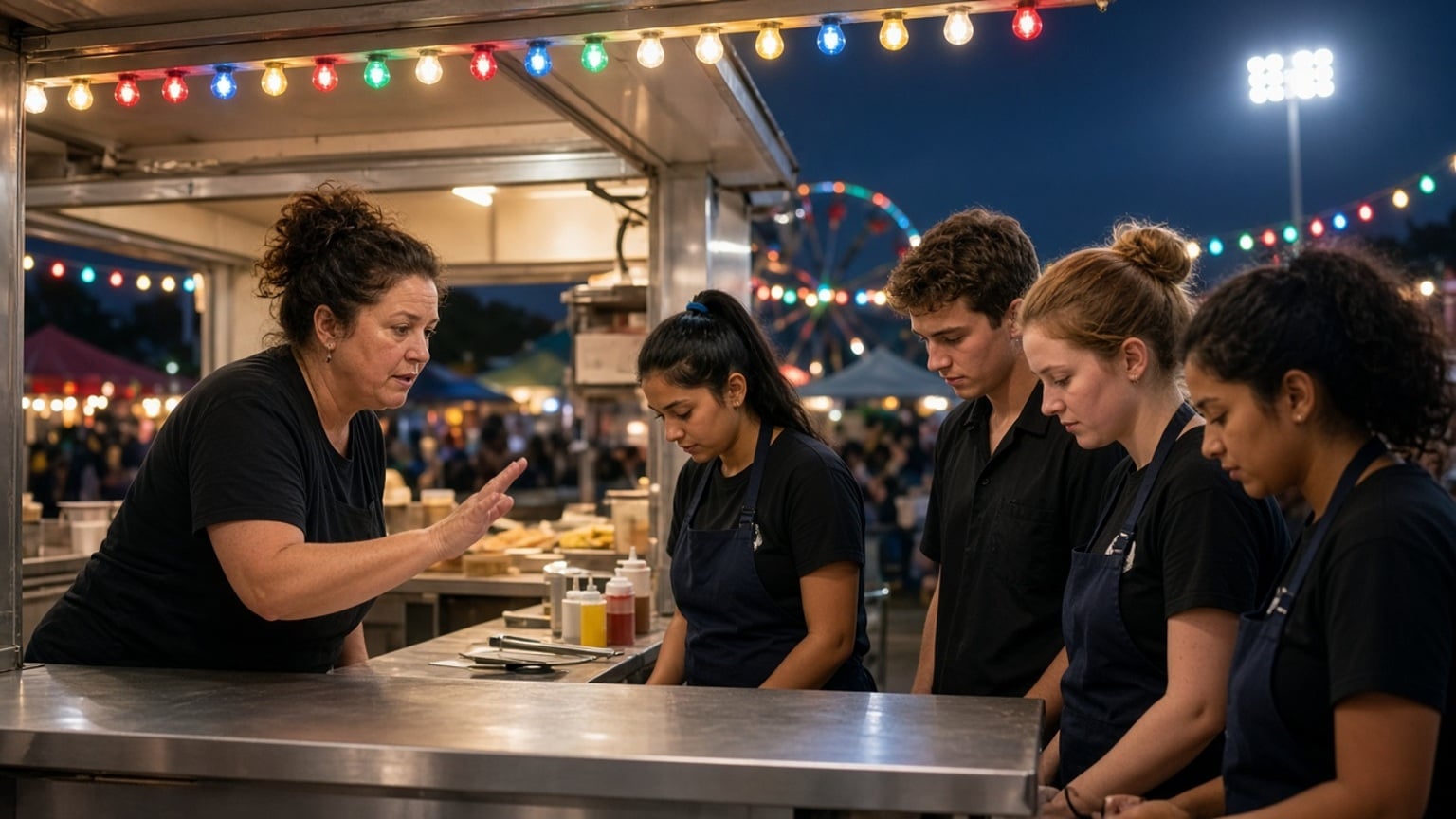
A short tabletop exercise can expose the weakness in the plan before the first event. Use an explicitly hypothetical scenario: a key food worker reports vomiting before opening, the trained replacement is unavailable, and the largest program release is approaching. Ask the supervisor to describe the next three decisions.
Check whether the answer follows the reviewed illness policy, identifies qualified coverage, and includes a controlled service reduction. Then add an incident in a shared dining zone. Who receives the call? Who isolates the area? Where is the kit? Who decides when operations resume?
Do not score the exercise by how quickly everyone says service continues. Score whether the team finds the right information, contacts the right people, protects the area, and records the decisions. A slower but controlled answer is better than a confident shortcut that leaves the risk unresolved.
Make the policy usable all season
Revisit the plan when vendors, supervisors, products, or operating hours change. A new evening lead may never have attended the opening briefing. A replacement disinfectant may have different instructions. A closed restroom can change the route used by both workers and guests during an incident.
Check a few practical indicators during the event: employees can name the reporting contact, supervisors can locate the policy, trained responders are available, and kits remain stocked. Treat missing pieces as operating corrections, not merely paperwork defects. The written plan should match the service that exists today.
The fair's strongest food-safety decision may be allowing a stand to operate a smaller menu for an afternoon. Good concession management makes that choice possible before pressure forces the wrong compromise. Illness reporting should trigger a reliable plan, not a test of how badly the team needs another person.
# Agree on the message before the incident
Prepare a short, reviewed service-pause message for guest-facing employees. It should explain the immediate operational fact and the available alternative without assigning a cause. For example, a hypothetical cashier can say that a section is temporarily unavailable while the team completes its response and direct guests to another open area.
The message should not claim that food definitely caused an illness or that the situation is harmless. Those conclusions require evidence and the appropriate expertise. Identify who handles follow-up questions and who coordinates any public statement under the fair's incident plan.
Also establish how vendors report a pattern of complaints. Separate reports should reach the designated lead rather than remain in individual cashiers' memories. Keep the details factual and protect personal information through the proper process.
This preparation helps the fair avoid two common communication failures: unsupported reassurance and uncontrolled speculation. Employees can be helpful without being asked to act as investigators, clinicians, or spokespeople. Their clear role is another protective part of the operating plan.
Build a workable fair food worker illness plan
Schedule a consultation with FairFirst to connect vendor staffing expectations, service fallbacks, and food-court incident handoffs. Bring your current policies and identify the situations your supervisors find hardest to manage.
Health and legal requirements should be confirmed with the appropriate authorities; your operating team needs a practical way to follow them. Talk with FairFirst before the next sick call becomes a service crisis.
Sources
- Norovirus Fact Sheet for Food Workers — Centers for Disease Control and Prevention
- How to Prevent Norovirus — Centers for Disease Control and Prevention
- Food Code 2022 and December 2024 Supplement — U.S. Food and Drug Administration
- Food Services: Hazardous Chemicals — Occupational Safety and Health Administration
- Introduction to Pesticide Labels — U.S. Environmental Protection Agency


