


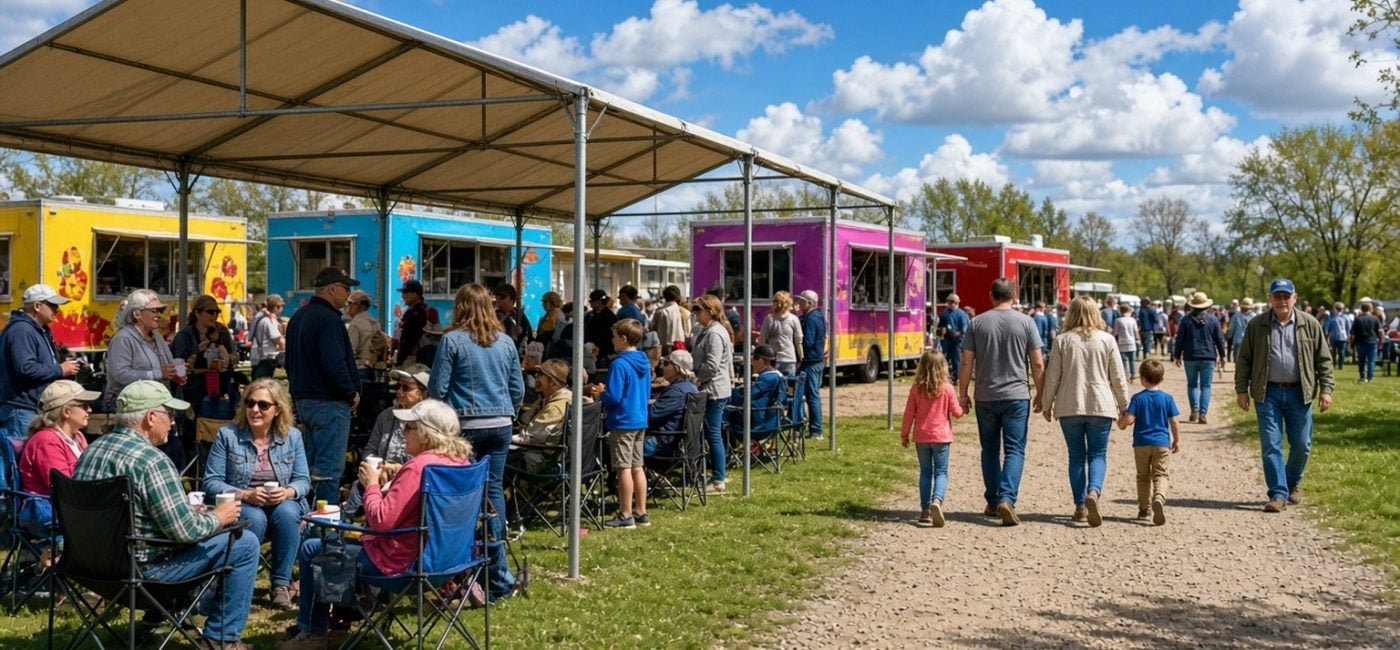
The food court has shade over the tables, but the lunch line sits in direct sun. Guests can see the cool place they want to reach while waiting in the hottest part of the visit. A canopy in the site plan does not necessarily mean the people waiting for food are protected. Fair guest shade and heat planning starts where guests actually wait.
That is a hypothetical layout problem, not an account from a named fair. It is also a useful June inspection question: where are guests actually spending time, and what relief is available there? Heat planning should follow their experience rather than the location of last year’s rented shade.
This article focuses on guests, not workplace heat-law compliance. Professional concessions coordination can connect the food court with facilities, accessibility, medical, and emergency-planning teams. Shade is one part of that work, alongside drinking water, understandable information, and clear authority to change operations when conditions require it.
Walk the waiting area at the relevant hour
Observe where shade falls when lunch and afternoon demand are expected, not only during a morning setup visit. Buildings, trees, and temporary structures cast different shadows as the sun moves. A shaded spot at opening may be exposed during a later rush.
Map the actual guest stopping points: menus, order windows, pickup areas, condiment stations, and nearby seating. Include people who pause outside the formal line. A shade plan that covers only seated diners can miss a substantial part of the food-service experience.
Record what you observe without inventing a universal safe waiting time. Exposure, individual health, weather, and activity differ. Have the fair’s qualified safety and medical advisers help translate observations into an appropriate guest heat plan.
Use forecasts as decision support
The CDC’s April 2024 Heat and Health Initiative announcement describes the seven-day HeatRisk forecast and related health resources. The tools were available before this season and can support advance coordination with local public-health and emergency partners.
Assign a responsible person to review official forecasts and alerts at agreed intervals. Establish how relevant information reaches concessions supervisors, guest services, facilities, and medical staff. A forecast in one person’s phone is not an operational communication system.
Do not turn a forecast category into an invented automatic rule for every fair. Develop site-specific actions with the appropriate authorities and specialists. The plan should identify who can authorize them and how workers learn that the decision has changed.
The air temperature is not the whole picture
National Weather Service heat guidance explains that heat index combines humidity and air temperature and is based on shady, light-wind conditions. Direct sunshine can make exposure more severe. Do not treat a comfortable-looking forecast number as proof that an exposed line is suitable.
Look at the actual setting: sun, surrounding surfaces, available air movement, nearby heat sources, and the length of the guest’s overall outdoor visit. Have qualified staff determine what monitoring is appropriate rather than improvising a technical assessment from one handheld reading.
Keep the limitation clear in board discussions. A shaded area can improve conditions without making the entire food court safe under all circumstances. The fair still needs an escalation plan and access to appropriate medical help.
Put shade where people need it
Consider the approach to the menu, the waiting area, and the space immediately after collection. The right solution may combine existing buildings, appropriately placed temporary shade, and changes to where guests are asked to wait.
The EPA’s 2008 trees-and-vegetation compendium explains the cooling value of shade and vegetation. Its urban examples are useful background, not a guarantee of a specific temperature reduction at your fair or proof that any tree location is operationally suitable.
Have facilities and qualified professionals review proposed shade locations, structural conditions, and maintenance. Do not install a canopy beneath conflicting equipment or inside required access simply because the uncovered spot is uncomfortable.
Temporary shade needs professional coordination
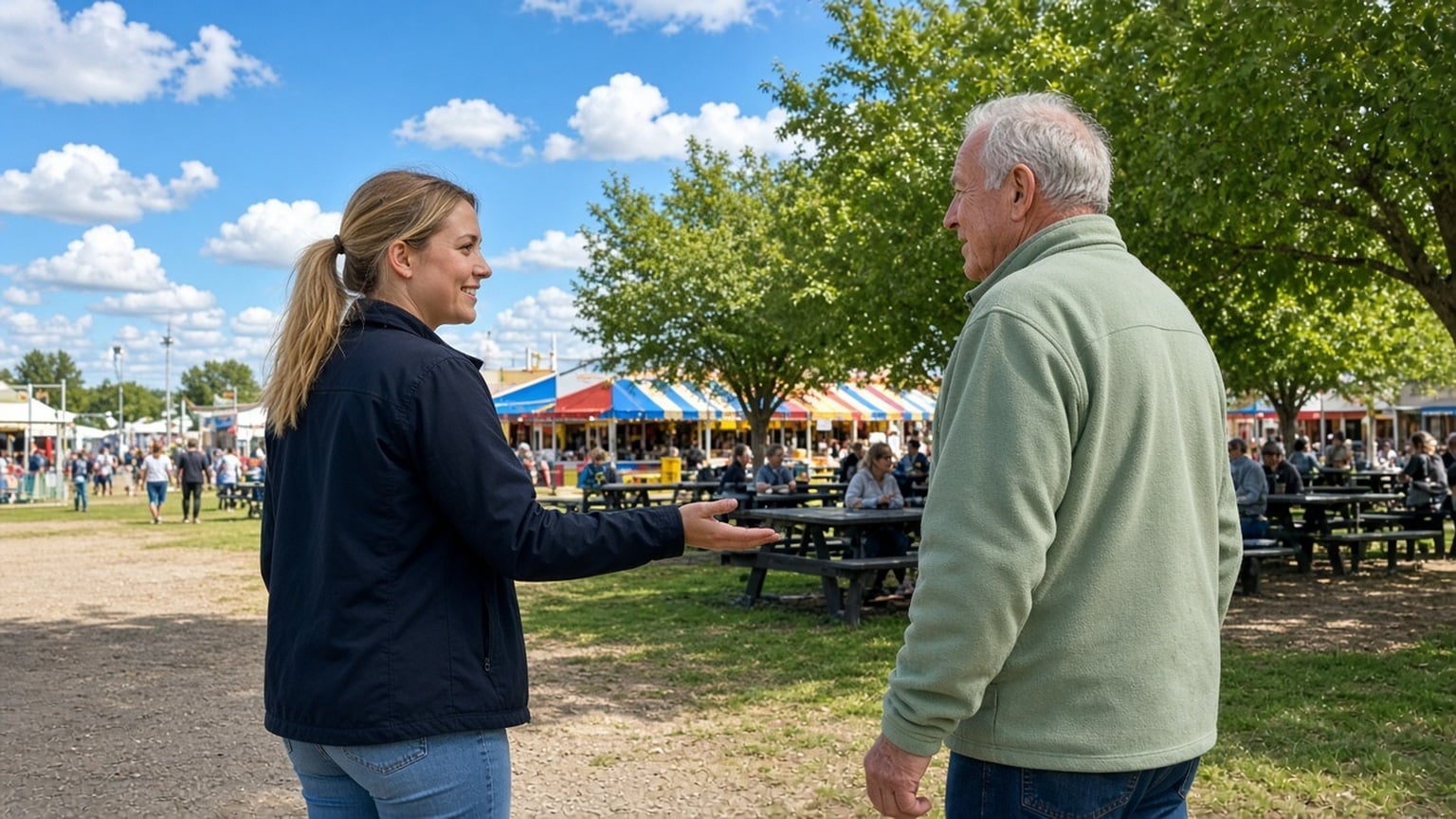
Use suitable structures and installation procedures reviewed for the actual site. Include relevant permitting, fire, wind, anchoring, and clearance considerations. The concessions team should coordinate information with qualified providers and authorities, not prescribe engineering details from an article.
Confirm who inspects the installation and who responds if its condition changes. Guests should not be asked to wait beneath a structure that has not received required approval. Keep unauthorized decorations, storage, or equipment from altering the approved arrangement.
Define what happens if shade must become unavailable. An alternative waiting arrangement should be reviewed before it is needed. Moving guests into an unplanned crowded corner can replace a heat concern with a circulation or access problem.
Make drinking water easy to find
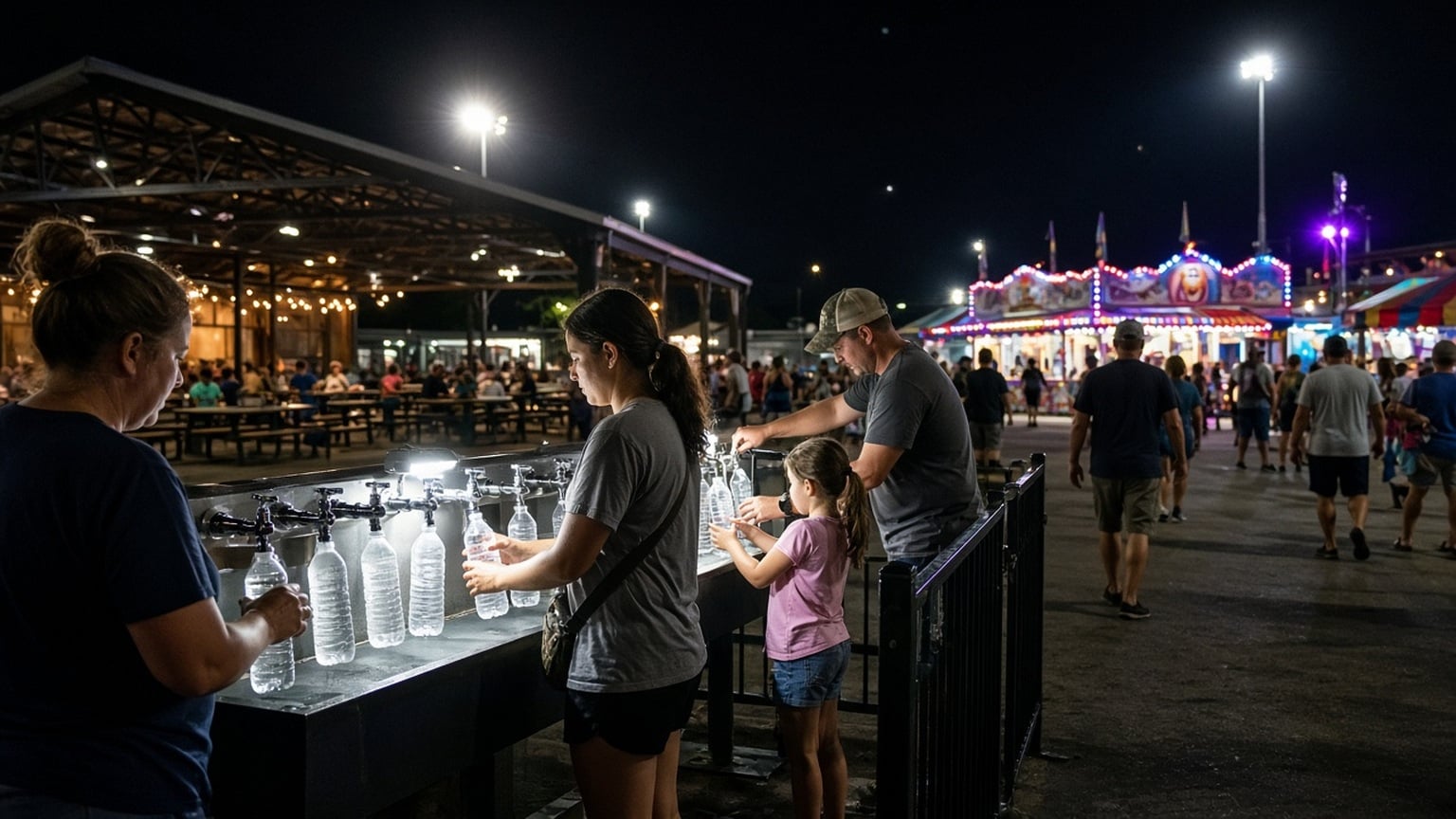
Know which guest drinking-water facilities are operating, their locations, and how staff report a problem. Coordinate approved refill policies and accurate directions. Do not rely on a station that exists on a map but is closed or difficult to reach.
CDC’s 2024 initiative emphasizes staying cool, staying hydrated, and knowing symptoms. Guest communication should support those actions without prescribing an identical fluid amount for every person. Some visitors have medical conditions requiring individualized advice from their clinicians.
Keep practical access in mind. A guest who has to cross a busy food court repeatedly may postpone using the available water. Review placement and routes with the relevant specialists and provide clear, consistent directions through guest-facing staff.
Cooling relief must be accessible
The 2010 ADA Standards address accessible routes and related facilities within their scope. Have qualified reviewers determine what applies to the grounds and proposed changes. Shade or cooling relief should not be usable only by people who can navigate steps or rough shortcuts.
Walk the complete route to the designated relief area and drinking-water facilities. Check whether temporary barriers, parked carts, or moved tables have changed the approved access. A route that was available during setup may become obstructed when the food court is operating.
Make sure staff can explain an appropriate route accurately. Do not direct a guest with mobility needs toward a distant alternative without verifying it. Assistance should be respectful and based on the person’s stated needs rather than assumptions.
Remember visitors who may need more protection
The CDC’s 2024 announcement notes that heat can affect anyone and identifies groups that may be more sensitive, including pregnant people and people with cardiovascular disease. Plan with medical and public-health advisers rather than trying to recognize vulnerability from appearance.
The CDC’s Ready Wrigley extreme-heat booklet provides child-oriented messages about cooling, water, and adult support. It illustrates why family communication should be understandable to children and caregivers, not written only for emergency planners.
Provide clear information about where to get help. Do not ask staff to determine whether a guest is medically fit to remain in line. Their role is to recognize a concern, follow the approved response, and connect the person with appropriate assistance.
Use calm, practical guest messages
Tell guests where shade, water, and designated relief are located and how to contact staff. Use the fair’s approved language and current information. A cheerful reminder is not useful if it points to a facility that has closed.
Coordinate visual and spoken communication, with appropriate alternatives for guests who cannot use one channel. Avoid relying on a phone notification alone. The person most in need of directions may not have a charged device or the fair’s application.
Do not overpromise. A sign advertising a cooling area should accurately describe the available facility. Distinguish open shade from an air-conditioned location so guests can make informed choices about the relief they are seeking.
Give supervisors a practical action ladder
Develop reviewed options for changing the food-service experience as conditions worsen. Possibilities for consideration include redirecting waiting to an approved shaded space, improving information, opening an authorized relief area, or modifying service. Their suitability depends on the site and circumstances.
Identify the decision maker and required coordination for each action. The vendor, concessions lead, facilities team, and event command should not be working from different assumptions. Record the decision and communicate when it takes effect. Confirm that the next supervisor receives the same direction, including any conditions that require another review. A protective measure should not disappear during a shift change because the incoming team assumes the previous arrangement was only temporary.
Keep severe-weather and structural restrictions in the same conversation. Shade cannot remain in service if the responsible authority determines the structure is unsuitable under changing conditions. Guest heat protection and other safety requirements must support one another.
Practice the medical handoff
Use the fair’s approved emergency plan to establish how staff contact medical responders and describe the location. A hypothetical exercise can ask what happens when a guest appears distressed near a pickup window. Keep the exercise focused on communication and access.
Concession workers should not diagnose the condition or improvise treatment beyond their training and approved role. Follow dispatcher and qualified medical directions. This article does not provide a medical treatment protocol or replace the fair’s emergency procedures.
Maintain the required access for responders. A shaded area crowded with movable furniture can become difficult to reach. Review the space with the medical and safety teams before opening and preserve the approved arrangement during operation.
Nightfall does not end the plan automatically
Do not assume conditions become comfortable the moment direct sun leaves the food court. Keep official monitoring and medical coordination active through operating hours. Let the approved plan determine when measures can be adjusted.
Verify that water, relief areas, and staff directions remain available after dark. Closing a support facility early while food service continues can leave a gap guests do not expect. Coordinate hours rather than allowing each service to make an independent assumption.
Use observed questions and access difficulties to refine the plan for the next day. Make changes through the responsible team, not by asking individual vendors to invent separate solutions.
Review fair guest shade and heat planning as a guest-service issue
After a busy period, ask where people actually waited, whether staff could provide accurate directions, and whether relief areas remained usable. Keep the observations specific. Do not claim a canopy increased revenue or prevented every heat illness without evidence.
Separate immediate operating corrections from longer-term facilities improvements. A future tree or permanent roof cannot solve today’s exposed waiting area, but current observations can inform the capital discussion. Maintain a reviewed interim plan while larger decisions are considered.
A well-managed food court treats guest comfort as part of the operating design, not an optional amenity beside it. The shade gap becomes manageable when somebody owns the entire path from forecast to guest assistance.
Talk to FairFirst Before Your Next Fair
Guests should remember the food and the fair, not an exposed lunch line. FairFirst can discuss concessions coordination that connects waiting areas, shade, water, guest information, and the fair’s qualified safety teams.
Schedule a FairFirst consultation to review the guest experience around your food court.
Find the shade gap before the next hot afternoon does.
Sources
- CDC Announces Heat and Health Initiative — CDC, April 2024
- Heat Index and Forecast Tools — National Weather Service, longstanding heat-index guidance
- Reducing Urban Heat Islands: Trees and Vegetation — EPA, 2008
- ADA Standards for Accessible Design — US Department of Justice, 2010
- Ready Wrigley Prepares for Extreme Heat — CDC, 2015; hosted 2024


