


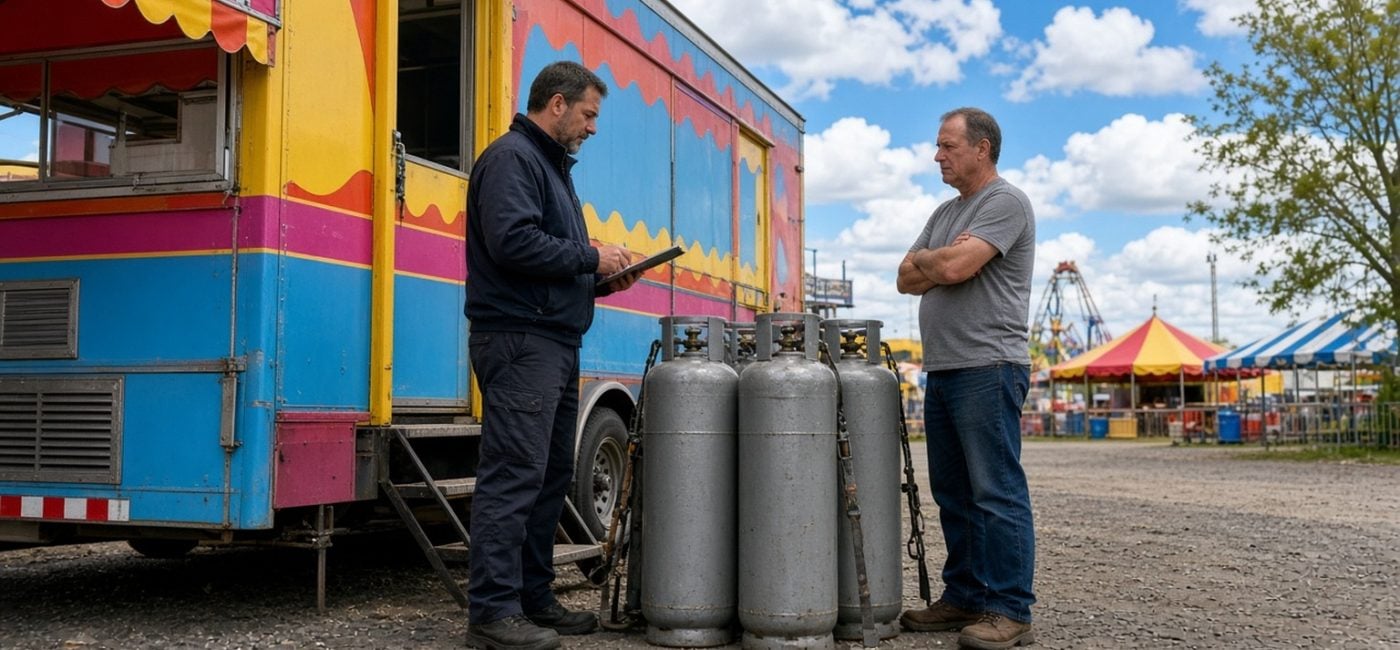
A vendor arrives with a cooking setup that worked at another event. The equipment fits the space, the crew is ready, and the menu looks good. Then the fire inspection raises a problem with the fuel arrangement or surrounding layout. Service cannot begin until the issue is resolved. The headline is an illustrative situation, not a quotation from an actual inspection. Early fair propane planning keeps that problem off opening day.
February is the time to prevent that opening-day collision. Fire planning belongs in the equipment and placement discussion, not at the end of move-in. The fair needs accurate information, the vendor needs location-specific requirements, and the authority having jurisdiction needs enough time to review the proposed operation.
Good concessions management coordinates those relationships without pretending to replace a fire official, qualified installer, or trained fuel supplier. Its value is making sure the right questions are answered before anybody lights the first burner.
Start with the actual cooking method
Collect the appliance type, fuel, cylinder arrangement, proposed cooking location, and any enclosure or canopy. Include equipment used for warming or demonstration, not just the principal grill. A description such as standard food booth does not tell the reviewer what hazards are present.
Ask vendors to identify intended changes early. A switch from electric equipment to propane is not merely a menu decision. It may affect placement, separation, fuel storage, extinguishing provisions, and approval. Route the revised information through the required review rather than treating it as an ordinary substitution.
Keep the approved equipment list tied to the stand’s location and current plan. If either changes, determine which approvals need reconsideration. The fair should not be working from a photograph of equipment the vendor no longer plans to bring.
Find the responsible fire authority
Identify who reviews the event and which adopted rules govern the location. Ask about required submissions, permits, inspections, and deadlines. Different jurisdictions and operating arrangements can produce different requirements. An approval at another fair is not a portable authorization.
Sacramento Metropolitan Fire District’s special-event guidance is one public example of local fire planning for carnivals, fairs, tents, and canopies. Use it as an illustration of the subjects requiring review, not as the governing instruction for a fair outside that district.
Provide the actual site plan and equipment information requested by your authority. Record the contact, submission status, and unresolved questions. Do not rely on an informal conversation being remembered by the official who later conducts the inspection.
Read the permit process before promising readiness
The district’s 2024 special-event and vendor-booth application requests cooking and fuel information, a responsible person, and inspection details. It also warns that requests for exceptions or modifications must be submitted with supporting documentation in advance. That is a local process, not a universal statewide timetable.
Translate your authority’s requirements into vendor deadlines that allow review and correction. A vendor’s application to the fair and an application for a regulatory permit are different milestones. Mark both separately so an accepted concession is not mistaken for an approved cooking operation.
Keep evidence of approvals available to the people supervising setup. A forwarded message without attachments may not contain the conditions that matter. Confirm which documents need to remain on site and who can retrieve them during inspection.
Separate cylinders, cooking, and public movement
Have the authority review cylinder location, cooking position, nearby openings, combustible materials, and public access. Do not copy a single clearance number from another city’s checklist. Relevant distances can depend on the equipment, quantity, structure, and adopted requirements.
The Alameda County Fire Department guidance posted by the fair describes specific arrangements for concession stands, cooking, cylinders, and generators. It is a published local example, not evidence of any failure at that fair and not a replacement for current instructions from your own authority.
Show required boundaries in the controlled site plan. Keep storage and queue placement from consuming them later. The approved space must accommodate the operation people actually intend to run, rather than forcing cooking or fuel equipment into leftover gaps.
Use suitable equipment and trained personnel
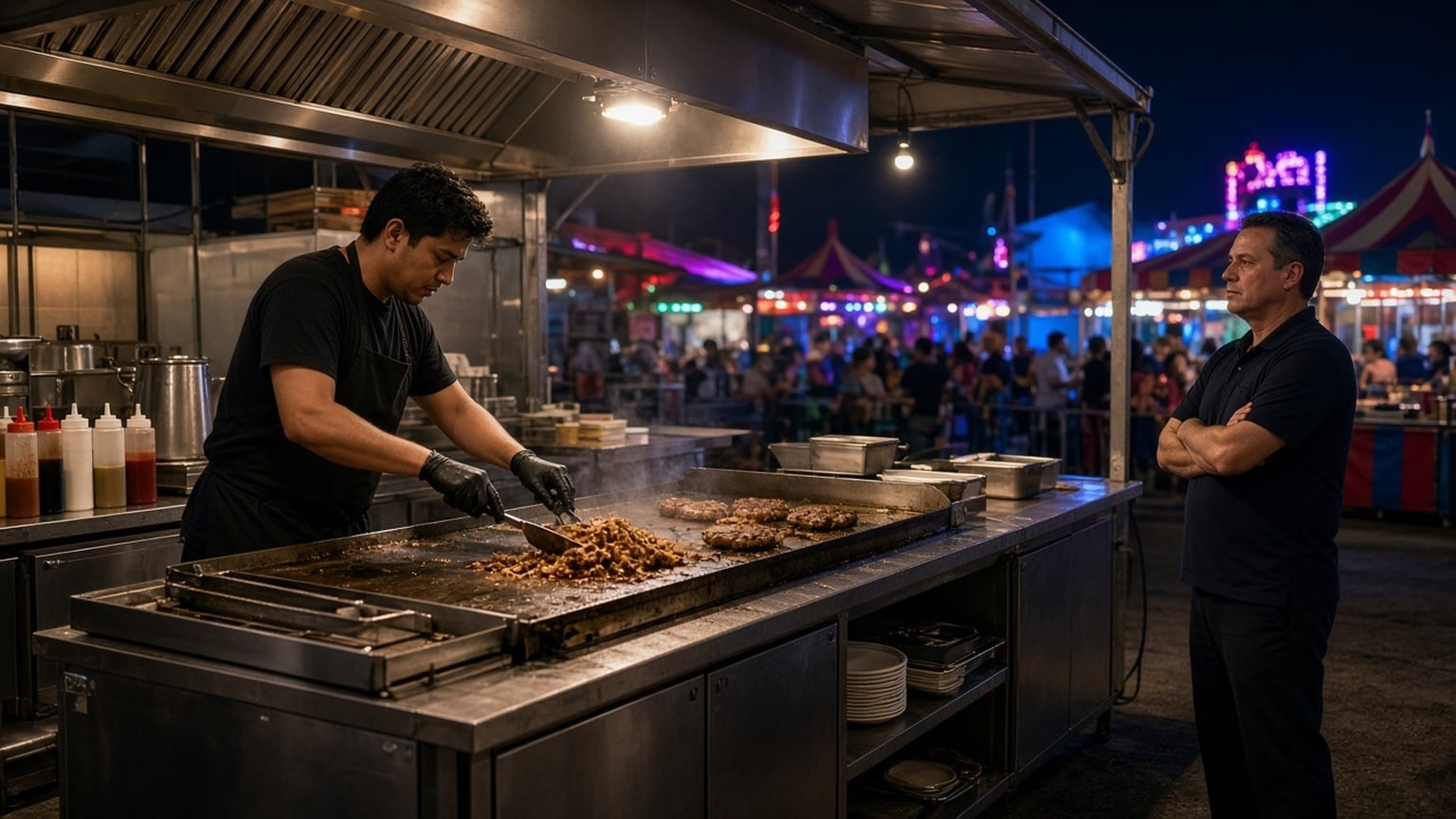
OSHA’s LPG storage and handling standard addresses equipment, systems, containers, and training for installation, removal, operation, and maintenance functions. These longstanding principles reinforce the need for appropriate expertise; California jurisdiction and site-specific requirements must still be established.
Do not allow staff to assemble an unfamiliar fuel system from available parts simply because service is scheduled to begin. Have qualified personnel confirm compatibility, condition, and the required tests. Follow manufacturer instructions and applicable approvals for the equipment in use.
A coordinator’s checklist should record who performed the authorized work and where the supporting documentation is kept. It should not become a do-it-yourself manual for modifying regulators, hoses, valves, or cylinders. Technical problems belong with the people qualified to solve them.
Control the spare-cylinder question
Vendors need a plan for fuel supply across operating hours. Ask what will be connected, what will be stored, who delivers replacements, and where authorized handling occurs. Spare cylinders are part of the proposed arrangement, not an afterthought hidden behind the trailer.
Confirm permitted quantities and storage conditions with the authority. Do not assume a convenient remote storage corner is allowed. Cylinder protection, orientation, access, nearby materials, and other conditions need appropriate review for the actual site.
Assign responsibility for keeping the arrangement consistent during the event. A replacement cylinder arriving later should enter the same controlled process as the original supply. Staff should know how to report an unauthorized addition without trying to relocate unfamiliar equipment themselves.
Keep fuel lines out of improvised traffic patterns
Consider deliveries, employee movement, cleaning, and equipment handling near the approved fuel arrangement. A protected installation can become vulnerable if a service route changes. Have qualified personnel review routing and protection rather than relying on staff to step carefully.
Do not let a vendor move cooking equipment for convenience without checking the effect on connections and approved separation. A longer line or a new location may require renewed review. The fact that an appliance can physically reach another position does not establish that it should be used there.
Document damage or suspected defects and stop affected use through the approved process. Keep unqualified workers from attempting makeshift repairs. The management goal is prompt reporting and safe isolation, not getting through the next rush by concealing a problem.
Extinguishing provisions must match the hazards
OSHA’s portable-fire-extinguisher standard addresses selection, access, inspection, maintenance, and employee education or training within its scope. A visible red cylinder is not proof that the required protection has been selected or maintained correctly.
Ask the fire authority and qualified service professionals which extinguishers or other systems are required for the particular cooking equipment. Check required servicing and documentation. Do not substitute a generic extinguisher recommendation for equipment-specific or local requirements.
Ensure workers understand the employer’s emergency policy and their own role. Some people may be designated and trained for limited response; others should evacuate and report. Nobody should feel that a concessions-management article instructs them to fight a fire beyond their training or safe circumstances.
Keep exits and response access clear
A cooking plan cannot be reviewed separately from people leaving the area and responders reaching it. Include exits, service lanes, public paths, and the effect of barriers or queue equipment. Have the appropriate officials determine the actual requirements.
Then maintain the approved conditions. Empty boxes and temporarily parked carts tend to appear where space looks unused. Explain why designated access must remain clear and provide an approved alternative staging place. Otherwise the same obstruction may reappear every shift.
Walk the route at night as well as during setup. Lighting, closing procedures, and loading activity can change conditions. Record unresolved issues and escalate them through the person authorized to act rather than leaving a verbal warning that nobody follows up.
Treat fair propane planning and inspection as an operating milestone
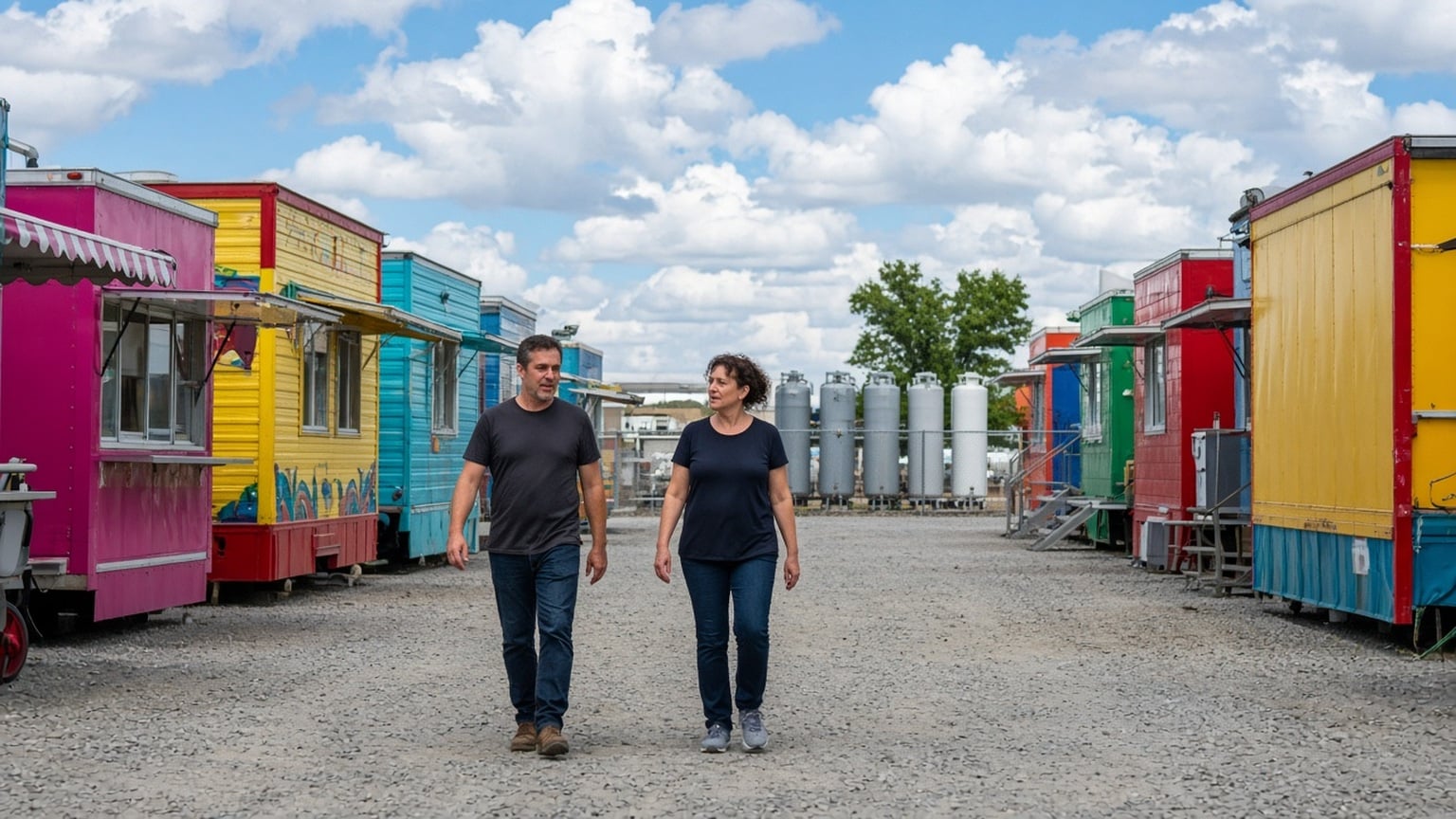
Set up the operation in the condition the authority expects to inspect. Have the authorized vendor representative available with the relevant documents. An inspector cannot reliably evaluate equipment that is still in a truck or an arrangement that changes immediately afterward.
Record findings accurately and communicate the corrective steps. Distinguish an item submitted for review from one actually approved. Do not describe silence as acceptance or assume a neighboring vendor’s approval covers the stand in question.
If correction requires a qualified contractor or revised placement, coordinate that work without negotiating away a safety requirement. The manager’s role is to remove administrative friction and find an authorized resolution, not pressure an official to overlook the issue.
Give shift leaders a simple stop-and-report rule
Workers need to recognize conditions that require stopping use and contacting trained responders or authorized personnel. Use the approved emergency procedures for suspected leaks, fire, damaged equipment, or other immediate concerns. Do not ask staff to troubleshoot unfamiliar fuel systems.
Identify the emergency contact method, stand location description, and meeting point for responders. A caller should be able to describe the site without relying on a nickname known only to vendors. Keep communications accessible to the workers who need them.
Practice the notification sequence during orientation without simulating hazardous conditions. Confirm that staff can reach the responsible person outside office hours. A perfect emergency binder is of limited value if the only person who knows its contents is off site.
Plan for an unavailable appliance
Decide in advance who can authorize a temporary menu reduction if equipment cannot be used. The alternative must remain within the vendor’s permitted operation and any relevant approvals. An unreviewed replacement cooker can create a second problem rather than resolve the first.
Give customer-facing staff accurate information about availability without speculating about the inspection or assigning blame. A controlled service interruption is preferable to improvisation around a safety concern. Preserve the decision record so the next shift understands which equipment remains out of use and who can authorize its return.
Opening approval is not the end of oversight
Continue observing whether the approved arrangement remains intact. Equipment, fuel, storage, and surroundings can change during the fair. Define which routine checks staff perform and which technical checks require qualified personnel. Do not confuse visual monitoring with a professional inspection.
Preserve records of significant changes and authorized responses. If an incident occurs, distinguish firsthand observations from reports by others. Maintain evidence under the fair’s approved procedures and involve the appropriate authorities and advisers.
At closeout, review recurring questions and equipment changes before the next season’s layout is committed. Early fire coordination is not a one-time paperwork exercise. It is a continuing link between the approved plan and the operation on the grounds.
Talk to FairFirst Before Your Next Fair
Get cooking methods, fuel arrangements, site placement, and inspection responsibilities into one coordinated process. FairFirst can discuss how to organize the vendor information and operating handoffs your qualified reviewers need.
Schedule a FairFirst consultation to strengthen your concessions readiness process.
Ask the fire-planning questions before opening day asks them for you.
Sources
- Carnivals, Fairs, Special Events, Tents and Canopies — Sacramento Metropolitan Fire District, 2014
- Special Event and Vendor Booth Application — Sacramento Metropolitan Fire District, 2024
- Concession Fire Requirements — Alameda County Fire Department, posted 2023
- 29 CFR 1910.110: LPG Storage and Handling — OSHA, longstanding standard predating 2025
- 29 CFR 1910.157: Portable Fire Extinguishers — OSHA, 2002 amendment


