


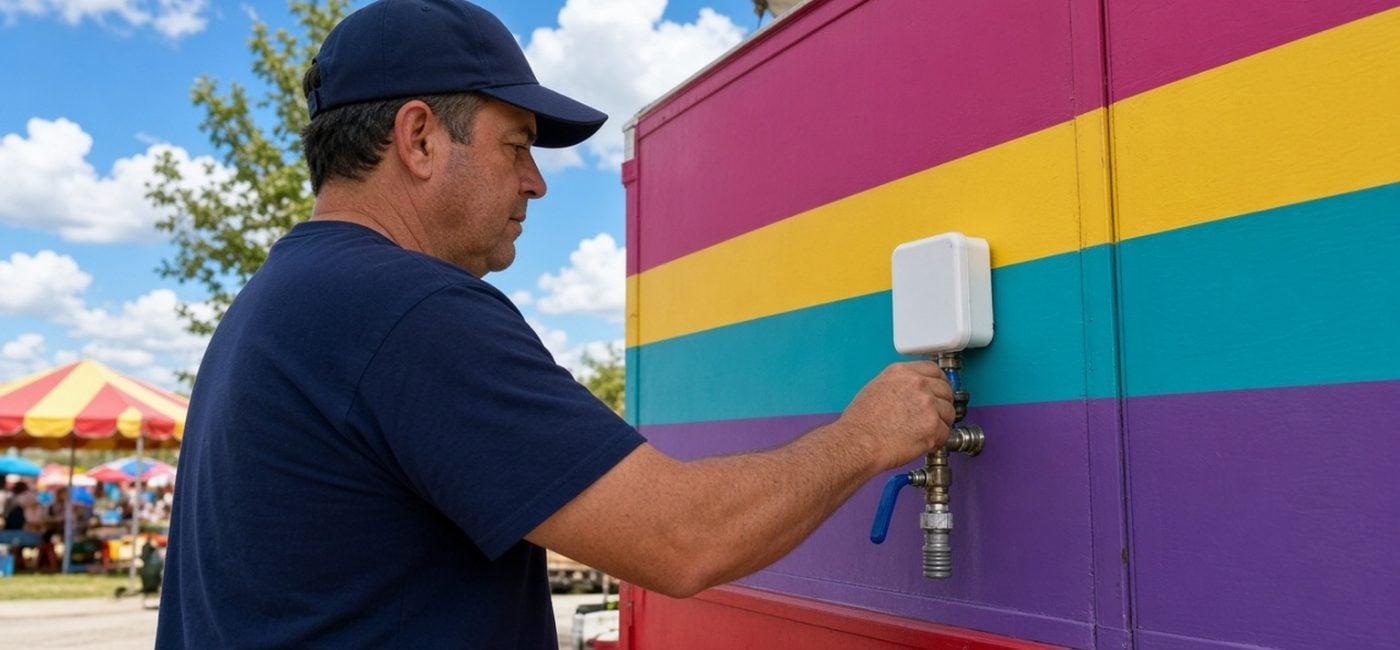
The food court can have excellent vendors and still lose its rhythm over something guests never see: water. A connection does not reach the assigned stand. A holding container fills before collection. A driver cannot get to the approved disposal point. Suddenly, a utility assumption becomes an operating decision. Fair water and wastewater planning makes those decisions early.
Those are illustrative problems, not reports from a named fair. They explain why March planning should include more than booth dimensions. Potable supply and wastewater handling need a complete route, responsible people, approved equipment, and a fallback that the relevant authorities have accepted.
This is an infrastructure conversation, not a substitute for local environmental-health review or professional plumbing design. Professional concessions coordination connects the vendor’s actual needs with what the grounds can safely provide. It makes the invisible service visible before the gates open.
Start fair water and wastewater planning by mapping both directions
Start at the approved potable source and trace the route to each operation. Then trace wastewater from its point of generation to its authorized final destination. Include refill activity, collection routes, storage, and access for service providers. A supply map without a disposal map is only half a plan.
Imperial County’s November 2023 temporary-food-facility guide explicitly asks event organizers to identify potable water and wastewater facilities in site planning. It also tells organizers to communicate which services they provide. That local example makes the management principle clear: responsibilities should be known before vendors arrive.
Confirm the requirements for your own jurisdiction and operating classifications. A fixed concession building, mobile unit, and temporary booth may need different arrangements. Do not use another county’s guide as permission to bypass the review applicable to your grounds.
Ask what each stand actually needs
Collect information about the planned preparation, beverages, handwashing, utensil washing, cleaning, and equipment. Ask whether the vendor expects a direct connection or an approved tank-based arrangement. Record the intended operating hours and the people responsible for replenishment and collection.
Do not estimate all stands from a single generic allowance. A booth serving sealed products does not necessarily have the same demand as an operation washing utensils or preparing drinks. Have the appropriate reviewer determine the facilities and capacity required for the actual proposed activity.
Use a separate entry for each location rather than assuming the vendor’s other stand is identical. The resulting schedule is a working tool for facilities staff, not just an application attachment that disappears after acceptance.
Protect the potable side from cross-connections
The EPA’s 2003 Cross-Connection Control Manual explains how actual or potential links between potable and nonpotable systems can permit contamination through backflow. It is a technical reference for water professionals, health officials, and plumbers, not a field-installation tutorial for concession crews.
Have qualified personnel assess the proposed connections and specify required protection. A hose that physically fits a fitting is not proof that the connection is appropriate. Avoid borrowing unverified components or extending a system without authorized review.
Keep potable equipment identified, protected, and stored separately from wastewater-handling equipment. Establish the approved cleaning and handling procedure with the responsible professionals. Staff should know whom to contact when equipment is damaged or its history is uncertain.
Choose the right materials through qualified review
Ask the facilities lead to verify suitable supply components, fittings, and protection for the planned service. Keep the approved specification with the installation information. Purchasing something described informally as a water hose does not establish suitability for potable-water service.
EPA’s 2021 cross-connection and backflow fact sheet reinforces the importance of a control program rather than reliance on appearance alone. Fair managers should coordinate with their water provider and qualified professionals about the safeguards relevant to the site.
The management job is to prevent undocumented substitutions. If a component fails, route the replacement through the same technical requirements as the original. Do not turn a missing part into an informal exception that nobody can explain the following morning.
Capacity is an operating condition, not a guess
Have the responsible professionals evaluate whether the available supply and equipment can support the proposed activities. Consider simultaneous use, replenishment windows, and any approved storage. Do not infer adequate service merely because water was available during a quiet setup test.
Coordinate a realistic commissioning check before operation. Confirm the required facilities work in their final locations and that staff can identify them. Record unresolved issues and the authorized corrective actions rather than asking vendors to improvise around inadequate provision.
Keep an escalation path for reduced pressure, unavailable supply, or suspected contamination. The relevant authority and qualified personnel should determine the response. A backup arrangement must be approved for its intended use, not invented during the dinner rush.
Distinguish wastewater from rainwater
Handwashing, utensil washing, beverage preparation, ice drainage, and cleaning can create liquid waste. Plan how the applicable waste streams will be collected and disposed of. Calling a liquid greywater does not make it harmless or establish permission to discharge it.
The Imperial County guide prohibits wastewater disposal on the ground and describes sanitary-sewer disposal and watertight holding arrangements. Apply the requirements your authority gives for your particular site. Identify authorized receiving points rather than treating a nearby drain as interchangeable with a sanitary connection.
Show vendors the approved destination and explain how to request collection. A verbal instruction to dump behind the booth is not a disposal plan. Keep grease and any other separately managed materials within their appropriate authorized collection systems.
Make collection possible while the fair is busy
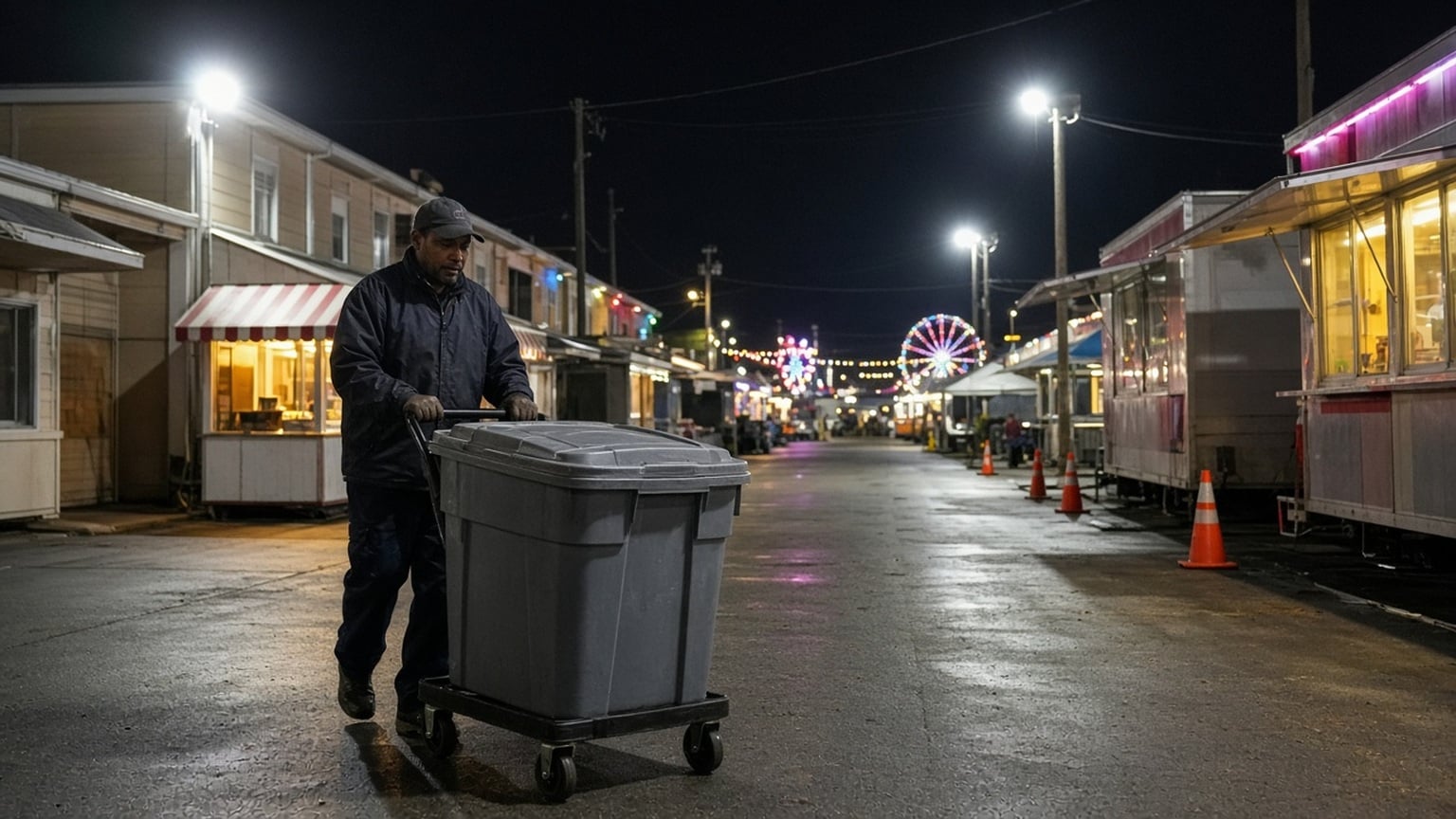
Wastewater service has to work during operating hours, not just when the grounds are empty. Check access for approved carts or vehicles, the availability of trained personnel, and the ability to reach holding equipment without moving cooking appliances or passing through guest seating.
Assign collection responsibility explicitly. If vendors manage their own containers, establish the approved route and reporting process. If a service provider collects them, confirm who requests an extra pickup and who verifies that the request was completed.
Use observed demand to adjust approved collection frequency. Do not wait until a container is close to overflowing before discovering that the service vehicle cannot enter for several hours. Any changes to equipment or disposal arrangements still need the relevant authorization.
Keep service routes separate and usable
Water connections and waste handling should not create barriers for guests or workers. Review crossings, equipment positions, access covers, and trip hazards with facilities and accessibility specialists. A convenient utility route can become an unacceptable obstruction when the food court fills.
The 2010 ADA Standards address accessible routes and related facility features within their scope. Use qualified review to determine the requirements for the particular facility and alteration. Do not assume a portable cover automatically makes a crossing accessible.
Protect the agreed routes from later changes. A new queue barrier, storage cart, or pickup table can block access that looked clear during setup. Include utility servicing in the daily walk so the plan remains workable under actual operating conditions.
Give every handoff a named owner
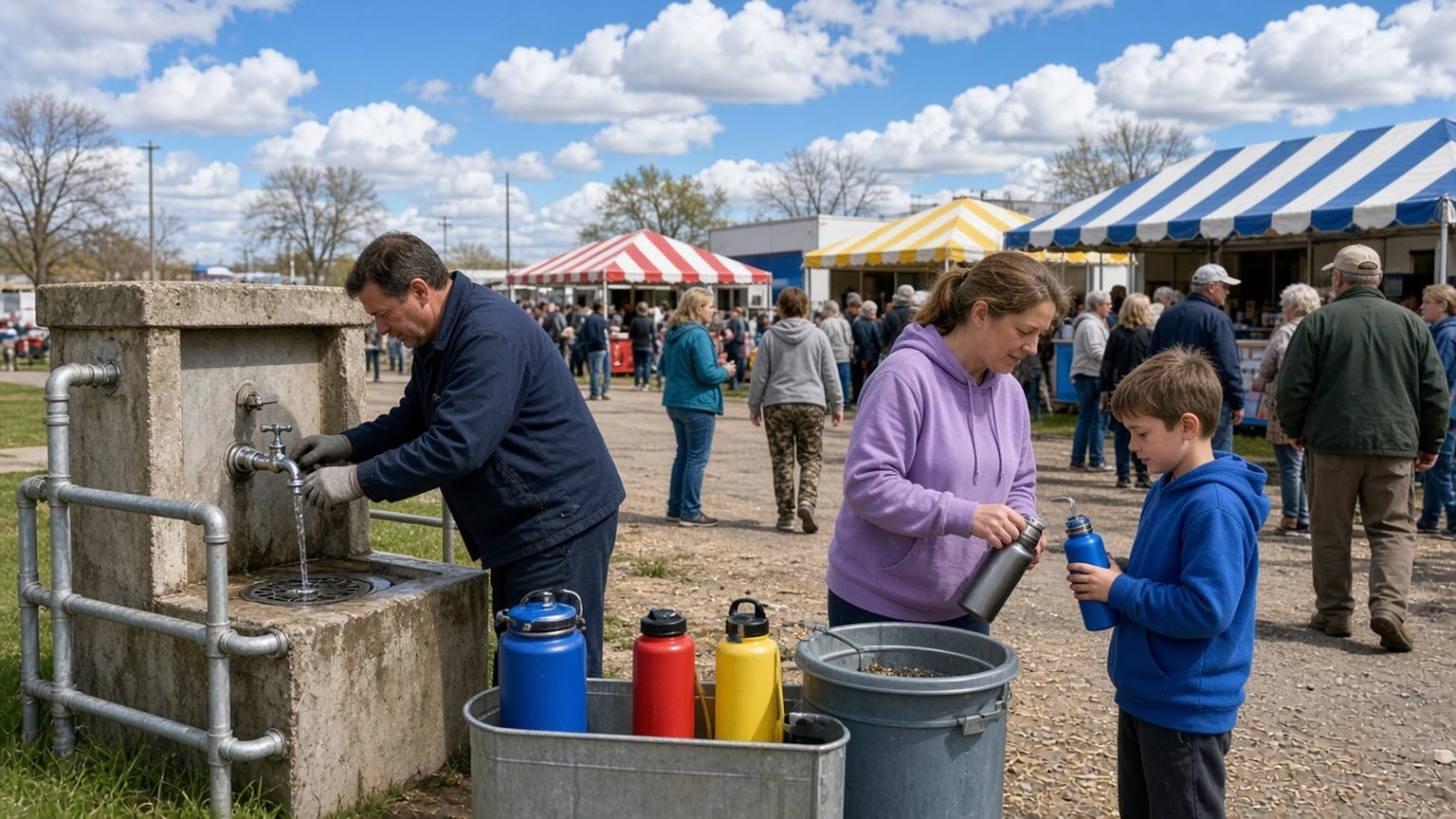
Create a practical responsibility table covering source approval, installation, inspections, replenishment, holding-container checks, collection, disposal, and incident response. Include a backup contact for each critical task. Job titles alone may not tell a night-shift worker whom to call.
San Diego County’s temporary-food training material discusses potable supply and the equipment needed for temporary operations. Its broader lesson for organizers is that working facilities must accompany the approved activity. Confirm current local directions rather than treating older training slides as a complete rulebook.
Walk vendors through the actual provision at their stand. Ask them to point out the approved water supply and wastewater procedure. This reveals misunderstandings earlier than a signature acknowledging a lengthy packet nobody has translated into the physical site.
Write the interruption plan before using it
Decide how a stand reports a supply failure or a disposal problem and who can direct an operational pause. Involve environmental health, facilities professionals, and the vendor in establishing approved alternatives. The response depends on the affected activity and applicable requirements.
Use a clearly labeled hypothetical tabletop exercise: the approved supply becomes unavailable halfway through service. Who verifies the issue, contacts the authority, communicates with the vendor, and determines whether an approved alternative is available? Do not assume bottled drinking water solves every operational need.
Record the conditions for resuming service and who is authorized to confirm them. A message saying water is back does not necessarily resolve a concern about system integrity. Follow the instructions of the responsible authorities and water professionals.
Close the system deliberately
Continue collection and disposal services through final cleaning and departure. Wastewater does not disappear when public sales stop. Establish the final service window and confirm that vendors know it before they begin shutting equipment down.
Use qualified personnel and approved procedures for disconnection, draining, cleaning, and storage. Do not leave abandoned containers or unknown liquids for the next crew to identify. Record damaged equipment and unresolved infrastructure concerns while the people who observed them are still available.
Retain the useful operating information for the next event: actual service access, collection problems, authorized changes, and equipment requirements. This is not a financial audit exercise. It is practical facilities knowledge that can prevent the same utility problem from recurring.
Keep changes visible to facilities staff
A vendor adding a beverage appliance or moving its washing area may change the demands on the approved system. Require the proposed change to reach the responsible facilities and regulatory reviewers before implementation. A menu adjustment should not silently become a plumbing alteration.
Update the working plan when a change is authorized, including any effect on collection needs or service access. Notify the next shift and remove outdated instructions. This small discipline protects the whole food court from a local adjustment that otherwise remains known only to the person who requested it.
Test the plan with the people doing the work
Before opening, ask a vendor, a facilities worker, and the collection lead to explain the water journey together. Each should describe the same source, route, responsibilities, and final disposal point. A contradiction is a planning issue worth resolving immediately.
Check that service information is understandable to the people who need it, including workers joining later shifts. Put the essential contact and location details where authorized staff can retrieve them without searching through an office archive. Keep obsolete plans out of circulation.
Strong coordination does not require dramatic language or a promise that nothing can fail. It requires a system in which a problem is recognized, reported, and addressed by the right people before improvisation becomes the default.
Talk to FairFirst Before Your Next Fair
A successful food court depends on the services behind it. FairFirst can discuss a concessions coordination approach that connects vendor requirements, grounds capabilities, service access, and responsible handoffs.
Schedule a FairFirst consultation to put water and wastewater planning on solid operational ground.
Build the complete service plan before the first stand connects.
Sources
- Temporary Food Facility Operator’s Guide — Imperial County Public Health, November 2023
- Cross-Connection Control Manual — EPA, 2003
- Cross-Connection Control and Backflow Prevention — EPA, 2021
- ADA Standards for Accessible Design — US Department of Justice, 2010
- Temporary Food Training — San Diego County, 2014 original document


