


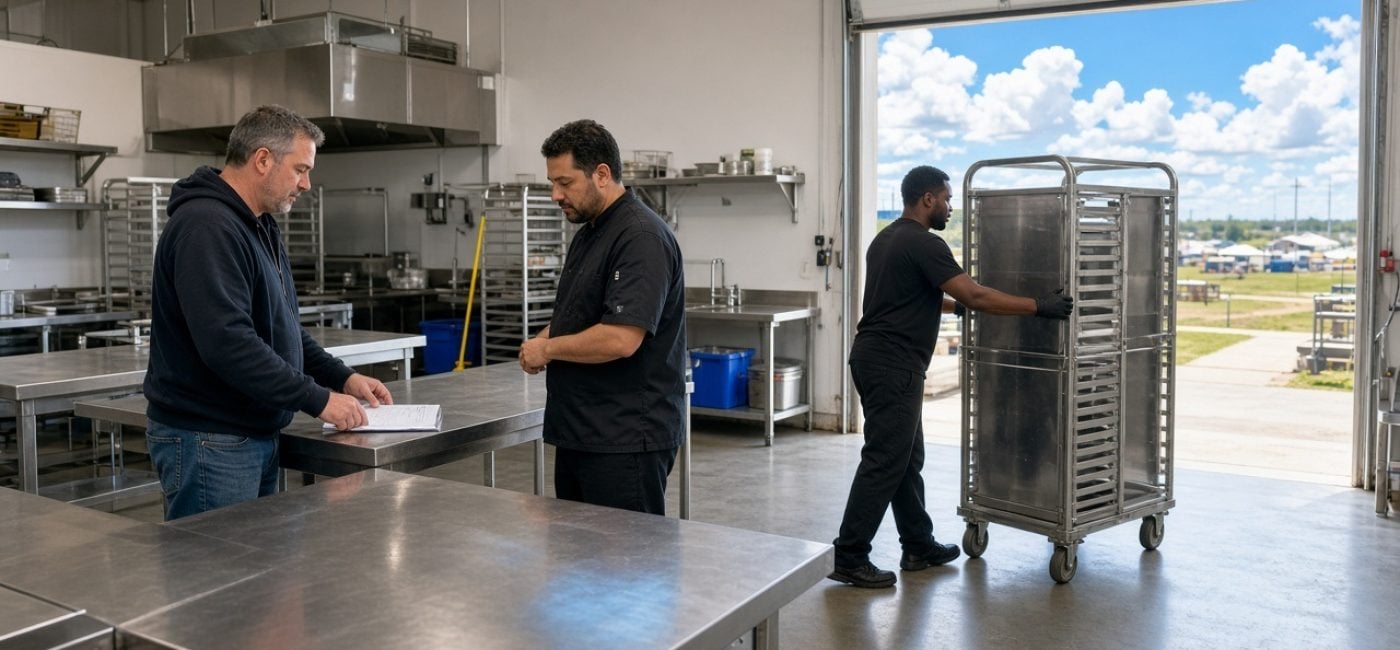
An unused kitchen is not automatically rental-ready
A fairground can have stainless counters, refrigeration, and food-service utilities that sit quiet between major events. That makes year-round kitchen use an understandable question for a board reviewing facilities in October 2025. It does not make rental income automatic. A space designed for one event arrangement may need different approvals, staffing, maintenance, and agreements before another operator can use it regularly. That is why fairground kitchen rental feasibility deserves a structured review.
Start with a feasibility review, not a revenue announcement. Identify what the fair owns, what it is authorized to rent, which uses the facility can support, and what demand actually exists. This article describes a planning approach, not a claim that any named fair has an approved shared kitchen or an unmet market. The opportunity is worth examining when the operating fundamentals fit. The wrong approach is to advertise access first and discover the restrictions after a renter has built a business plan around it.
Define the proposed use narrowly enough to assess it
“Commercial kitchen rental” can mean very different things: occasional preparation, ongoing production, storage, a permitted commissary relationship, or space connected to a particular event. Ask prospective users what they need to prepare, when they need access, how much equipment they require, and where the food will go. Do not bundle distinct activities under one convenient label.
The CDFA fairground facility-rental information shows that many fairs host uses beyond the annual fair. It does not authorize a particular kitchen operation or establish that a given building meets food-facility requirements. Treat the proposed activity as a specific scope to review with regulators and the fair’s governing authority. A narrow initial use can be easier to evaluate than a broad promise that anyone can prepare anything at any hour. Clarify the scope before pricing it.
Check public-asset and governing-body requirements
Identify the entity that owns or controls the space and the rules that apply to its use. A district agricultural association, county facility, and nonprofit fair may follow different procedures. Review delegated authority, board approvals, rate policies, procurement considerations, existing rights, and any restrictions in the controlling agreements. Do not assume an idle room is available merely because no event occupies it today.
The CDFA fairtime and interim rental agreement materials provide a relevant starting point for fairground agreement discipline, including clear event terms and responsibilities. Confirm which documents and approvals apply to the actual proposal. Ask counsel to review the arrangement before offering long-term access or unusual rights. Put the authorization path into the project schedule. A well-intentioned community use still needs a defensible decision process, and staff should not negotiate commitments beyond the authority the governing body has provided.
Bring environmental health into the first conversation
Contact the local environmental health authority before changing food-facility use or inviting tenants. Explain the proposed menus, processes, operating model, storage, equipment, and access arrangements. Ask whether plan review, permit changes, separate operator permits, or other approvals are required. A permit associated with fairtime operation should not be assumed to cover every year-round activity.
For an Alameda County example, the county’s requirements for food-facility plans describe the plan-review process. Other jurisdictions may use different forms and procedures. Do not promise an approval date or classify a renter’s activity without the responsible authority’s input. Keep a written list of determinations and open questions. The goal is to design a lawful operating model from the start, not to ask an inspector to approve a business arrangement after the fair has already sold access and collected deposits.
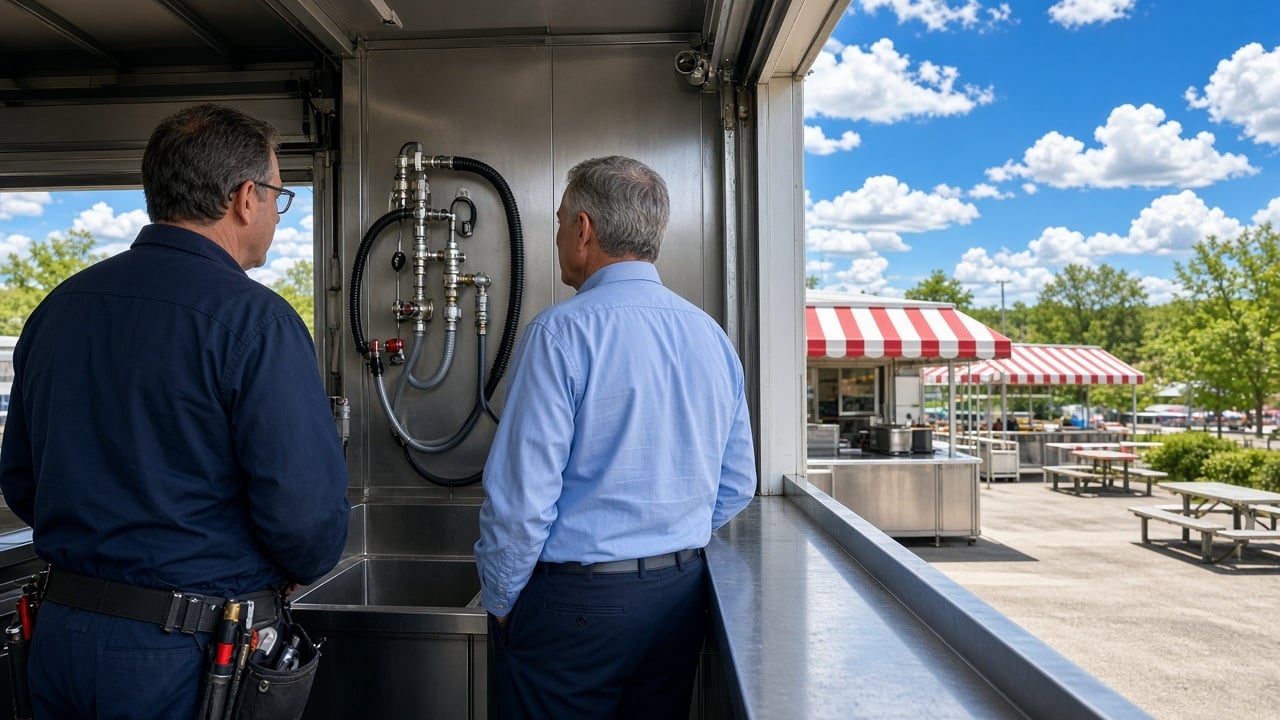
Audit the equipment and utility capacity
Document the available equipment, ownership, condition, service history, and manufacturer information. Separate equipment that belongs to the fair from items a concession vendor leaves temporarily. Confirm electrical, fuel, water, wastewater, ventilation, refrigeration, and fire-protection needs through qualified facilities personnel and the applicable authorities. A familiar appliance is not proof that the entire system can support a new production schedule.
Assess the proposed process against the facility’s real capacity. The FDA’s 2022 Food Code is a model reference for food-facility operation and equipment considerations; the adopted local requirements govern the actual use. A kitchen that can cook a menu may still lack adequate approved cooling, storage, or warewashing capacity for it. Identify those constraints before discussing maximum rental hours. The useful product is an approved usable service, not access to a collection of equipment that renters must somehow make work.
Validate demand with questions instead of assumptions
Talk with potential users through an appropriate, fair process. Ask about frequency, time of day, equipment needs, storage, loading, business permissions, and willingness to pay a proposed rate. Distinguish an expression of interest from a signed commitment. A person who likes the idea may not be able to use the specific hours or approved processes the fair can offer.
Review nearby community needs without inventing a shortage or claiming the kitchen will solve it. Separate the demand for space from the demand for low-cost space with substantial included support. If the business case depends on year-round use, ask what evidence supports that occupancy assumption. Record uncertainties and test them through a limited, authorized arrangement if appropriate. A feasibility review should be allowed to conclude that the idea needs revision or that another use of the facility is more practical.
Price the whole operation, not just the room
Build a cost model that includes utilities, staffing, access control, cleaning verification, waste service, equipment wear, maintenance, insurance review, administration, and reserve for replacement. Identify which costs are fixed and which change with use. Do not assume existing fair staff can absorb new duties without affecting their other work.
Compare plausible usage scenarios rather than presenting a single optimistic annual total. Show the board what happens if bookings are irregular, a major appliance fails, or fairtime preparation blocks access for longer than expected. Avoid promising profit before the costs and approvals are known. A rental rate can serve a community purpose, but any subsidy or discounted use should be authorized and transparent under the fair’s applicable policies. The financial question is not whether someone will pay for the room; it is whether the proposed arrangement supports the service the fair is actually committing to deliver.
Write boundaries between users and the fair
Define permitted activities, authorized people, access hours, equipment use, storage rights, sanitation duties, reporting, and the procedure for changes. Explain whether supplies are included and who approves substitutions or equipment additions. A shared space needs clear separation of food, utensils, chemicals, and personal property through a process acceptable to environmental health.
Specify who checks the condition at arrival and departure, who responds to equipment faults, and when work must stop pending qualified review. Renters should not improvise repairs or borrow another user’s ingredients because the building is shared. Address interruptions, canceled access, damage, and dispute handling through reviewed terms. The agreement should match the operating model approved by regulators. A broadly worded waiver is not a substitute for identifying who performs each ordinary task and who has authority when an unusual situation develops.
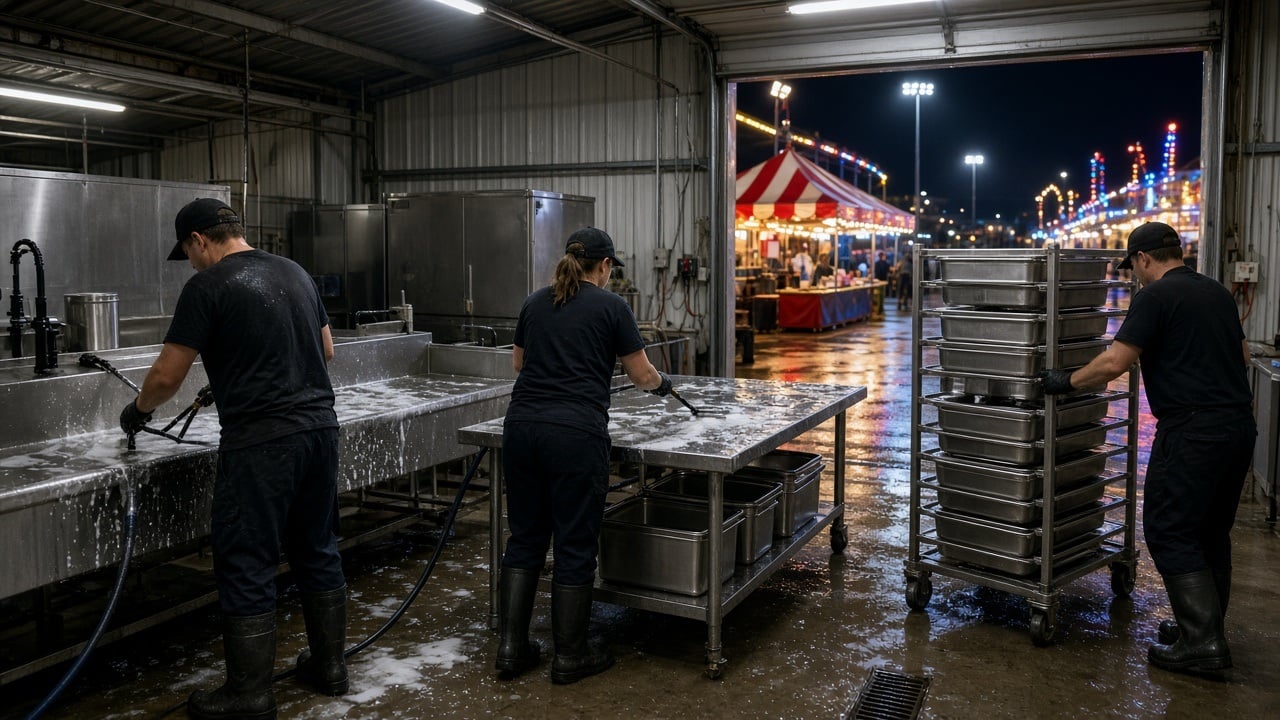
Protect fairtime and emergency uses explicitly
Year-round access must fit the fairground’s principal obligations and any emergency or public-service role that applies to the property. Identify blackout periods, setup windows, inspections, maintenance closures, and the circumstances in which access may be interrupted. Do not promise uninterrupted availability if the fair cannot lawfully or practically provide it.
Explain notice procedures and remedies through the agreement rather than relying on the assumption that renters understand how fairgrounds work. Consider the effect on stored food and equipment when a space becomes unavailable. The renter needs a realistic plan, and the fair needs room to meet its established responsibilities. Coordinate the calendar across departments before confirming use. A kitchen booking that conflicts with a fairtime utility shutdown or required building work is not a minor scheduling inconvenience; it can undermine the food operation the agreement was meant to support.
Keep selection and conflicts transparent
When several users want limited access, establish a fair, documented allocation process appropriate to the governing entity. Explain eligibility, priority, rates, and decision authority. Review relationships that may create a conflict of interest. Do not let personal familiarity become the unofficial rule for who receives desirable hours or favorable terms.
The California FPPC conflict-of-interest guidance explains restrictions that can apply to public officials involved in governmental decisions affecting financial interests. Counsel should evaluate the actual circumstances and any other applicable rules. Keep the decision record useful enough that a new board member can understand why the arrangement was approved. A community-oriented kitchen can lose credibility if access appears arbitrary. Transparent procedures support the public purpose and make it easier for staff to enforce the same operating standards consistently across users.
Design access and communication for real users
Review how people enter, load supplies, reach work areas, and receive instructions. Confirm applicable accessibility obligations with the fair’s accessibility lead and qualified advisers. The 2010 ADA Standards are an important design reference, but a site-specific assessment is needed for the proposed use. Do not assume a locked service entrance or a narrow loading route is adequate because staff have used it informally for years.
Prepare clear orientation materials and an assistance contact. Explain emergency procedures, approved equipment use, reporting, and departure checks in a form users can understand. Test the process with the person who will actually open the building and the person who will verify closing. A rental operation becomes fragile when only one facilities employee knows the alarm, the utility restrictions, or the procedure for a refrigeration problem. Build usable coverage before adding more hours.
Make the fairground kitchen rental feasibility decision explicit
Present the board with a concise feasibility package: approved scope, required permissions, equipment condition, verified demand indicators, cost scenarios, responsibilities, and unresolved risks. Distinguish facts from estimates and identify the decisions needed before operation begins. If the proposal is not ready, say what must change rather than calling uncertainty an opportunity and moving ahead anyway.
A limited approved program may be the right next step, or the fair may decide the infrastructure is better reserved for existing uses. Neither outcome is a failure if the review is honest. Professional concession planning helps evaluate the food operation as a whole, including the resources required between major events. The point is to make useful infrastructure serve a realistic purpose without creating unsupported revenue expectations or an unmanageable operating burden. Ultimately, an idle kitchen is a question worth investigating, not a business case by itself.
Talk to FairFirst Before Your Next Fair
Professional concession management should connect the policy on paper with the decisions made on the grounds. FairFirst can help your team define responsibilities, coordinate vendors, and build practical operating procedures around your fair’s needs. Schedule a consultation with FairFirst to review your food-service operation and identify the next steps.
Start the conversation about your next fair.
Sources
- Facility Rentals — CDFA Fairs and Expositions (undated directory)
- Fairtime and Interim Event Rental Agreement — CDFA (2019)
- Requirements for Food Facility Plans — Alameda County Environmental Health (undated guidance)
- 2022 Food Code — U.S. FDA (2022)
- Conflict of Interest Rules — California FPPC (undated guidance)
- 2010 ADA Standards — U.S. DOJ (2010)


