



A family can love the fair and still struggle to understand its lunch options. One child wants a smaller serving. Another wants a different side. The adults are trying to compare a shared platter with several individual meals while deciding what else the day’s budget needs to cover. Better family fair meal planning makes those comparisons easy.
This is a hypothetical planning situation, not survey evidence about every family. It points to an opportunity that is easy to miss: a useful family offer is not necessarily the biggest combo. It is an understandable meal that people can evaluate, carry, divide, and pay for without surprises.
With summer visits approaching, May is a sensible time to test family-friendly offers. Professional concessions coordination can align vendor economics, clear inclusions, practical portions, and guest communication. The objective is choice and clarity, not a promise that a bundle will be cheapest for everyone or automatically increase spending.
Start family fair meal planning by defining the offer
Start with the actual components: number and size of servings, included sides, beverages, and any choices. A family meal label does not explain whether the offer serves two people or several, or whether a drink shown in the photograph is included.
Avoid assumptions about one standard household. Guests may include one adult and a child, grandparents with several children, or a group with different appetites. A practical menu can offer a smaller entry point alongside a larger package without declaring either the normal family.
Ask the vendor to write the offer as a complete sentence before creating artwork. If the description needs several exceptions to remain accurate, simplify the package. An understandable product is easier to communicate than a clever name with complicated conditions.
Give smaller appetites a real option
Consider a modest serving that does not require purchasing the largest adult combination. Make its contents and portion clear. This is a product-design recommendation, not a medical judgment about how much a particular child should eat.
The 2020–2025 Dietary Guidelines for Americans recognize different needs across life stages. They are population dietary guidance, not a requirement that county-fair vendors sell one prescribed child meal. Do not use them to imply federal approval of an individual concession offer.
Let the smaller option stand on its own. A guest should not have to negotiate an unofficial half order with the cashier. Clear availability helps vendors plan a consistent product and helps families understand what they can purchase.
Make the budget comparison possible
Put the included components and applicable price information together. If a family must buy additional drinks or sides to complete the pictured meal, say so clearly. Avoid using a low headline figure for an offer that most guests will interpret as including more.
The California Attorney General’s pricing guidance explains the general hidden-fees framework and conditional treatment of specified food businesses. Have counsel confirm the applicable disclosure rules for the actual offer rather than assuming food-concession status removes every obligation.
The practical goal is that a guest can make a reasonable comparison before ordering. It is not necessary to claim that one offer is universally affordable. Families have different budgets, and a transparent range is more credible than a broad promise the fair cannot substantiate.
Prove savings claims or leave them out
A bundle may offer convenience without providing a numeric discount. If the fair advertises savings, compare the same components and portions against a legitimate reference. Keep the basis for the statement and have it reviewed before printing.
The FTC’s Guides Against Deceptive Pricing, in the 2024 federal compilation, explain concerns with fictitious former prices and misleading bargain offers. A dramatic crossed-out figure should not be invented to make an ordinary meal appear exceptional.
Check whether optional substitutions change the comparison. A package containing smaller servings cannot quietly borrow the individual prices of larger ones. When precise savings are difficult to establish, describe the contents honestly rather than manufacturing an attractive percentage.
Keep choices useful rather than endless
A little flexibility can make a bundle more practical. Too many combinations can make it difficult to explain and fulfill consistently. Work with the vendor to select choices that fit the approved menu and preparation process.
Clearly identify which substitutions are included, which cost extra, and which are unavailable. Do not promise that any item can be exchanged for anything else. Guests should not discover the rules only after reaching the payment step.
Test the offer with a hypothetical family making different selections. Can staff repeat the order accurately and describe what comes in each tray? If the package requires a supervisor to interpret every time, simplify it before adding more choices.
Hydration should be easy to understand
Explain the beverage component plainly, including size and available options. Consider whether water can be selected without requiring a confusing substitution. Do not assume every family wants the largest sweetened drink just because it is the default package photograph.
Coordinate accurate information about the fair’s drinking-water locations and any relevant refill policies. Staff should know where to direct guests rather than pointing vaguely toward the grounds. Avoid promising a station is available without checking its actual operating status.
Distinguish a menu recommendation from a legal requirement or nutrition claim. Offering a practical water choice can improve clarity and flexibility without marketing the whole meal as healthy, balanced, or suitable for every age.
Think through how the meal leaves the window
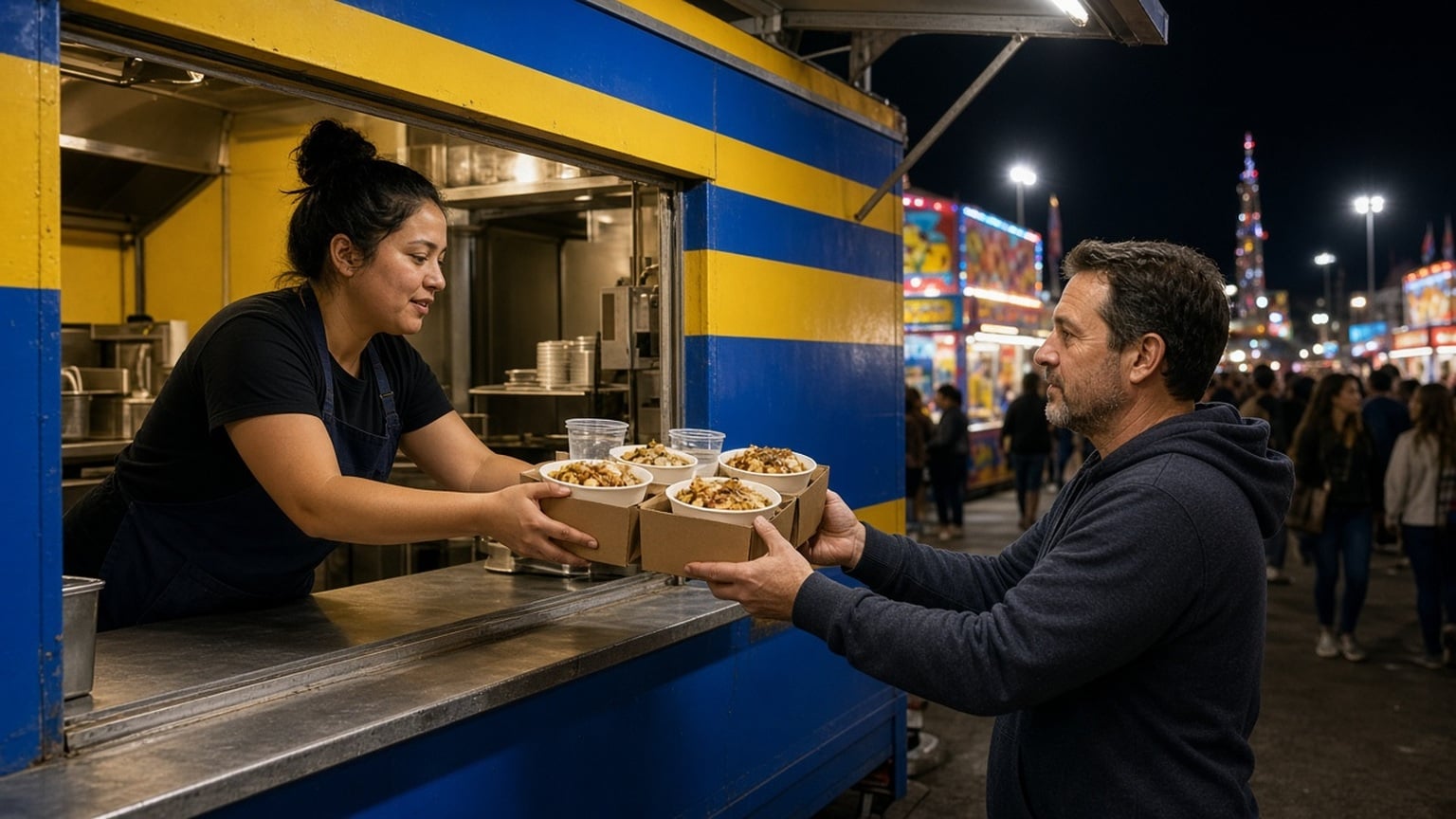
A family offer needs packaging that guests can carry through the actual fair environment. Test the loaded carrier with the intended food and drink arrangement under controlled conditions. Do not discover at service that one adult needs several hands to move it.
Ask whether separate trays make sharing easier and whether lids or carriers create practical difficulties. Include necessary utensils and napkins in the service plan. A package described as convenient should not require another trip back through the crowd for basic components.
Coordinate the handoff with seating and circulation planning without turning this into a queue redesign project. Give guests a clear place to move after collecting the meal. Keep public paths and accessible service areas usable.
Make the family table accessible
The 2010 ADA Standards address accessible routes, dining surfaces, and other features within their scope. Have qualified reviewers determine the requirements for the facility. A family offer should not lead guests toward seating they cannot use.
Maintain the approved accessible seating and routes during operation. Chairs, parked strollers, and packaging carts can change the usable space. Provide practical places for necessary equipment without treating accessibility features as spare storage.
Consider the whole visit from ordering to sitting down. Staff should know how to provide appropriate assistance without making assumptions about a guest’s abilities. Accessible service is not a separate premium option attached to the family package.

Communicate across different needs
A guest may need a spoken explanation, a readable alternative, or another appropriate aid to understand the offer. The Justice Department’s effective-communication guidance describes obligations within the ADA’s scope. Apply the requirements to the actual interaction and circumstances.
Use plain language for the package and avoid relying entirely on icons or a phone-based menu. If information is available in another language, keep its components and terms consistent with the main version. An outdated translation can create a different offer unintentionally.
Train staff to distinguish preferences from allergy questions and route the latter through the vendor’s verified information process. A flexible bundle should not encourage workers to make unsupported assurances about ingredients or preparation.
Check the vendor economics without guessing
Work through the actual components, packaging, preparation effort, and agreed commercial terms with the vendor. A family offer must be sustainable to deliver consistently. Do not promise the board that bundling automatically creates a higher margin.
Compare realistic scenarios using the vendor’s own costs and approved assumptions. Distinguish the effect of serving size from the effect of price, and identify any additional packaging or handling. Keep hypothetical calculations labeled as planning exercises rather than historical results.
Agree how changes will be reviewed if the offer proves difficult to execute. A product that works only when a particular worker is present needs refinement. Consistency is part of value because the guest should receive the advertised package each time.
Promote an offer the stands can actually honor
Confirm participating locations, availability, terms, and start dates before the fair promotes the package. A central announcement can create expectations for vendors who never agreed to participate. Get the operational details settled before the marketing calendar.
Keep photographs representative of the portions and inclusions. Do not use a crowded table of food to illustrate a modest package without making the distinction clear. Review social posts, printed materials, and on-site displays together.
Tell guest services how to answer questions about the offer. They need the same current information as the counter, including any approved change. When a promotion ends, remove obsolete displays and communicate the change rather than leaving guests to discover it at payment.
Leave room for families who do not want a bundle
A package should expand choice, not force every household into the same order. Keep the individual items and smaller options understandable alongside it. A guest who wants one meal should not have to buy several servings to access a practical portion or a clearly displayed price.
For a hypothetical comparison, consider a grandparent buying lunch for one child versus two adults buying several meals. Their needs differ even when they visit the same stand. A compact individual option and a plainly defined multi-meal carrier can serve both without pretending that a single combination is the right answer for everyone.
Ask staff whether guests can find those alternatives without a special request. The useful test is whether the menu presents a genuine range, not whether the largest package occupies the most prominent photograph.
Learn from questions, not assumptions
Observe what guests ask: how many servings, whether drinks are included, whether portions can be separated, or where they can sit. These questions help identify friction without claiming to represent every family’s preferences.
Collect practical feedback from the counter and preparation teams as well. A package may be clear to guests but awkward to carry or slow to assemble. Adjust the offer through the approved process, keeping the vendor and communications team aligned.
Do not judge the program from one busy afternoon or claim a guaranteed repeat-visit effect. Useful outcomes include fewer ambiguities, consistent delivery, manageable preparation, and a range of choices guests can understand. Those are solid reasons to refine a family offer.
Talk to FairFirst Before Your Next Fair
Family value starts with a clear, practical offer, not an oversized label. FairFirst can discuss how to coordinate portions, package design, vendor economics, and consistent guest communication across the food court.
Make the next family meal easier to choose, carry, and budget for.
Sources
- Dietary Guidelines for Americans 2020–2025 — USDA and HHS, 2020
- Hidden Fees: California Price-Transparency Guidance — California Attorney General, 2024 framework
- Guides Against Deceptive Pricing, 16 CFR Part 233 — FTC/GovInfo, 2024 edition
- ADA Standards for Accessible Design — US Department of Justice, 2010
- Effective Communication — US Department of Justice, 2020


