


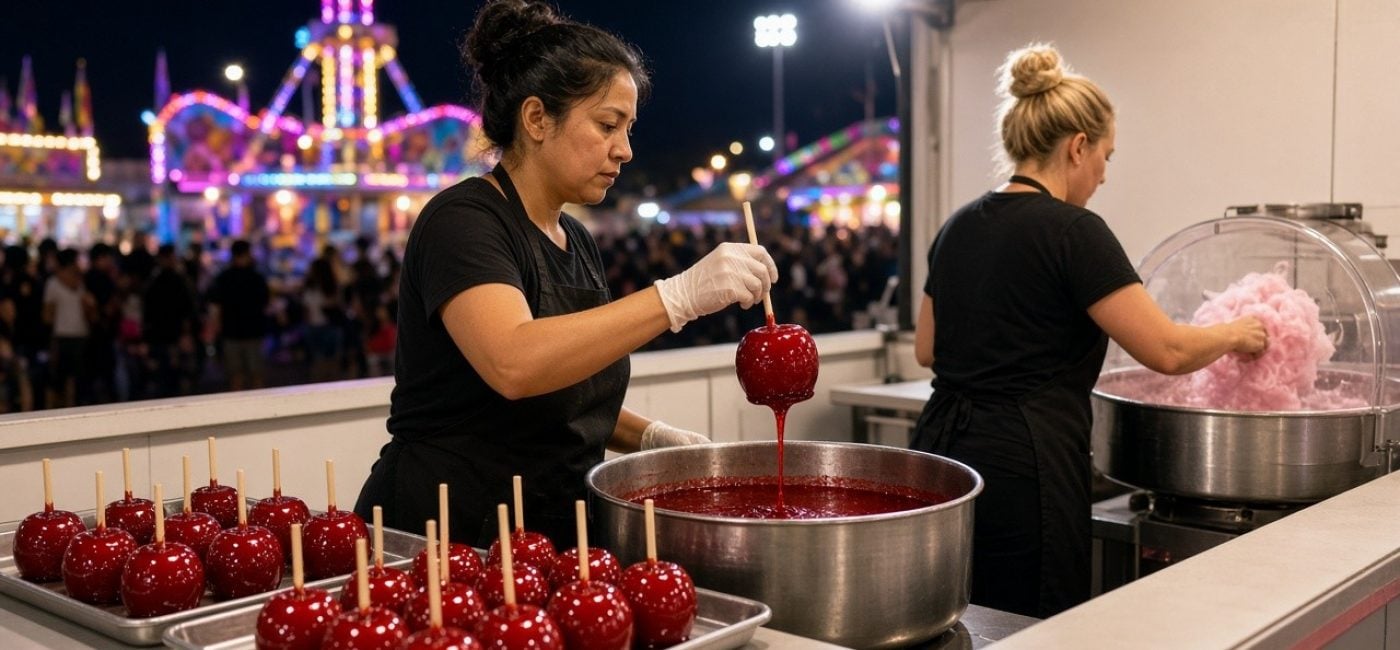
If your board meetings have started to include questions about food dyes, “ultra-processed” food, and whether the fair should be selling deep-fried candy bars at all, you are not imagining it. The Make America Healthy Again agenda has moved from campaign slogan to federal policy in barely a year, and its language is now showing up in county health department conversations, sponsor questions, and local news coverage of fair food. MAHA fair food scrutiny is now a planning issue, even where the rules reach the midway only indirectly.
Here is the problem for fair managers: most of the coverage blurs what is actually law, what is voluntary, and what is simply political pressure. Some of these changes will affect what your vendors can legally sell in California. Others do not apply to fair concessions at all. As you finalize 2026 vendor menus, you need to know the difference, because overreacting can kill sales just as surely as ignoring the issue can embarrass your board.
What MAHA Actually Is, and What It Has Done So Far
The MAHA Commission was created by executive order in February 2025 to study childhood chronic disease. Its first report came out in May 2025, and in September 2025 it released the Make Our Children Healthy Again Strategy. For food businesses, the strategy’s key commitments include developing a government-wide definition of ultra-processed foods, working toward a front-of-package nutrition labeling rule, reforming the “Generally Recognized as Safe” (GRAS) pathway for food ingredients, and helping states restrict junk food purchases through SNAP waivers.
Most of those items are still in progress. A definition is not a ban, and a proposed labeling rule does not change what a vendor can fry on a midway this summer. But the direction is clear, and three specific actions deserve your attention right now.
1. The New Dietary Guidelines Say “Eat Real Food”
On January 7, 2026, HHS and USDA released the Dietary Guidelines for Americans, 2025–2030. The core message is “eat real food.” The guidelines call for prioritizing protein at every meal, choosing full-fat dairy with no added sugars, eating whole fruits and vegetables, and limiting highly processed foods, added sugars, and artificial additives. They also recommend water and unsweetened beverages for hydration.
Does it apply to fair concessions? Not directly. The Dietary Guidelines shape federal nutrition programs like school meals and set the tone for public health messaging. They do not regulate what a private concessionaire sells at a county fair. What they do change is the conversation. When a county supervisor or a local reporter asks what your fair is doing about “highly processed food,” the new guidelines, published at RealFood.gov, are the yardstick they will use. Interestingly, the emphasis on protein and full-fat dairy is friendlier to classic fair food than many expected. A grilled tri-tip sandwich, a turkey leg, or a real-fruit smoothie fits the “real food” message better than most people assume.
2. SNAP Food Restriction Waivers: Big News, Small Fair Impact
USDA has been approving state requests to remove items like soda and candy from what SNAP benefits can buy. In a December 10, 2025 announcement, USDA approved waivers for Hawaii, Missouri, North Dakota, South Carolina, Virginia, and Tennessee, bringing the total to 18 states. Each waiver is tailored to the state, and implementation dates vary through 2026. USDA keeps a running list on its SNAP food restriction waiver page.
Does it apply to fair concessions? Almost never, and California is not on the list. More importantly, federal rules already bar SNAP benefits from being used on foods that are hot at the point of sale, which covers the vast majority of what fair vendors sell. Most fair concession stands are not SNAP-authorized retailers in the first place. If someone tells your board that SNAP waivers will force menu changes at your fair, that is not accurate. The real effect is reputational: the waivers have made “soda and candy” a political category, and that framing carries over to how people talk about midway food.
3. Food Dyes: This One Actually Reaches Your Midway
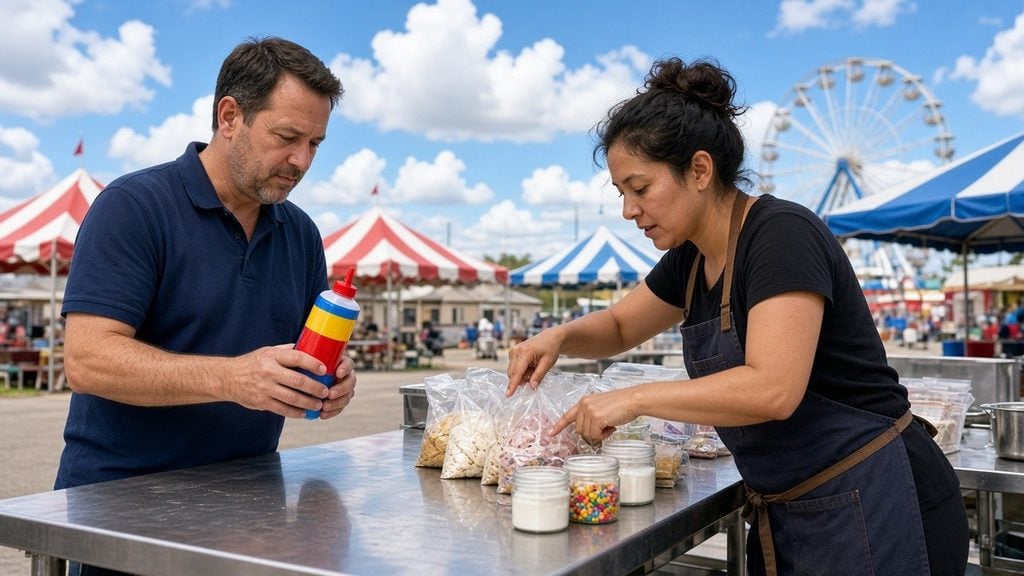
Synthetic food dyes are where federal policy, California law, and fair menus collide. Think about how many classic fair items depend on bright color: candy apples, cotton candy, snow cone syrups, frosted funnel cakes, blue raspberry drinks, rainbow sprinkles, and red velvet anything.
The federal picture
In January 2025, the FDA revoked the authorization for FD&C Red No. 3 in food. Food manufacturers have until January 15, 2027, to reformulate. Then, on April 22, 2025, HHS and FDA announced a plan to phase out petroleum-based dyes. The FDA began the process of revoking Citrus Red No. 2 and Orange B, and said it would work with industry to eliminate six more, including Red No. 40, Yellow No. 5, Yellow No. 6, Blue No. 1, Blue No. 2, and Green No. 3, by the end of 2026. It also committed to fast-tracking natural alternatives such as butterfly pea flower extract, gardenia blue, and Galdieria extract blue.
Be precise with your board here. The Red No. 3 revocation is a legal requirement. The six-dye phase-out was announced as a national standard and timeline built on industry cooperation, not as an outright ban on those dyes today. In practice, many ingredient suppliers are already reformulating, which means your vendors’ syrups, sprinkles, and candy coatings may change whether or not anyone forces the issue.
The California picture
California went further, earlier. Under the California Food Safety Act (AB 418), now Health and Safety Code section 109025, beginning January 1, 2027, no person or entity may sell, distribute, hold, or offer for sale a food product containing brominated vegetable oil, potassium bromate, propylparaben, or Red dye 3. Violations can bring civil penalties of up to $5,000 for a first violation and up to $10,000 for each later one.
Does it apply to fair concessions? Yes. The law applies to anyone selling food in California commerce, and a fair vendor selling a candy apple coated with a Red 3 product is selling food. The 2027 date gives you one more season of cushion, but 2026 is the year to get ahead of it. Potassium bromate deserves a look too, since it has historically appeared in some bread flours and rolls. Ask vendors to confirm their bun and dough suppliers.
California has also passed laws aimed at schools, including AB 2316 on synthetic dyes in school food and AB 1264, which the Governor’s office describes as a first-in-the-nation law phasing out the most concerning ultra-processed foods from school meals. Those laws apply to schools, not fairs. But they show where California’s definitions are heading, and they give county public health departments a ready-made vocabulary.
How Fairs Are Balancing Classics With MAHA Fair Food Expectations
The fairs handling this well are not purging deep-fried favorites. Fried food is a big reason people come to the fair, and stripping it out would drive guests away. Instead, they are adjusting around the edges in ways guests barely notice and boards can point to with pride.
Run a dye and additive audit now
Ask every vendor for ingredient lists on colored and baked items: syrups, coatings, frostings, sprinkles, drink mixes, buns, and doughs. Flag anything with Red No. 3, potassium bromate, propylparaben, or brominated vegetable oil for replacement before 2027. Then flag the other synthetic dyes as “watch” items. Doing this in January, before menus are printed and inventory is ordered, costs almost nothing. Doing it in July costs a lot.
Swap colors, keep the concept
A candy apple can still be red. Natural colors from sources like beet, paprika, spirulina, and fruit and vegetable juices are widely available to food suppliers. Some shift slightly in shade or behave differently under heat, so test before the fair, not during it. Guests care that the snow cone looks fun, not which colorant made it blue.
Add transparent options instead of replacing classics
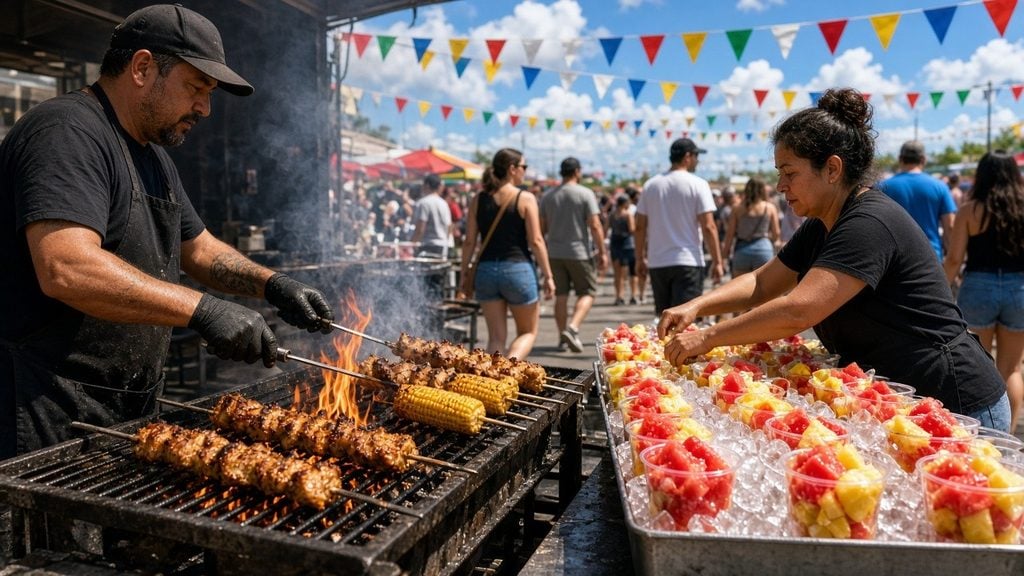
Guests respond to choice. A grilled chicken skewer, a fresh fruit cup, a plant-based bowl, or a corn-on-the-cob stand sits comfortably next to the funnel cakes. Put these items where traffic is heaviest, price them competitively, and give them an appealing presentation. Grilled, protein-forward items fit the new guidelines’ “prioritize protein” message, and they tend to sell when they look and smell great.
Make ingredient information easy to find
Transparency is the cheapest credibility a fair can buy. Simple ingredient and allergen cards at each stand, or a printed or online guide to options like “no artificial dyes,” “plant-based,” or “gluten-free,” let health-conscious guests find what they want without lecturing anyone else.
Put water front and center
The new guidelines specifically recommend water and unsweetened beverages. Make bottled water, unsweetened iced tea, and agua fresca made with real fruit easy to find at every beverage point, and keep water priced reasonably. On a hot day it sells itself, and it gives your board an easy talking point.
Keep the menu approval process documented
Most fairs already approve vendor menus. Add a simple checklist for additives covered by California law, natural color sourcing, and at least one lighter option per food court area. A documented process protects the board if questions come up, and it keeps every vendor working from the same playbook.
What Not to Do
The biggest risk in 2026 is not a regulator. It is a rushed reaction. Fairs that overhaul their menus because of a headline often end up with empty healthy-food stands, frustrated vendors, and the same deep-fried favorites selling out two booths away.
Do not announce sweeping bans you cannot enforce or that your vendors cannot meet. Do not tell vendors that SNAP rules or the Dietary Guidelines legally require menu changes, because they do not. And do not let the issue sit until a reporter asks about it. The fairs that will look best in 2026 are the ones that can say, calmly and accurately, “Here is what the law requires, here is what we have already done, and here is the variety we offer.”
Talk to FairFirst Before Your Next Fair
FairFirst manages food concessions for county fairs, including the Alameda County Fair, and we track these regulatory changes so fair boards do not have to. We audit vendor menus for California-restricted additives, help operators source natural colors and lighter options that actually sell, and build menu approval processes that keep your fair compliant and your midway fun. If MAHA questions are landing on your board’s agenda, schedule a consultation with FairFirst and we will help you build a 2026 menu plan that holds up to scrutiny without sacrificing sales.
Book your free FairFirst consultation today.
Sources
- Make Our Children Healthy Again Strategy, MAHA Commission / The White House, 2025
- Kennedy, Rollins Unveil Historic Reset of U.S. Nutrition Policy, U.S. Department of Agriculture, 2026
- Dietary Guidelines for Americans, 2025–2030 (RealFood.gov), U.S. Department of Health and Human Services and U.S. Department of Agriculture, 2026
- Secretary Rollins Signs Six New State Waivers, U.S. Department of Agriculture, 2025
- SNAP Food Restriction Waivers, USDA Food and Nutrition Service, 2025
- What Can SNAP Buy?, USDA Food and Nutrition Service, 2025
- FDA to Revoke Authorization for the Use of Red No. 3 in Food and Ingested Drugs, U.S. Food and Drug Administration, 2025
- HHS, FDA to Phase Out Petroleum-Based Synthetic Dyes in Nation’s Food Supply, U.S. Food and Drug Administration, 2025
- California Health and Safety Code Section 109025 (California Food Safety Act, AB 418), California Legislative Information, 2023
- Governor Newsom Signs First-in-the-Nation Law to Ban Ultra-Processed Foods from School Lunches, Office of the Governor of California, 2025


