


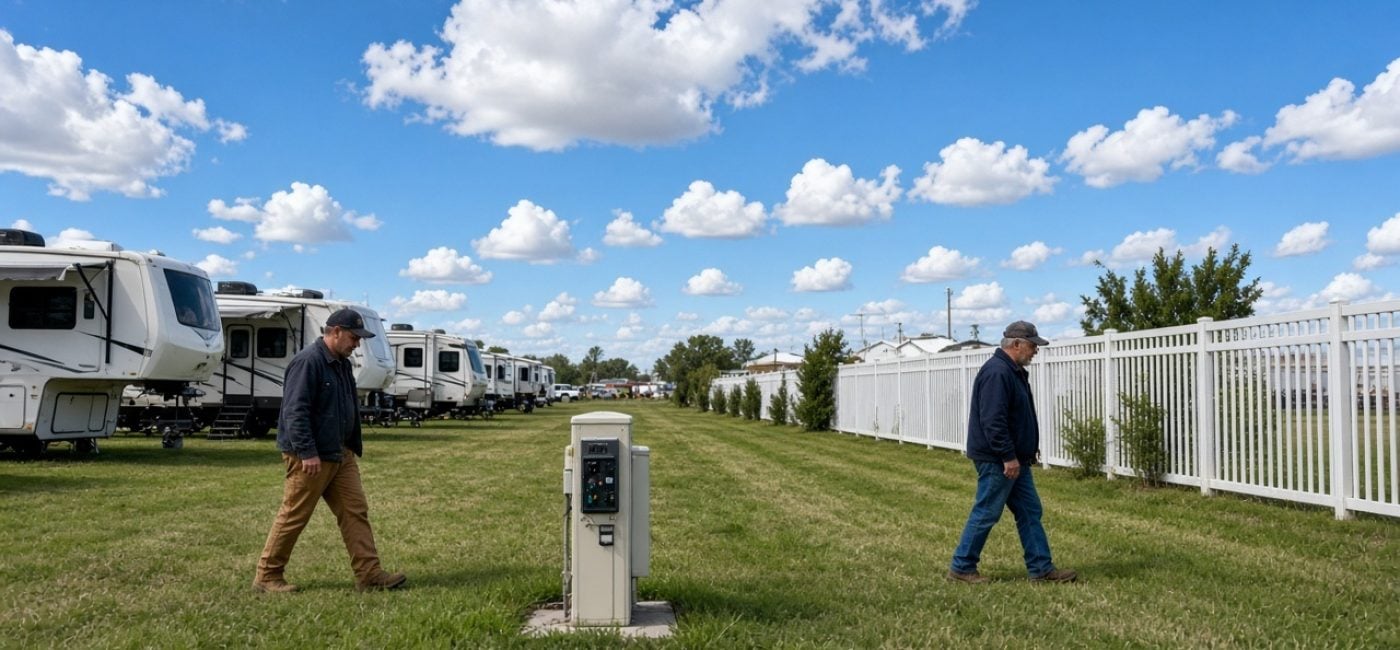
A parking instruction is not a seasonal fairground lodging plan
“They can stay on the grounds” sounds practical until a vendor asks where the RV goes, who provides sanitation, and what happens when a power connection fails overnight. In this hypothetical planning conversation, the food-service agreement says little about housing, while several departments assume someone else approved it. A short stay does not make those questions disappear. A written seasonal fairground lodging plan answers them before anyone parks.
November 2025 is the right time to resolve next season’s responsibilities before travel plans and employment promises depend on them. The fair needs a clear arrangement covering permission, site use, safety, sanitation, access, and communication. The employer and the person providing accommodation also need to understand their obligations. This article is a planning framework, not a determination that a particular fairground is an approved campground or employee-housing facility. Start by identifying the actual use and the authority responsible for reviewing it.
Classify the arrangement before offering space
Describe who will stay, why they are there, how many people are involved, what units they will use, who controls the site, and how long occupancy is proposed. Distinguish employee housing, recreational-vehicle accommodation, ordinary visitor camping, and other arrangements rather than assuming one label fits them all. The legal result depends on facts and applicable law, not the name used in a vendor email.
The California HCD employee-housing overview identifies the Employee Housing Act and related regulatory framework. Consult HCD or the appropriate enforcement agency about the specific proposal and rules in effect for it. Do not borrow a threshold from a different exemption or a zoning provision and treat it as blanket permission. A preliminary classification should lead to a documented approval path, including the local departments and fair officials who need to review the use.
Confirm permits and exemptions through the right agency
The HCD permits-and-exemptions guidance describes employee-housing permitting and examples of facilities that are exempt or not subject to that act. An exemption from one program is not proof that no building, fire, sanitation, occupancy, or local requirements apply. Government ownership and the identity of the operator may matter, so avoid making assumptions from the fairground’s public character alone.
Prepare a written inquiry with the real operating facts and retain the response. Ask which agency has enforcement responsibility, what approval is required, and whether the proposed location and connections are authorized. Do not promise occupancy before those questions are resolved. If a vendor proposes housing in a unit it owns, the unit’s ownership does not answer whether it may be placed and occupied at the site. Keep the permission to use the land separate from the suitability and approval of the accommodation itself.
Draw the site for people who will sleep there
Map the approved lodging area, unit locations, access lanes, sanitation points, waste collection, emergency access, and pedestrian connections. Have the relevant fire, facilities, and enforcement authorities review spacing and site conditions. Do not invent a universal clearance dimension from memory or copy one from an unrelated campground arrangement.
The CDFA fairground rental agreement materials reinforce the need for written use conditions and responsibilities, although the particular forms and approvals must fit the actual lodging arrangement. Keep sleeping areas separated from activities and traffic that conflict with their approved use. A quiet-looking corner during planning may become a loading route during move-in or teardown. Review the full event calendar and service schedule so the site plan remains workable throughout the stay, not just on the day someone parks an RV.
Put utility responsibilities in writing
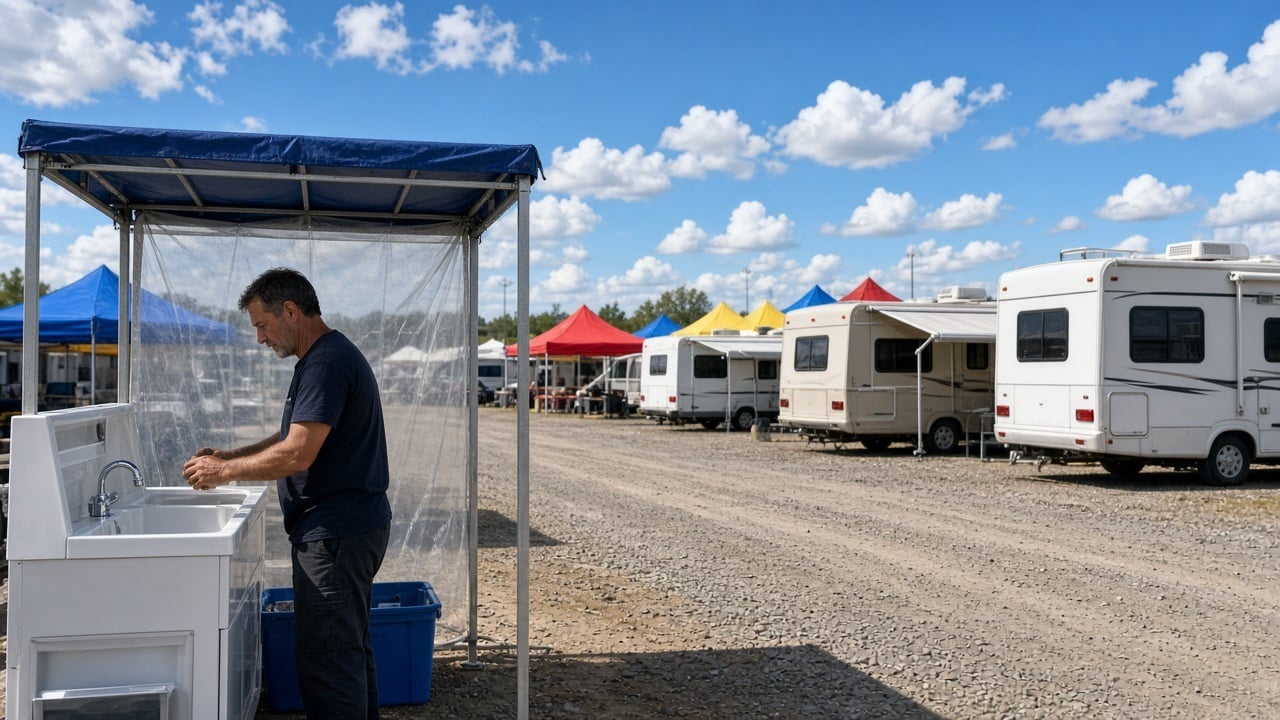
Identify who provides and maintains approved electrical service, potable water, wastewater connections or collection, and any other utility required by the arrangement. Have qualified personnel assess capacity and installations. Residents and food-stand staff should not improvise adapters, repairs, or connections because the usual facilities contact has gone home.
Define how a fault is reported and who responds overnight. Specify when a unit must stop using a connection or relocate through the approved process. Keep the service route clear and protect connections from vehicle movement and other damage. The operating agreement should explain charges, included services, and any limitations without suggesting that payment excuses unsafe conditions. A utility pedestal beside a parking space is not, by itself, a complete lodging service. The approved supply, the person responsible for it, and the response when it fails all belong in the plan.
Treat sanitation as a scheduled service
Clarify toilet, handwashing, bathing where applicable, drinking-water, wastewater, and waste arrangements with the responsible authority. Identify service frequency, access hours, cleaning, maintenance, and backup contacts. Do not assume residents can use a public restroom that is locked after closing or a vendor sink intended for a different permitted use.
Build the schedule around actual occupancy and the approved facilities, not only the hours when guests attend the fair. The fair and operator should know who notices a problem and who can authorize a repair or replacement. Residents need a clear way to report a sanitation concern without being sent between departments. Keep lodging-related wastewater separate from food-service disposal unless the arrangement is explicitly approved. The practical standard is a dependable, authorized service that works overnight and during transitions, not a promise that somebody will find a hose or unlock a door if needed.
Address carbon monoxide and fuel risks explicitly
Fuel-burning equipment can create hazards near sleeping spaces. The CDC’s carbon-monoxide prevention guidance, first published in 2024 explains that carbon monoxide is colorless and odorless and can cause severe illness or death. Do not rely on a resident noticing an odor or feeling unwell before taking action. Sleeping people may be especially unable to recognize a developing problem.
Have qualified personnel and the appropriate authority review generator placement, vehicle exhaust, fuel storage, alarms, and equipment use for the actual site and units. Follow manufacturer instructions and applicable requirements. Never suggest that opening a window makes indoor generator use acceptable. This article is not an installation guide or an approval for a particular setup. The lodging orientation should identify prohibited practices, emergency reporting, and the person authorized to address a concern, without asking an untrained employee to diagnose or repair fuel-burning equipment.
Keep emergency access usable after closing
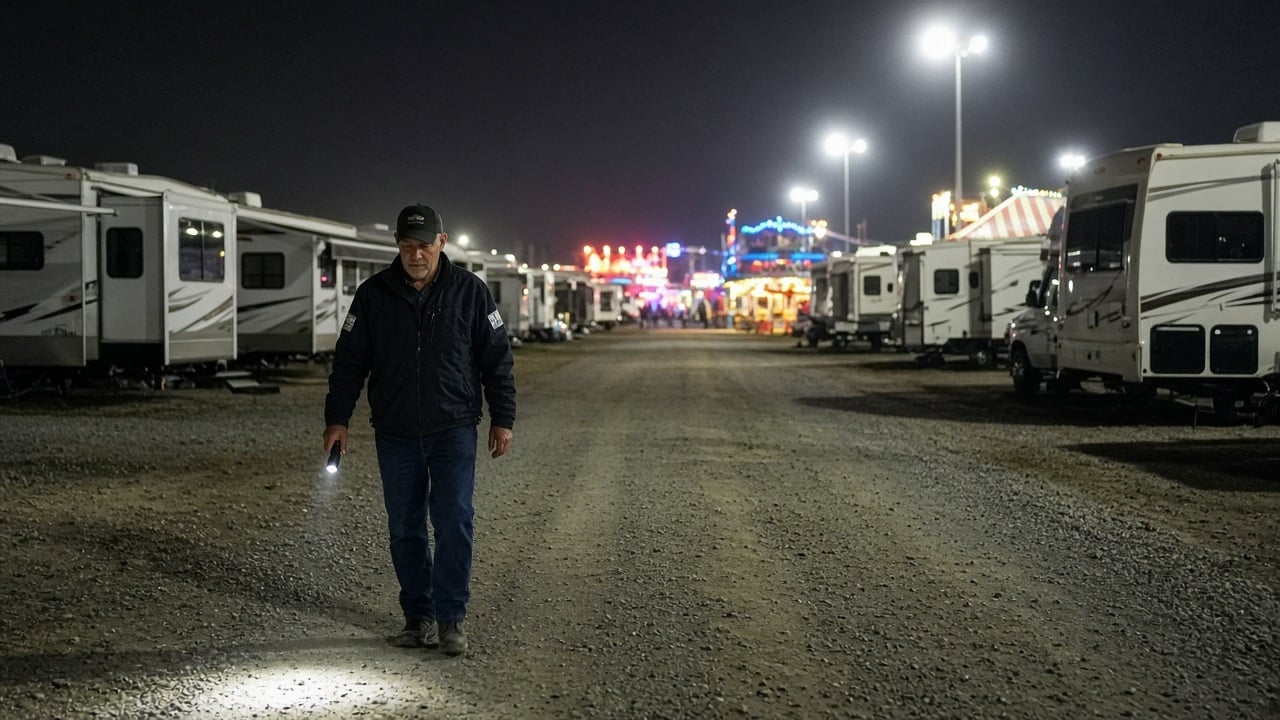
A lodging area remains occupied when much of the public operation is quiet. Confirm how emergency responders enter, how residents identify their location, and how the overnight contact is reached. Check that gates, barriers, parked vehicles, and storage do not obstruct the approved route. Assign responsibility for maintaining that route as teardown and deliveries change the surrounding grounds.
Give residents usable instructions for fire, medical emergencies, severe weather, and other site-specific concerns. Coordinate the plan with the fair’s emergency leadership rather than issuing a separate vendor note with conflicting directions. Include people who need assistance and review communication methods that do not depend entirely on a phone signal. An emergency map should reflect the actual occupied units and access arrangements. A diagram drawn before move-in is not enough if vehicles later fill the lane that responders were expected to use.
Clarify employment promises and resident costs
If accommodation is connected to employment, the employer should have qualified counsel review the arrangement, disclosures, charges, and any wage-related implications. Do not assume a vendor contract authorizes payroll deductions or that an employee’s agreement resolves every legal issue. Keep the lodging terms distinct from the general concession settlement so the affected people can understand them.
Explain the approved dates, included services, resident responsibilities, payment terms if any, and the process if work or the event ends early. Avoid promising housing that depends on approvals still pending. Give the resident a copy of the relevant terms through the employer’s appropriate process. The fair needs to understand what it has authorized, and the employer needs to avoid making promises beyond that authorization. Written clarity is especially important when people travel a long distance and may have limited practical alternatives once they arrive.
Protect privacy while maintaining a usable roster
An overnight operation needs enough information to know which units are occupied and how to reach the responsible contacts. It does not need a publicly displayed list of personal details. Define who maintains the roster, who can access it, and what information is genuinely necessary for operations and emergencies. Handle employment and identity records through the appropriate authorized processes.
Keep lodging discussions out of public radio traffic when they do not need to be broadcast. Residents should know where to report a concern privately and how the information will be handled. Avoid using access control as an excuse for unnecessary monitoring of personal life. The fair’s legitimate site-management needs should be clear and proportionate. A well-designed arrangement can provide an accurate emergency picture while respecting the people staying on the property and limiting sensitive information to the staff who actually need it.
Make access and communication inclusive
Review the physical route to lodging services and the way instructions are delivered with the appropriate accessibility and legal advisers. The 2010 ADA Standards provide a design reference for applicable facilities, but the obligations for a particular lodging arrangement need a site-specific assessment. Do not assume an employee-related or temporary use automatically removes accessibility questions.
The Department of Justice’s effective-communication guidance explains the importance of communication that works for people with communication disabilities. Provide instructions in usable formats and identify an assistance contact. A dense packet handed out during a rushed arrival may not create real understanding. Walk through the essential points: approved location, sanitation, utilities, emergency access, reporting, and departure. Confirm the process with the people expected to use it rather than treating a signature as proof that every practical issue has been resolved.
Close the arrangement as carefully as you open it
Set departure dates, inspection procedures, equipment-removal responsibilities, and a process for resolving remaining charges or damage through reviewed terms. Confirm that wastewater and waste are handled through authorized services and that utilities are disconnected by appropriate personnel. Do not let the lodging area become unassigned space once food service ends.
After the event, review what worked with the operator, facilities team, and affected residents through appropriate channels. Keep personal information out of routine board summaries. Record concrete improvements for next season, including clearer approval timing or better overnight coverage. Professional concession coordination helps connect lodging promises with the real limits and responsibilities of the fairground. The goal is not merely to find somewhere people can park. It is to ensure that an approved, workable arrangement exists for the entire stay and that everyone knows who owns each part of it.
Talk to FairFirst Before Your Next Fair
Professional concession management should connect the policy on paper with the decisions made on the grounds. FairFirst can help your team define responsibilities, coordinate vendors, and build practical operating procedures around your fair’s needs. Schedule a consultation with FairFirst to review your food-service operation and identify the next steps.
Start the conversation about your next fair.
Sources
- Employee Housing Laws and Regulations — California HCD (law applicable 2025)
- Employee Housing Permits and Exemptions — California HCD (undated guidance)
- Fairtime and Interim Event Rental Agreement — CDFA (2019)
- Carbon Monoxide Poisoning Basics — CDC (originally published 2024)
- 2010 ADA Standards — U.S. DOJ (2010)
- Effective Communication — U.S. DOJ (2020)


