
Editors Note: This article originally appeared July 13th, 2012
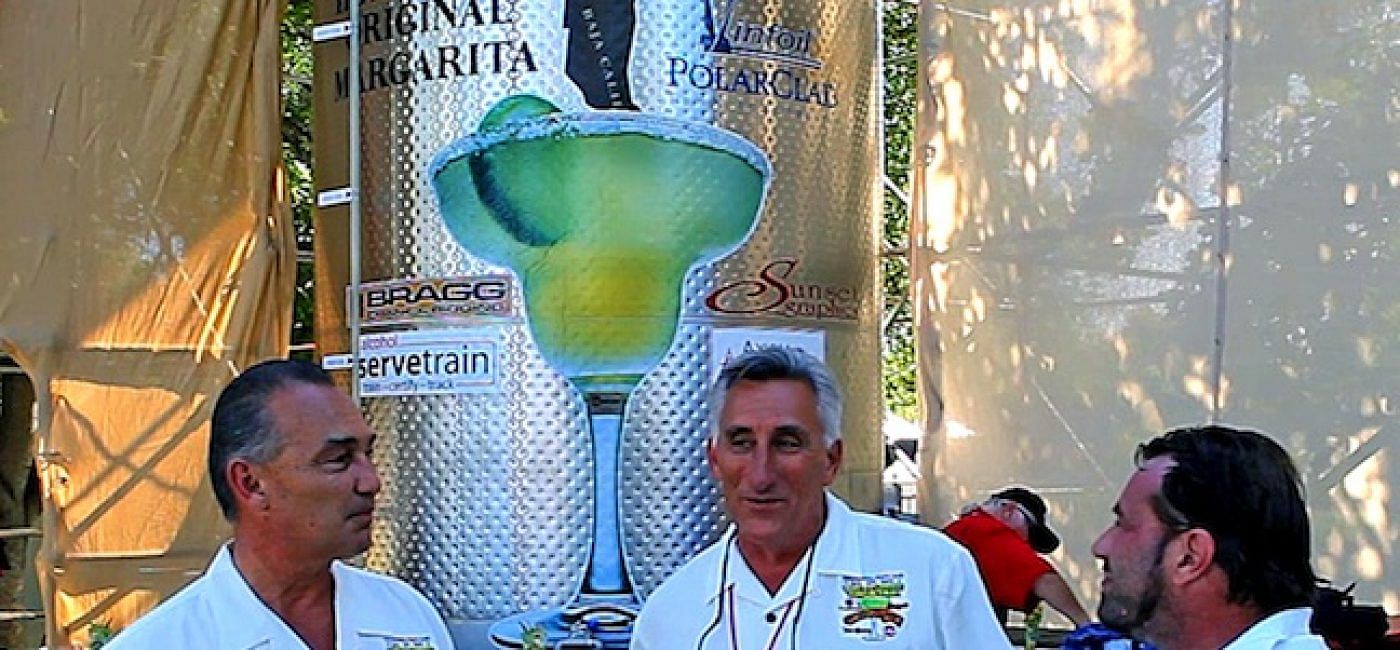
Ever wonder what the world’s largest margarita, all 10,500 gallons of it, looks like? Neither did we, until our very own Nick Nicora decided that Jimmy Buffett’s Las Vegas record needed a California-style challenge. Spoiler alert: Margaritaville, we’ll take that title, thank you very much.
Building the World’s Largest Margarita
Picture this: a 25-foot tall blender (yes, you read that correctly) powered by a 20-horsepower motor, because apparently, your countertop Vitamix just wasn’t going to cut it for this job. The recipe? Oh, just a casual 4,650 bottles of Jose Cuervo Gold Tequila (that’s 2,100 gallons for those keeping score), mixed with 8,400 gallons of margarita mix, 50 gallons of lime, and 20 gallons of Cointreau. You know, your standard Friday night cocktail.
But what makes this story special isn’t just the numbers – it’s the heritage behind it. Ricardo Hussong, third-generation owner of Hussongs Cantina in Ensenada (where the margarita was supposedly first created in 1941), flew in to witness the historic moment. It’s like having the grandson of the man who invented the wheel show up to watch you build a monster truck.
“Taking a world record from an institution like Margaritaville is nothing short of extraordinary,” as Christopher Ford from Stitches ‘n Dishes put it. And he’s right – it takes more than just a really big blender and a dream. It takes a community, as Nicora himself emphasized: “It can’t be just me; it can’t be just Ricardo. It’s got to be the whole team.”
The result? A cocktail that could serve 134,000 people, beating Buffett’s previous record by 2,000 gallons. And while some might call it excessive, we prefer to think of it as “efficiently social.” After all, isn’t sharing a margarita with friends what life’s all about? We just happened to make enough for all our friends… and their friends… and their friends’ friends.
For those wondering about Nick’s record-breaking habits – yes, this is the same mastermind who brought you the 777-pound hamburger at the Alameda County Fair. Apparently, doing things at normal scale is just not in his vocabulary.
The massive margarita was served at the California State Fair in souvenir cups, making it possibly the only time you could legitimately say you were drinking from a world record. And while we can’t promise it was the best margarita ever made (try mixing anything perfectly at that scale), we can definitely say it was the biggest.
Note: No limes were harmed in the making of this record… okay, that’s a lie. We definitely massacred a lot of limes.
What the World’s Largest Margarita Teaches Fair Boards
A 10,500-gallon cocktail makes a great headline, but the lessons behind it are practical. Strip away the 25-foot blender and the souvenir cups, and the world’s largest margarita was a fair beverage operation at an extreme scale. It needed permission to serve, safe handling, enough trained people, a plan for lines, and partners who knew their roles. Those are the same pieces every fair board and concessions operator manages each season.
Whether your fair is weighing a record attempt, a signature drink, or a featured food launch, the checklist below is a useful way to pressure-test the idea before anyone mixes a single margarita.
Start With the Rules, Not the Recipe
A record attempt only counts if it follows the record keeper’s rules. Guinness World Records explains that once an application is accepted, the applicant receives official record guidelines and clear next steps. Read those guidelines before you design the equipment, the recipe, or the serving plan, because they can shape all three.
Build the timeline backward from fair opening day. Leave room for the application review, equipment fabrication, health department review, and a rehearsal. A stunt that is rushed into the final weeks before opening tends to pull staff away from the basic concession work that pays the bills.
Alcohol Licensing Comes Before Everything Else
In California, alcohol service at a fair runs through the Department of Alcoholic Beverage Control. ABC’s license types page lists the permanent licenses and the temporary daily licenses, several of which are limited to qualifying nonprofit organizations. Confirm early who holds the license for the area where the margarita will be poured: the fair, a concessionaire, or a nonprofit partner. That answer decides who is accountable on the day.
Servers matter as much as the license. ABC’s Responsible Beverage Service program covers training and certification for people who serve alcohol and the managers who supervise them. ABC also publishes model alcohol management policies and guidance on checking identification. A novelty margarita draws curious guests of every age, so ID checks and cut-off procedures need to be stronger than usual, not weaker. Our guide to responsible alcohol service at fairs covers the day-to-day controls in more detail.
Treat a Giant Batch Like Any Other Food Operation
A margarita is a food product in the eyes of a health inspector. The FDA Food Code is the national model for retail food safety, and California applies its own Retail Food Code through county environmental health departments. In Alameda County, for example, the community events and temporary food facilities program sets the permit path for booths at events. Bring the local inspector into the plan early and show them the equipment, the water source, the cleaning plan, and how product will be dispensed.
Ice deserves its own line in the plan. The FDA notes that it regulates packaged ice as a food, and frozen margaritas use a lot of it. Store ice off the ground, keep scoops out of the product, and keep beverage ice separate from ice used to chill cans or bottles. Our article on fair concession ice safety walks through the handling steps.

Plan the Service, Not Just the Pour
The headline number for the world’s largest margarita was enough to serve 134,000 people. A fair board should read that as a staffing and line-management problem as much as a beverage problem. How many pour points will you run? How many cups can one server hand out in an hour? Where do guests pay, and where do they wait? Our guide to fair concession queue planning shows how to estimate throughput and keep lines out of walkways.
Long, hot shifts need a plan of their own. Cal/OSHA’s heat illness prevention program calls for water, shade, rest, and training for outdoor workers, and the Labor Commissioner explains meal period and rest period rules for California employees. If any of your crews are represented by a union, such as UNITE HERE, which represents many food service workers, bring labor partners into the schedule early so the special event does not collide with existing agreements.
Crowd safety is the other half of service planning. OSHA’s crowd management safety guidelines were written for retail events, but the basics carry over to a fair: plan barricades and line layout in advance, assign trained staff to manage the crowd, and have a clear plan for emergencies.
Control Access Where Alcohol Is Served
Large-batch margaritas, like any alcohol, work best inside a defined footprint. A fenced beverage garden with one or two staffed entrances makes ID checks, wristbands, and drink limits far easier to enforce than open carry across the midway. Put a supervisor at each entrance, give servers a simple way to call for help, and decide in advance who can stop service when a guest has had enough.

Run a Rehearsal Before Opening Day
No one should operate a custom margarita mixing rig for the first time in front of a crowd. Schedule a full rehearsal with the actual equipment, the actual crew, and a small batch of product. Time how long it takes to fill a cup, change a dispensing line, clean a nozzle, and swap a tired server for a fresh one. Those numbers tell you how many pour points you really need and whether the line plan holds up.
Use the rehearsal to test the unglamorous parts too. Check where ingredients are stored, how empty bottles and boxes leave the area, how the cleaning crew reaches the equipment without crossing the guest line, and how the supervisor talks to security. Write down every problem you find and assign an owner to fix it. A short rehearsal report is also a helpful document to share with the health inspector, the license holder, and your insurer, because it shows the plan has been tested and not just written.
Make the Story Work for the Fair
The margarita record worked because it had a story: a heritage connection through Ricardo Hussong, a friendly rivalry with a famous Las Vegas record, and souvenir cups guests could take home. That kind of story supports sponsorship, media coverage, and attendance in a way a plain drink special cannot. Our article on fair food court sponsorship covers how to structure partner value so the attraction pays for itself.
Fair boards do not have to plan big attractions alone. The Western Fairs Association brings fair managers together to share practices, and the California Fair Services Authority offers risk control and contract insurance review services to California fairs. The California Department of Food and Agriculture’s Fairs and Expositions branch is another useful contact for fairs in the state network.
Budget for Waste, Cleanup, and Leftovers
Every big batch leaves something behind: cups, packaging, ice melt, and product that is not sold. CalRecycle publishes the recycling and organics requirements for venues and events, and your waste hauler and local jurisdiction will have their own rules. Put cleanup crews, recycling stations, and a disposal plan for leftover product into the budget from the start.
A Practical Checklist Before Your Fair Tries Something Big
- Rules: Get the record guidelines, or define success clearly if it is not a record attempt.
- License: Confirm who holds the alcohol license and that the service area is covered.
- Health permit: Walk the plan through with your local environmental health office.
- People: Schedule trained servers, supervisors, and relief staff, with heat and break plans.
- Lines: Map pour points, payment points, and queue space away from walkways.
- Access: Use a defined footprint with ID checks at the entrances.
- Story: Line up partners, sponsors, and media before the day, not after.
- Cleanup: Plan recycling, waste, and leftover product disposal in the budget.
Big ideas are part of what makes a fair memorable. The world’s largest margarita showed that a playful goal can bring a community together, as long as the planning underneath it is serious. If your fair board is considering a signature food or beverage attraction, or simply wants stronger concession operations, schedule a consultation with FairFirst and we will help you plan it from permit to cleanup.


